The Professional AC Diagnostic Process: A Go/No-Go Decision Guide
Kevin Allen
Co-Founder & Service Lead

Evaluating Sudden AC Failures During Extreme Temperatures
As summer heat waves arrive and your cooling system struggles to keep up, getting common homeowner questions answered quickly is the first step toward restoring your home's safety. In our years of experience serving the local area, we've seen how extreme summer heat accelerates indoor temperature spikes, turning a minor cooling delay into a serious environmental hazard within a matter of hours. When your air conditioner suddenly stops working during peak temperatures, you face an immediate decision point: determining whether the issue requires immediate emergency intervention, a scheduled diagnostic visit, or a larger discussion about system replacement.
If you are dealing with a sudden cooling failure, securing professional AC repair is the safest way to protect your equipment and your home.
Addressing the root cause of an HVAC failure requires objective data rather than guesswork. Many homeowners hope a quick fix will solve the problem, but accurately resolving a system breakdown starts with a structured evaluation. By understanding the professional diagnostic process, you satisfy the core informational intent needed to make smart, cost-effective decisions about your home's infrastructure. Our technicians rely on specialized tools to measure electrical currents, refrigerant pressures, and airflow dynamics, ensuring that the prescribed repair actually targets the underlying failure rather than just masking a symptom.
AC Diagnostic vs. Routine Tune-Up: Clarifying the Terminology
A pattern our team sees often is confusion over the difference between maintenance and diagnostics. To address this clearly: a routine tune-up is preventative maintenance performed on a fully functional system, while an AC diagnostic is a targeted investigation into a specific failure or performance drop.
Technicians cannot simply "tune up" a broken air conditioner. If a compressor is failing or a capacitor has blown, cleaning the condenser coils or changing the filter will not restore cooling. A diagnostic must isolate the broken component first. Once the repair is complete and the system is operational again, routine maintenance can resume.
| Feature | Routine AC Tune-Up | Professional AC Diagnostic |
|---|---|---|
| System Status | Fully operational; cooling normally. | Experiencing a failure, strange noise, or performance drop. |
| Primary Goal | Prevent future breakdowns and maintain efficiency. | Identify the root cause of an existing malfunction. |
| Technician Actions | Cleaning coils, clearing drain lines, tightening connections. | Testing voltage, measuring refrigerant pressures, isolating faults. |
| Outcome | A clean, optimized system ready for the season. | A clear repair recommendation based on objective data. |
When to Transition from Troubleshooting to Professional Help
Before scheduling a service call with our business, there are a few safe steps you can take. Basic DIY AC troubleshooting includes checking your thermostat settings, verifying the circuit breaker hasn't tripped, and replacing a dirty air filter. A clogged filter severely restricts airflow, which can cause the evaporator coil to freeze and mimic a major system failure.
However, you must recognize the strict limits of safe DIY intervention. Air conditioning systems operate on high-voltage electricity and contain pressurized chemical refrigerants. Tampering with internal electrical panels, contactors, or refrigerant lines without proper licensing poses severe safety risks and can void your equipment warranty. Once you have ruled out the thermostat, the breaker, and the filter, it is time to transition to a professional diagnostic with our team.
The Go/No-Go Decision Matrix for AC Issues
When your system acts up, determining the severity of the problem helps you decide how quickly to act. This structured go/no-go decision matrix categorizes common symptoms into clear action plans based on what our technicians typically encounter in the field.
Category 1: Safe to Wait (Monitor and Schedule)
Some symptoms indicate a developing problem but do not pose an immediate threat to your equipment or safety. If you notice minor airflow drops in specific rooms, slightly elevated indoor humidity, or mild, intermittent rattling noises from the outdoor unit, you generally have time to schedule a standard service visit. These issues often stem from aging ductwork, a dirty filter, or a loose fan blade. Monitor the system closely, but you do not need to request emergency after-hours dispatch.
Category 2: Schedule Promptly (Turn Off and Call)
Category 2 symptoms require prompt professional attention to prevent further mechanical damage. If your system is running constantly without actually cooling the house, short-cycling (turning on and off every few minutes), or icing over at the indoor coil, turn the system off at the thermostat. Continuing to run an air conditioner under these conditions forces the compressor to work against extreme stress, which can quickly turn a minor electrical fix into a total system failure. Schedule a diagnostic visit as soon as possible.
Category 3: Emergency Shut-Off (Immediate Danger)
Certain warning signs demand immediate action. If you detect burning electrical smells, hear loud grinding or heavy buzzing noises from the condenser, or experience complete system unresponsiveness, you have a Category 3 emergency. If you are unsure what to check if your AC is not turning on, always start by safely powering down the unit. Turn the system off at the thermostat immediately, and flip the dedicated circuit breaker to the "off" position to cut all power. These symptoms often point to melting wires, a seized compressor, or a failing blower motor. Leave the power off and request emergency diagnostic services.

What to Expect During a Professional AC Diagnostic
Understanding the steps our technicians take during a visit helps satisfy the informational intent behind your service call. Our certified team utilizes objective data and transparent processes to provide honest diagnostics without unnecessary upselling. Rather than guessing based on a brief visual inspection, a professional will follow a systematic process to isolate the exact point of failure.
- Initial Symptom Review and Thermostat Calibration: The technician begins by discussing the specific symptoms you have noticed. They will then test the thermostat to ensure it is sending the correct low-voltage signals to the indoor and outdoor equipment.
- Electrical Component Testing: Using a multimeter, the technician tests the dual run capacitor, the contactor, and the control board. They check for proper voltage drops and ensure the electrical components are operating within the manufacturer's specified ranges.
- Refrigerant Level and Pressure Readings: Specialized gauges are connected to the outdoor unit to measure the superheat and subcooling of the refrigerant. This objective data reveals whether the system is fully charged, leaking, or struggling with a restriction in the line.
- Airflow and Ductwork Inspection: The technician measures static pressure to ensure the blower motor is moving the correct volume of air. High static pressure often indicates a severe restriction, such as a collapsed duct or an oversized filter.
- Compilation of Objective Data: Finally, the technician compiles these readings to form a precise repair recommendation. They will explain exactly which component failed and provide the data to support their findings.
This thorough approach guarantees that you are paying to fix the actual problem, rather than replacing parts on a trial-and-error basis.
Why Seemingly Simple Symptoms Require Complex Technical Diagnostics
Homeowners in the local area often ask our team why a straightforward symptom requires a comprehensive technical evaluation. The short answer is that modern HVAC units are complex, interconnected systems where a single symptom can originate from multiple, unrelated failures. Addressing the informational intent of a breakdown means looking past the surface issue.
For example, if your air conditioner is blowing warm air, the root cause could be a severe refrigerant leak, a failed compressor, a broken reversing valve, or simply a blown capacitor that is preventing the outdoor fan from spinning. Without electrical meters and pressure gauges, it is impossible to distinguish between a minor electrical fault and a catastrophic mechanical failure.
According to data from the U.S. Department of Energy, improper refrigerant charge or airflow issues can degrade system efficiency by up to 20 percent. Continuous cycling during peak summer heat exacerbates these hidden mechanical stresses. When a system is slightly low on refrigerant, the compressor must run longer and hotter to achieve the same cooling effect. Over time, this thermal stress breaks down the internal insulation of the compressor.
This is why accurate early diagnostics are so critical. Figuring out why your AC compressor hisses after it turns off might reveal a minor pressure equalization issue that can be corrected easily today, preventing a total compressor lockup next month. Catching these hidden faults early extends the overall lifespan of your cooling system and keeps minor repairs from evolving into full system replacements.
Comprehensive AC Diagnostic FAQ
To further fulfill the informational intent of this guide, we have compiled objective answers to the most common questions homeowners ask when facing a system failure.
What is an AC diagnostic test?
An AC diagnostic test is a systematic evaluation of your cooling system's electrical and mechanical components to identify the root cause of a failure. A licensed technician uses specialized tools like multimeters, manometers, and refrigerant gauges to measure the system's performance against manufacturer specifications. This process eliminates guesswork and provides objective data for a precise repair plan.
How long does an AC diagnostic take?
A standard AC diagnostic typically takes 30 to 60 minutes to complete. The exact duration depends on the complexity of your system, the accessibility of the indoor and outdoor units, and the nature of the failure. Intermittent electrical issues or hidden refrigerant leaks may require slightly more time to accurately trace and verify.
Is an AC diagnostic necessary?
Yes, an AC diagnostic is absolutely necessary before any professional repair can begin. It is the only way to accurately prescribe a repair and avoid replacing functioning parts unnecessarily. Skipping the diagnostic phase often leads to misdiagnosed problems, repeated breakdowns, and wasted money on ineffective fixes.
What is the difference between an AC diagnostic and routine maintenance?
Routine maintenance is preventative care performed on a fully functioning system to keep it running efficiently, much like an oil change for a car. An AC diagnostic is a targeted troubleshooting process used when a system has actively failed or is exhibiting severe performance issues. You cannot perform routine maintenance on a broken system until a diagnostic identifies and resolves the underlying failure.
Can a diagnostic prevent a full system replacement?
Yes, catching minor electrical faults early can save major components like the compressor from catastrophic failure. A diagnostic might reveal that a failing capacitor is causing the system to overheat; replacing that small part immediately prevents the extensive damage that would occur if the compressor burned out completely.
What happens if the diagnostic reveals a major failure?
If the technician discovers a severe mechanical failure, they will present objective data comparing the viability of a repair versus the benefits of a full system replacement. You will receive a detailed breakdown of the failing components, the expected lifespan of the remaining equipment, and the efficiency gains of a new unit, allowing you to make an informed, pressure-free decision.
Restoring Your Home's Comfort with Data-Driven Solutions
Understanding the professional diagnostic process empowers you to make informed, confident decisions when your cooling system struggles. By recognizing the warning signs and using the go/no-go matrix, you can protect your equipment from further damage as seasonal temperatures continue to rise. Satisfying the informational intent behind your system's failure means you never have to settle for guesswork or temporary fixes.
Do not ignore minor warning signs or wait for a complete breakdown during the next heat wave. If you suspect your system is underperforming, our business is here to provide a straightforward, objective breakdown of the problem's mechanisms and a clear set of criteria for what to do next. Reach out to our team to schedule a professional diagnostic evaluation to restore your home's comfort with precise, data-driven solutions.
About the Author
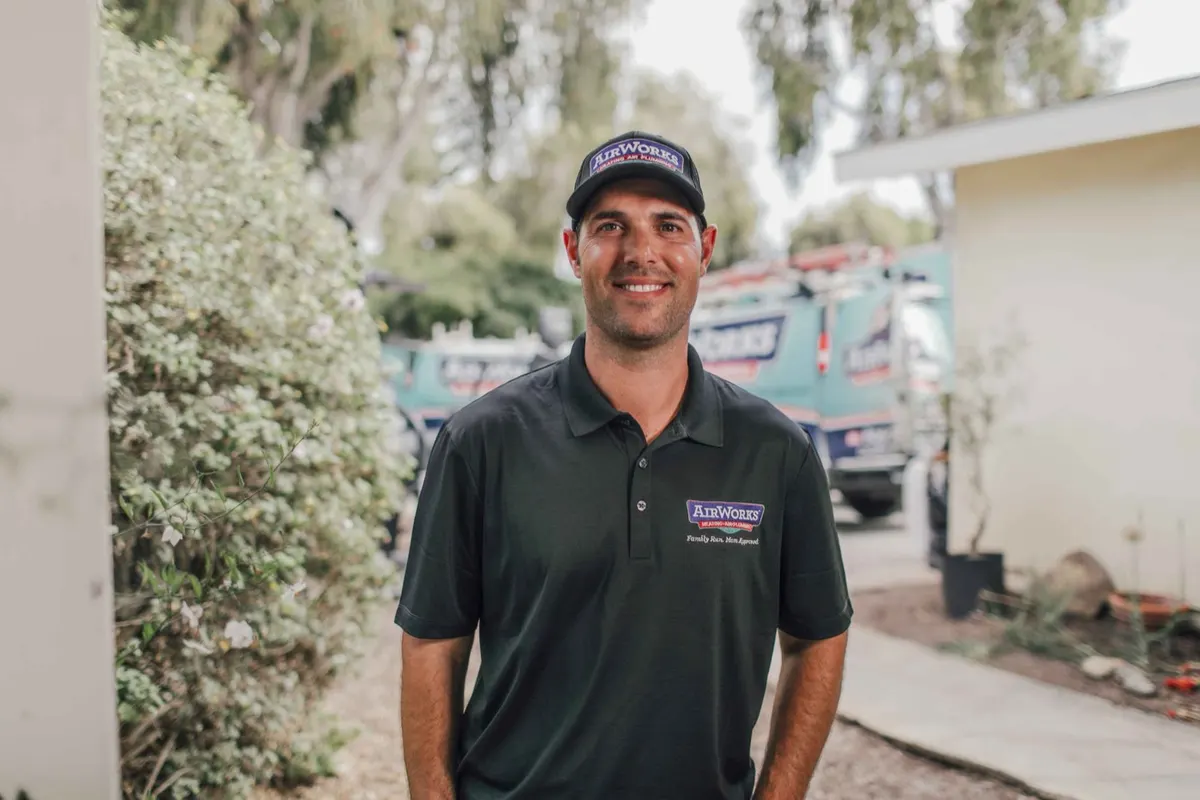
Kevin Allen
Co-Founder & Service Lead
Co-founded AirWorks in 2010 and has worked in Ventura County HVAC since 2002. Leads the service and installation crews — and the fix-what's-actually-broken ethic the company was built on.
Need Help?
Contact us today to discuss your needs. Our team is ready to help.
Related Articles
Options Comparisons for Homeowners: Heat Pump vs. Gas Furnace
Read Options Comparisons for Homeowners: Heat Pump vs. Gas FurnaceWhy Is Your Air Conditioner Hissing When Off? Causes and Diagnostics
Read Why Is Your Air Conditioner Hissing When Off? Causes and DiagnosticsHeat Pump vs. Gas Furnace: Technical Options Comparisons for Homeowners
Read Heat Pump vs. Gas Furnace: Technical Options Comparisons for HomeownersReady to Get Started?
Whether you need a repair, maintenance, or a new installation, our expert team is here to help.