AC Diagnostic: What to Expect During a Professional Assessment
Kevin Allen
Co-Founder & Service Lead

Navigating an Unexpected Cooling System Failure
Your vents are blowing warm air, or worse, the entire system has gone completely silent on a hot afternoon. When you are facing an unexpected system failure, scheduling an accurate ac diagnostic is the only definitive way to find out exactly what is wrong without resorting to guesswork. The immediate stress of losing your home comfort often leads homeowners to jump to conclusions about what might be broken. However, assuming you know the root cause based on a single symptom frequently results in purchasing unnecessary parts or paying for repairs that do not actually solve the underlying issue.
Troubleshooting common local service problems begins with understanding the difference between a symptom and a cause. For example, a frozen evaporator coil is a symptom. The cause could be anything from a clogged air filter restricting airflow to a severe refrigerant leak. Guessing which one is to blame is a gamble with your time and budget. A structured, data-driven approach removes the emotion from the situation and relies on hard mechanical and electrical facts to pinpoint the exact point of failure.
The most critical decision point you face right now is determining what you can safely check on your own versus what legally and safely requires a licensed professional. There is a distinct line between basic homeowner maintenance and invasive system testing. Crossing that line without the proper training and tools can void your manufacturer warranty, cause further damage to the equipment, or create serious safety hazards involving high-voltage electricity and pressurized chemicals.
This guide breaks down the objective, step-by-step methodology used in professional cooling system assessments. By understanding how a certified technician approaches a failing unit, you can make informed decisions about your home's infrastructure. You will learn exactly what data points are measured, why they matter, and how transparent reporting protects you from high-pressure sales tactics.
Safe Homeowner Checks vs. Professional Intervention
Before you pick up the phone to schedule a service call, there are a few basic, safe steps you should take. According to data from the U.S. Department of Energy, dirty air filters and neglected routine maintenance are the leading causes of premature cooling system failures. Verifying these basic components can sometimes restore your system's function immediately. However, it is vital to know exactly where your responsibilities end and a professional's begin.
If you are unsure about what to check first if your AC is not turning on, start with the components that do not require opening the main equipment cabinet. These external checks are perfectly safe for a homeowner to perform and are often the first questions a dispatcher will ask you when you call for help.
What You Can Safely Inspect
Your initial investigation should focus entirely on airflow and power supply at the user level. These are simple verifications that require no specialized tools.
- Thermostat batteries and settings: Verify that the thermostat display is active, set to "Cool," and that the target temperature is set at least five degrees below the current room temperature. If the screen is blank, replace the batteries.
- Air filter condition: Locate your return air filter. If it is caked with dust, pet hair, or debris, it is choking the system's airflow. A severely clogged filter can cause the internal coils to freeze solid, triggering safety switches that shut the system down.
- Tripped breakers or blown fuses: Check your home's main electrical panel. If the breaker labeled for your air conditioner has tripped, reset it once. If it trips again immediately, leave it off—this indicates a severe electrical short that requires professional attention.
When to Stop and Call a Professional
Once you have verified the thermostat, filter, and breaker, your safe troubleshooting phase is complete. Any task that involves removing access panels from the indoor air handler or the outdoor condenser must be left to a licensed technician.
- Internal electrical components: Air conditioners utilize high-voltage electricity and store lethal amounts of energy in capacitors, even when the power is turned off at the breaker.
- Refrigerant lines and coils: Handling, testing, or modifying refrigerant levels requires federal EPA certification. Venting refrigerant into the atmosphere is illegal and dangerous.
- Motor and compressor testing: Evaluating the health of blower motors or the main compressor requires specialized meters to measure electrical resistance and insulation integrity.
| Troubleshooting Step | Homeowner (DIY) | Licensed Professional |
|---|---|---|
| Checking thermostat settings | Yes | Yes |
| Replacing dirty air filters | Yes | Yes |
| Resetting a tripped breaker (once) | Yes | Yes |
| Testing capacitor microfarads | No | Yes |
| Measuring refrigerant pressure | No | Yes |
| Testing motor winding resistance | No | Yes |

The Anatomy of a Professional AC Diagnostic
A professional diagnostic is not a quick visual glance at your equipment. It is a systematic, data-driven investigation designed to eliminate variables until the exact point of failure is isolated. When troubleshooting common local service problems, technicians follow a strict order of operations. This methodology ensures that secondary issues are not overlooked while fixing the primary complaint.
The process begins with an initial system performance evaluation. The technician will measure the temperature drop across the indoor coil—meaning they check the temperature of the air entering the return vent versus the air blowing out of the supply vents. A healthy system typically shows a temperature drop of 15 to 20 degrees Fahrenheit. If the drop is outside this range, the technician knows immediately whether they are dealing with an airflow restriction or a refrigeration cycle failure.
Electrical System Analysis
Because modern cooling systems rely heavily on complex electrical sequences to operate, the electrical analysis is usually the next phase of the diagnostic. Technicians use specialized multimeters to test the integrity of the power supply and the components that manage it.
- Testing voltage and amperage: The technician verifies that the equipment is receiving the correct voltage from the electrical panel. They then measure the amperage (electrical current) drawn by the compressor and motors during startup and operation, comparing these readings against the manufacturer's maximum ratings.
- Evaluating wire integrity and connections: Wires are inspected for burned insulation, pest damage, or loose terminal connections that could cause dangerous arcing or intermittent power loss.
Mechanical and Airflow Testing
If the electrical system is functioning correctly, the investigation moves to the mechanical and airflow components. This phase requires physical access to the moving parts and the sealed refrigeration circuit.
- Measuring static pressure: Using a manometer, the technician measures the air pressure inside the ductwork. High static pressure indicates a restriction (like a collapsed duct or a restrictive filter), while low pressure might indicate a major duct leak.
- Assessing blower motor performance and coil condition: The indoor blower motor is tested for proper speed and balance. The technician also inspects the evaporator coil for biological growth, dirt buildup, or signs of oil residue, which is a primary indicator of a refrigerant leak. They will connect manifold gauges to the outdoor unit only if the temperature drop and airflow data suggest a refrigerant issue, as connecting gauges unnecessarily can release small amounts of charge.
Common Hidden Issues Uncovered by Diagnostics
Many homeowners assume that if their system is blowing warm air, it simply needs a "recharge" of refrigerant. However, a comprehensive diagnostic often reveals that the true problem lies elsewhere. Because cooling systems are complex, interconnected machines, a single symptom can have dozens of potential root causes.
The Problem: The outdoor unit is buzzing loudly, but the fan blade is not spinning, and the air inside the house is warm.
The Cause: While this might look like a failed fan motor, a diagnostic test frequently reveals a failed dual-run capacitor. The capacitor acts as a battery that provides the initial jolt of electricity needed to start the motors. When it fails, the motors try to start but cannot overcome their own inertia, resulting in a loud electrical buzzing sound. Another frequent culprit is a pitted contactor—the high-voltage switch that turns the outdoor unit on and off. Over time, the metal contacts become burned and scarred, preventing electricity from flowing smoothly.
The Solution: By using a multimeter to test the capacitor's microfarad rating and inspecting the contactor's voltage drop, the technician can replace a small, inexpensive electrical component rather than condemning the entire motor.
Another hidden issue frequently uncovered is the effect of thermal expansion on electrical connections. As electricity flows through wires, they heat up and expand slightly. When the system turns off, they cool and contract. Over thousands of cycles, this constant movement can loosen the screws holding the wires in place. A loose connection creates electrical resistance, which generates excess heat, eventually melting wires or destroying circuit boards. Identifying and tightening these connections during a diagnostic prevents catastrophic system failure down the road.
How Local Temperature Fluctuations Impact System Wear
Your cooling system does not operate in a vacuum; it is entirely at the mercy of the environment around it. Address how the local area's temperature fluctuations put stress on cooling systems, making accurate professional diagnostics crucial for reliable home comfort. Rapid shifts in regional weather patterns force your HVAC system into frequent, stressful cycling.
When temperatures swing dramatically from cool mornings to blistering afternoons, your system must turn on and off more frequently to maintain the indoor set point. This short-cycling is incredibly hard on mechanical parts. The most stressful moment in a cooling system's operation is the startup phase. The compressor and blower motor draw massive amounts of electricity to get moving, putting immense strain on the capacitors, contactors, and motor bearings.
This weather-induced wear is often subtle and difficult for a layperson to spot. A motor bearing might slowly lose its lubrication over a season of heavy cycling, causing the motor to run hotter and draw more amperage. You will not notice this degradation just by listening to the unit, but a technician measuring the electrical draw during a diagnostic will spot the warning signs immediately. Proactive diagnostics can identify this climate-related strain early, allowing for minor adjustments that restore efficiency lost to environmental stress before a total breakdown occurs.
The Value of Transparent, Certified Diagnostics
Not all service calls are created equal. The most significant differentiator in the home service industry is the commitment to reliable, transparent service from certified technicians who provide honest diagnostic reports without unnecessary upselling. When you invite a professional into your home, you are trusting them to interpret complex technical data accurately and present it to you honestly.
Technician certification matters immensely for this process. Organizations like NATE (North American Technician Excellence) require rigorous testing to ensure technicians understand the physics of the refrigeration cycle and the intricacies of high-voltage electrical diagnostics. A certified technician relies on objective measurements—voltage, amperage, static pressure, and superheat—rather than subjective guesswork or quotas.
A transparent, data-driven diagnostic report empowers you to make informed decisions. Instead of simply being told, "your system is broken and needs to be replaced," you should expect a report that details the exact findings. For example, a transparent report will state, "The dual-run capacitor is rated for 45 microfarads but is currently measuring at 12 microfarads, causing the compressor to fail on startup." This level of detail removes the fear from the repair process. It provides you with clear facts, outlines the specific options for repair, and ensures you are only paying for the exact services your system actually needs.
Frequently Asked Questions About AC Diagnostics
What happens during an AC diagnostic?
During an AC diagnostic, a technician performs a systematic investigation of your cooling system to identify the root cause of a failure. They measure electrical voltage and amperage, test airflow and static pressure, and evaluate the refrigeration cycle. This data-driven approach eliminates guesswork and pinpoints the exact component that needs repair.
What is the difference between an AC diagnostic and a tune-up?
An AC diagnostic is a targeted investigation performed when your system is broken or malfunctioning to find a specific problem. A tune-up is preventative maintenance performed on a working system to clean components, lubricate moving parts, and ensure it runs efficiently before the heavy cooling season begins.
How long does an AC diagnostic take?
A standard professional diagnostic typically takes between 45 minutes to an hour to complete. However, if the issue involves complex electrical shorts, intermittent failures, or hard-to-reach ductwork, the investigation may take longer to ensure all variables are properly tested.
Can I diagnose my AC myself?
You can safely perform basic checks, such as verifying thermostat settings, replacing a dirty air filter, and checking for a tripped circuit breaker. However, any diagnostic step involving testing internal electrical components, handling refrigerant, or opening equipment panels must be left to a licensed professional for safety and legal reasons.
What specialized tools do technicians use during an AC diagnostic?
Technicians use several specialized tools to gather objective data, including digital multimeters to test electrical voltage and resistance. They also use manifold gauges to measure refrigerant pressures, manometers to test ductwork static pressure, and dual-temperature probes to calculate the exact temperature drop across the indoor coil.
Making an Informed Decision for Your Home's Comfort
A proper AC diagnostic is much more than a quick glance at a broken machine; it is a vital, data-driven investment in the longevity and safety of your home's cooling system. By refusing to guess at the problem, a certified technician protects you from the frustration of recurring breakdowns and the expense of unnecessary part replacements. Understanding the root cause is the only way to ensure a lasting, safe repair that restores your comfort reliably.
When you are faced with a system failure, remember the boundary between safe homeowner checks and the need for specialized intervention. We encourage you to seek out certified professionals who prioritize transparency and objective reporting over high-pressure sales. If your system is struggling to keep up or has stopped working entirely, reach out to schedule a comprehensive, fact-based diagnostic to get your home back to a comfortable temperature.
About the Author
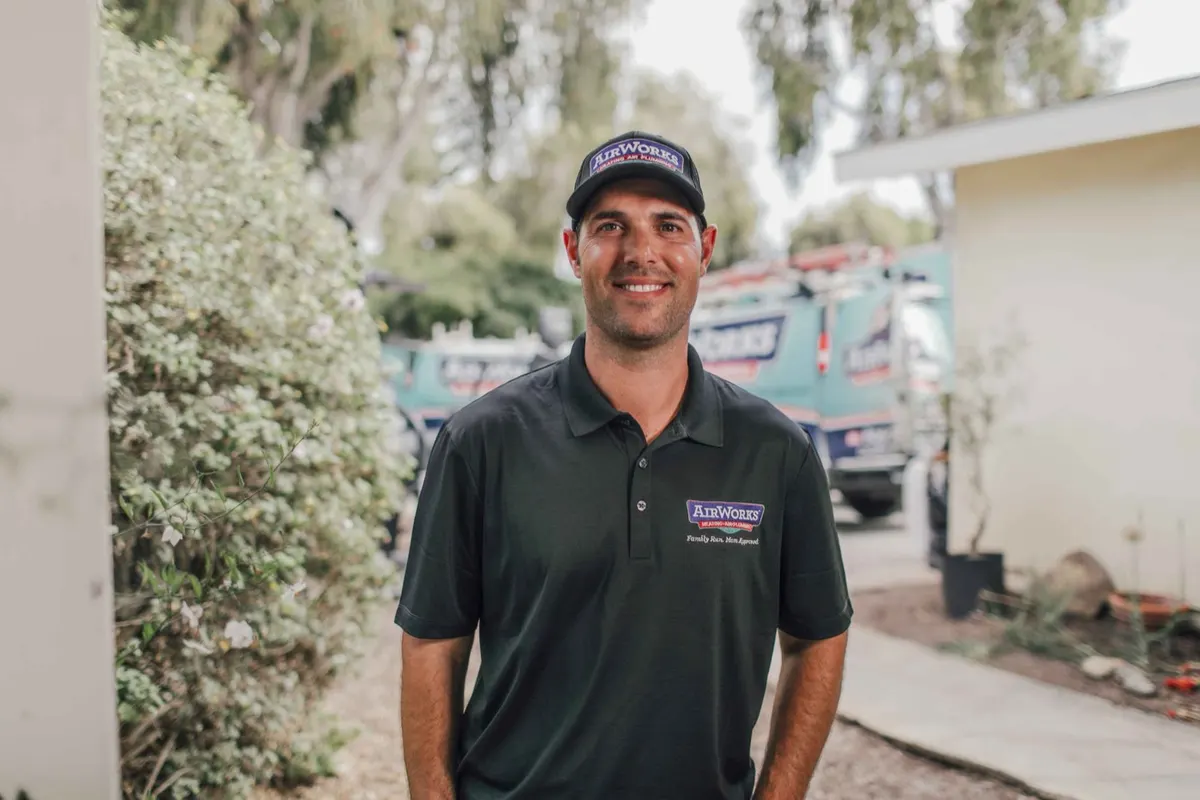
Kevin Allen
Co-Founder & Service Lead
Co-founded AirWorks in 2010 and has worked in Ventura County HVAC since 2002. Leads the service and installation crews — and the fix-what's-actually-broken ethic the company was built on.
Need Help?
Contact us today to discuss your needs. Our team is ready to help.
Related Articles
Options Comparisons for Homeowners: Heat Pump vs. Gas Furnace
Read Options Comparisons for Homeowners: Heat Pump vs. Gas FurnaceWhy Is Your Air Conditioner Hissing When Off? Causes and Diagnostics
Read Why Is Your Air Conditioner Hissing When Off? Causes and DiagnosticsHeat Pump vs. Gas Furnace: Technical Options Comparisons for Homeowners
Read Heat Pump vs. Gas Furnace: Technical Options Comparisons for HomeownersReady to Get Started?
Whether you need a repair, maintenance, or a new installation, our expert team is here to help.