The Anatomy of a Professional AC Diagnostic: Protecting Your System from Peak Heat
Kevin Allen
Co-Founder & Service Lead

When Peak Summer Heat Pushes Your Cooling System to the Limit
When the first major heat wave of the season arrives, finding reliable home maintenance tips and troubleshooting strategies becomes a top priority for any homeowner facing a sudden air conditioning failure. The transition from mild spring weather to relentless summer heat places immense stress on your home cooling system. Your AC unit, which may have sat idle or run on low cycles for months, is suddenly forced to operate continuously just to keep the indoor temperature bearable. Extreme local summer heat accelerates component wear, turning minor inefficiencies into major mechanical failures seemingly overnight.
This continuous cycling creates a tremendous amount of friction and heat within the system itself. When an air conditioner runs without a break, the compressor works overtime, electrical components run hot, and any slight refrigerant imbalance becomes magnified. The frustration of coming home to a sweltering house is only matched by the anxiety of figuring out exactly what went wrong. Sudden cooling loss demands immediate attention, but making the right call requires objective data rather than panic.
The very first step in troubleshooting common local service issues is securing an objective, professional assessment. Guessing at the root cause often leads to wasted money or, worse, irreversible damage to the equipment. By understanding the anatomy of a professional diagnostic, you gain a clear roadmap for making informed, safety-first decisions regarding your system's care. You learn how to evaluate the severity of the malfunction and determine the best path forward for your home.
Ready to restore your comfort? Schedule a professional AC repair today.
Immediate Mitigation: What to Do Before the Technician Arrives
The Problem: You notice warm air blowing from your vents, or you hear an aggressive grinding noise coming from the outdoor condenser unit. The house is getting warmer by the minute, and the thermostat reading continues to climb despite the system running constantly.
The Cause: These symptoms typically indicate a significant mechanical or electrical failure. A grinding noise often points to a failing fan motor or a struggling compressor. Warm air usually signifies a refrigerant leak, a frozen evaporator coil, or a compressor that has stopped engaging entirely. When the system continues to run under these conditions, it forces compromised parts to keep working, generating excessive heat and mechanical strain.
The Solution: Your immediate priority is damage control. You must stop the system from destroying itself while you wait for professional help. These steps are strictly about preventing further harm, not implementing a permanent fix.
Safely Halting System Operation
The most critical action you can take is turning the system off completely at the thermostat. Waiting "just a few more hours" in peak heat to see if the system will correct itself can turn a minor electrical fix into a catastrophic compressor failure. If the thermostat is unresponsive, locate your home's electrical panel and flip the dedicated HVAC breaker to the "off" position. Cutting power prevents potential electrical fires and stops the mechanical components from grinding themselves to pieces.
Once the power is secured, you can perform a few safe, preliminary checks without ever opening an equipment panel. Verify that your thermostat is actually set to "cool" and that the temperature setpoint is lower than the current room temperature. Check your air filter; a completely clogged filter can suffocate the system and cause the coil to freeze over. If the filter is clean and the settings are correct, you have ruled out user error. At this point, reviewing what to check when your AC is not turning on can provide additional context, but your primary job is to leave the system off until an expert arrives.
Decision Matrix: Emergency Dispatch vs. Standard Scheduling
Not every air conditioning issue requires a technician to arrive at two in the morning. Understanding how to objectively evaluate your situation helps you determine the true urgency of the required professional intervention. A true HVAC emergency involves situations that threaten your property or your safety, while standard scheduling applies to performance issues that are uncomfortable but not immediately dangerous.
Use the following matrix to evaluate the severity of your system's malfunction. This clear checklist helps separate minor inconveniences from critical failures.
| System Symptom | Safety Risk Level | Classification | Recommended Action |
|---|---|---|---|
| Electrical burning smell or visible smoke | High (Fire Hazard) | Emergency Dispatch | Shut off power at breaker immediately; call for emergency service. |
| Complete system failure during 100°F+ heat wave | High (Health Hazard) | Emergency Dispatch | Turn off system; seek cool shelter if necessary; request urgent service. |
| Loud screeching, banging, or metal-on-metal grinding | Moderate (Equipment Damage) | Emergency Dispatch | Turn off system immediately to save the compressor; request urgent service. |
| Intermittent squeaking or rattling noises | Low | Standard Scheduling | Monitor the noise; schedule a standard diagnostic visit. |
| System runs but cools the house very slowly | Low | Standard Scheduling | Check the air filter; schedule a standard diagnostic visit. |
| Slight increase in indoor humidity levels | Low | Standard Scheduling | Schedule a standard diagnostic to check refrigerant and airflow. |
If you experience any of the symptoms in the "Emergency Dispatch" category, immediate professional intervention is required to prevent severe damage or safety risks. If your symptoms align with "Standard Scheduling," you can safely book an appointment during normal business hours. Regardless of the classification, rest assured that a professional diagnostic will uncover the exact severity of the issue. The technician's objective findings will dictate the necessary repairs, removing all the guesswork from the equation.
The Step-by-Step Professional AC Diagnostic Checklist
When a certified technician arrives at your home, they do not simply guess at the problem based on the symptoms. They follow a rigorous, objective breakdown of your system's performance. This methodical approach ensures that the root cause is identified accurately, preventing recurring breakdowns. Here is exactly what happens during a comprehensive diagnostic visit.
- Refrigerant Level Checks: The technician begins by measuring the refrigerant pressures and temperatures. They are looking for subtle leaks and ensuring the system holds the proper charge according to strict Department of Energy guidelines. An undercharged system struggles to cool, while an overcharged system can damage the compressor.
- Electrical Component Testing: The electrical system is the nervous system of your AC. Technicians evaluate contactors for pitting or burning, check the wiring for secure connections, and rigorously test the capacitors. Capacitors are particularly vulnerable to overheating during continuous summer operation, making them a primary focus during the electrical testing phase. A weak capacitor can prevent the fan or compressor from starting.
- Thermostat Calibration: The control center of your home must communicate accurately with the equipment. The technician verifies that the thermostat is reading the room temperature correctly and sending the proper voltage signals to the furnace and outdoor unit. Miscalibrated sensors can cause the system to short-cycle or run endlessly.
- Airflow and Ductwork Inspection: Proper cooling requires unrestricted airflow. The technician inspects the blower motor for strain, checks the evaporator coil for dirt buildup, and evaluates the static pressure of the ductwork. Blockages or dirty coils force the blower motor to work harder, increasing energy consumption and accelerating wear and tear.
- Compressor and Coil Evaluation: Finally, the technician assesses the heart of the system. They measure the amperage draw of the compressor to ensure it operates within the manufacturer's specifications. They also inspect the outdoor condenser coil for debris that might impede heat transfer. If the compressor shows signs of catastrophic internal failure, the technician will walk you through the data to explain why an AC replacement might be the most financially sound option.

The Hidden Dangers of DIY HVAC Electrical Troubleshooting
With the abundance of online tutorials, it is tempting to try and fix an air conditioner yourself. However, stepping beyond basic filter changes and thermostat adjustments introduces severe safety risks. Strict safety protocols dictate that professional-level diagnostics must be left to certified experts.
High-voltage shock hazards are the most immediate danger. The outdoor condenser unit operates on 240 volts of electricity, which is more than enough to cause fatal injury. Even when the power is shut off at the breaker, components like the dual-run capacitor store a massive electrical charge. If you accidentally bridge the terminals on a charged capacitor with a screwdriver or your hand, it will discharge instantly, delivering a severe shock. Technicians use specialized meters to safely discharge and test these components.
Furthermore, improper handling can inadvertently void manufacturer warranties. Most HVAC manufacturers explicitly state in their warranty documentation that any repairs or electrical modifications performed by unlicensed individuals will immediately void the coverage. If you attempt a DIY fix and accidentally short out the control board, you will be paying out of pocket for a replacement that might otherwise have been covered.
According to Department of Energy data, electrical control failure is a leading cause of air conditioning malfunction. Diagnosing these failures requires specialized tools, such as digital multimeters, manometers, and anemometers, to read voltage, resistance, and pressure accurately. Misinterpreting these readings often leads homeowners to replace the wrong parts, wasting time and money while leaving the actual problem unresolved. Professional diagnostics protect both your physical safety and your financial investment by ensuring the work is done correctly and legally.
How a Diagnostic-First Approach Protects Your Investment
The true value of a professional diagnostic lies in its reliance on hard data. A symptom-based guess—such as assuming a warm house always means a system needs more refrigerant—often leads to a cycle of endless service calls. A diagnostic-first approach replaces assumptions with a comprehensive, step-by-step evaluation.
Working with certified, transparent technicians who perform thorough, step-by-step diagnostics before ever recommending a repair or system overhaul ensures you only pay for exactly what you need. When a technician tests every component systematically, they uncover the root cause rather than just treating the symptom. This objective transparency prevents premature or unnecessary repairs. For instance, a system that keeps shutting down might seem like it has a dead compressor, but a proper diagnostic might reveal that a five-dollar clogged drain line tripped a safety switch.
Translating Findings into Actionable Solutions
Once the testing is complete, the technician translates the raw data into actionable solutions. They explain the root cause clearly and objectively, showing you the exact readings on their meters. If a capacitor is reading below its microfarad rating, they show you the number. This evidence-based approach empowers you to make a confident decision.
The technician will then help you weigh a targeted repair against long-term system upgrades based on this hard data. If your system is relatively new, a targeted repair is almost always the right choice. However, if the diagnostic reveals multiple failing components, a leaking evaporator coil, and a compressor drawing excessive amperage, pouring money into repairs makes little sense. In those cases, the technician will use the diagnostic data to explain why exploring AC installation services provides a better return on your investment. A proper diagnostic pays for itself by ensuring the correct issue is resolved the very first time.
Frequently Asked Questions About AC Diagnostics
What does an AC diagnostic include?
An AC diagnostic includes a comprehensive evaluation of the system's electrical, mechanical, and airflow components. Technicians test refrigerant levels, capacitor health, compressor amperage, and thermostat calibration. They also inspect the ductwork and coils for blockages. This step-by-step process identifies the exact root cause of a malfunction rather than just addressing the surface symptoms.
How long does an AC diagnostic take?
A standard professional AC diagnostic typically takes between 45 minutes to an hour to complete. Complex issues involving intermittent electrical faults or hard-to-find refrigerant leaks may require additional time. The technician needs this time to allow the system to run, gather accurate pressure readings, and test all high-voltage components safely. Rushing the process often leads to missed underlying issues.
Can I diagnose my AC myself?
You can perform basic preliminary checks, such as verifying thermostat settings, inspecting the air filter, and checking for tripped breakers. However, you should never attempt to diagnose electrical or refrigerant issues yourself. Testing high-voltage components like capacitors and compressors requires specialized training and tools to prevent severe shock hazards. Professional diagnostics are required to ensure safety and keep manufacturer warranties intact.
Why is my AC running but not cooling?
When an AC runs constantly but fails to cool the house, it usually indicates restricted airflow or a refrigerant issue. A severely clogged air filter or a dirty evaporator coil can block the cold air from entering your ductwork. Alternatively, a refrigerant leak prevents the system from absorbing heat from your home's air. A professional diagnostic is necessary to pinpoint exactly which of these issues is occurring.
Why is a professional AC diagnostic necessary before quoting a repair?
A professional diagnostic is necessary because many different failures share the exact same symptoms. Quoting a repair based solely on a symptom like "warm air" is merely guessing, which often leads to replacing the wrong parts. An objective diagnostic provides hard data, ensuring that the repair quote accurately reflects the actual root cause of the problem. This protects the homeowner from paying for unnecessary work.
What is the difference between an AC tune-up and a diagnostic?
An AC tune-up is a proactive maintenance service performed on a working system to clean components, tighten electrical connections, and optimize efficiency before the season begins. A diagnostic is a reactive troubleshooting service performed when the system has actively failed or is exhibiting specific problems. While a tune-up prevents future issues, a diagnostic identifies and isolates a current mechanical or electrical failure.
Securing Reliable Comfort Before the Next Heat Wave
Understanding the professional diagnostic process empowers you to make smart, safe decisions when your cooling system falters. By recognizing the difference between a true emergency and a standard service need, you can navigate sudden breakdowns without panic. You now know that attempting DIY electrical work is dangerous, and that demanding transparent, evidence-based data from your technician protects your financial investment.
Timely professional intervention remains the best defense against catastrophic system failure during the hottest months of the year. Do not wait for a minor noise or a slight drop in cooling performance to turn into a complete breakdown. Schedule an objective assessment at the first sign of trouble to maintain uninterrupted comfort. Having a clear, technical but accessible breakdown of what went wrong—along with a definitive checklist for professional intervention—ensures your home stays cool and safe all summer long.
About the Author
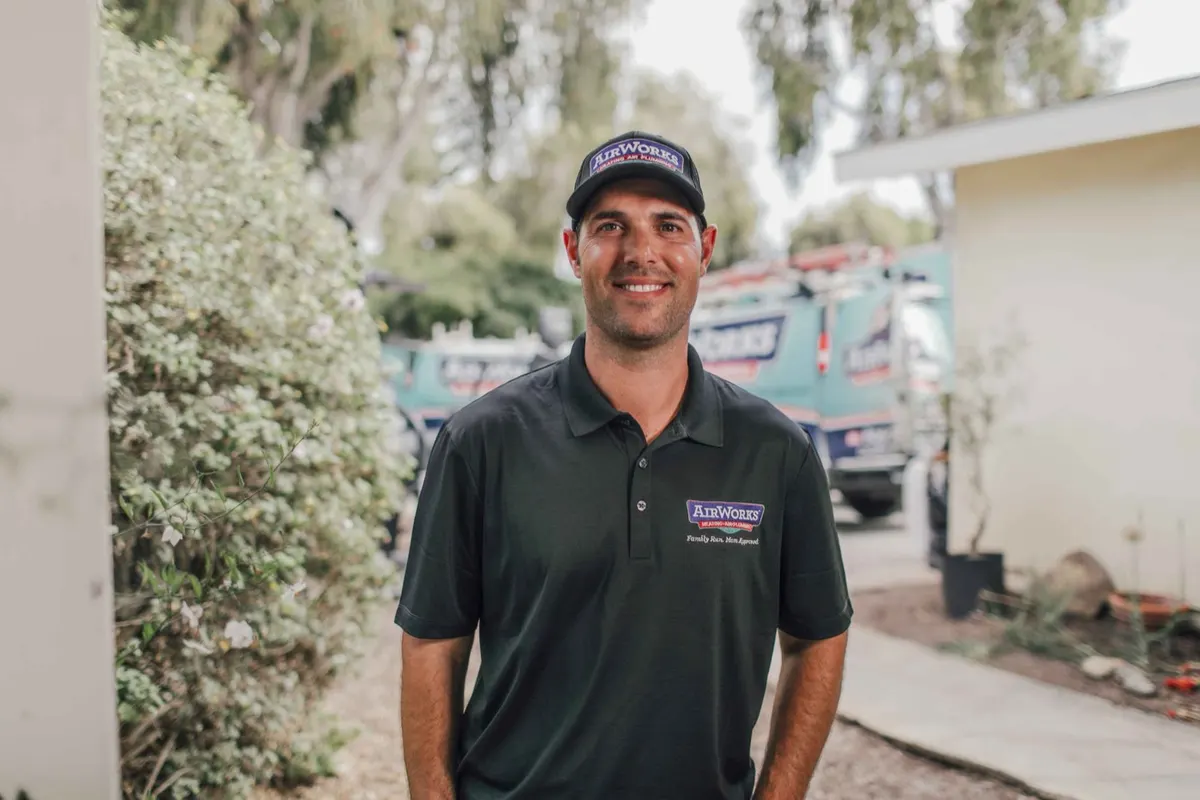
Kevin Allen
Co-Founder & Service Lead
Co-founded AirWorks in 2010 and has worked in Ventura County HVAC since 2002. Leads the service and installation crews — and the fix-what's-actually-broken ethic the company was built on.
Need Help?
Contact us today to discuss your needs. Our team is ready to help.
Related Articles
Options Comparisons for Homeowners: Heat Pump vs. Gas Furnace
Read Options Comparisons for Homeowners: Heat Pump vs. Gas FurnaceWhy Is Your Air Conditioner Hissing When Off? Causes and Diagnostics
Read Why Is Your Air Conditioner Hissing When Off? Causes and DiagnosticsHeat Pump vs. Gas Furnace: Technical Options Comparisons for Homeowners
Read Heat Pump vs. Gas Furnace: Technical Options Comparisons for HomeownersReady to Get Started?
Whether you need a repair, maintenance, or a new installation, our expert team is here to help.