
Trenchless vs. Traditional Sewer Repair: A Cost-Benefit Breakdown for Ventura Residents
Kevin Allen
Co-Founder & Service Lead

A broken sewer line under your driveway forces a tough choice. Understand the true total cost of ownership before deciding between traditional trenching and a trenchless repair premium.
The Hidden Realities of Sewer Line Failure Beneath Your Property
There is a widespread myth that fixing a broken underground pipe always means turning your property into a chaotic construction zone, but when you look at Trenchless vs. Traditional Sewer Repair: A Cost-Benefit Breakdown for Ventura Residents, the reality is quite different. The most stressful part of a plumbing failure is rarely the pipe itself; it is the location of the pipe. When a main sewer line fails directly beneath an existing paved driveway, a custom patio, or mature landscaping, homeowners are immediately faced with a critical decision point. In our extensive experience serving the local area, we know you must choose between paying the upfront equipment premium associated with modern trenchless repair methods or accepting the highly destructive, property-altering nature of traditional trenching.
For many property owners in Ventura, the initial instinct is to simply compare the baseline plumbing quotes. However, as our technicians often explain during consultations, evaluating this project based solely on the cost of pipe and direct labor misses the larger financial picture. A true evaluation requires a comprehensive total-cost-of-ownership analysis. Traditional excavation quotes almost never account for the secondary hardscape and driveway restoration costs required to put your property back together once the plumbing crew leaves. When you factor in the price of pouring new concrete, repaving asphalt, and replacing established gardens, the perceived savings of a traditional dig quickly evaporate.
If you are navigating a major lateral line failure and need guidance on the best path forward, securing expert plumbing in Ventura County is the vital first step toward protecting both your home's infrastructure and its surrounding property value.
How Traditional Trenching Impacts Your Property and Soil
To fully understand the differences between these two approaches, it is necessary to examine the mechanics and the unavoidable secondary consequences of the traditional excavation method. Traditional sewer repair relies on brute force. Over our years in the field, we've seen firsthand how this process involves bringing heavy machinery, such as backhoes and mini-excavators, onto your property to dig a deep, wide trench along the entire length of the failing sewer lateral. Because sewer lines rely on gravity, these trenches often need to be several feet deep, requiring massive earth removal.
The immediate destruction of surface elements is the most visible consequence of this method. If your sewer line runs under your driveway, the concrete slabs or asphalt must be saw-cut, jackhammered, and hauled away as debris. Established gardens, retaining walls, and custom walkways that sit in the path of the trench are completely dismantled. Our team frequently meets homeowners who are shocked to learn that standard plumbing contracts do not cover the subsequent hardscape and driveway restoration costs. Once the pipe is replaced and the dirt is pushed back into the hole, you are left to hire separate masonry and landscaping contractors to rebuild your yard from scratch.
Beyond the visible surface destruction, traditional trenching causes severe unseen damage to the existing soil matrix and natural compaction beneath your property. Ventura's coastal climate features wet winter cycles and dry summers, leading to expansive soil shifting. We've observed that over decades, the soil around your home settles into a highly compacted, stable matrix that helps support your foundation and hardscaping during these extreme wet-to-dry weather cycles. Heavy excavation completely disrupts this natural compaction. When the excavated dirt is backfilled into the trench, it is aerated and loose. Even with mechanical tamping, the soil will continue to settle unevenly over the next several years, often leading to sunken driveways, pooling water, and structural stress on nearby concrete slabs.
The True Scale of Heavy Excavation
When you authorize a traditional dig, you are authorizing a major civil engineering project on your front lawn. Based on the countless excavation sites our team has assessed, the true scale of heavy excavation involves several disruptive factors:
- Heavy equipment mobilization: Excavators and dump trucks require wide access paths, often driving over and cracking adjacent sidewalks or healthy lawn areas just to reach the dig site.
- Massive earth displacement: Digging a trench that is four feet deep and fifty feet long displaces a staggering volume of earth, which must be staged on your property, smothering grass and plants.
- Shoring and safety hazards: Deep trenches must be structurally shored up to prevent collapse, adding time and complexity to the project while creating a significant safety hazard in a residential neighborhood.
- Secondary contractor requirements: Relying on professional sewer replacement via traditional methods guarantees you will also need to hire pavers, concrete pourers, and landscapers to finish the job.
Trenchless Technology: Preserving Driveways and Mature Landscaping
Trenchless sewer repair represents a massive leap forward in underground infrastructure management, offering a modern alternative that entirely bypasses surface destruction. Rather than digging a trench to expose the entire length of the pipe, trenchless technology requires only one or two small access points—typically a small entry pit near the home and an exit pit near the municipal connection. Through these small access points, specialized equipment is used to either rehabilitate the existing pipe from the inside or pull a brand-new pipe into place.
There are two primary methods of trenchless repair: Cured-In-Place Pipe (CIPP) lining and pipe bursting. CIPP lining involves inserting an epoxy-saturated felt tube into the damaged pipe. Once in place, a bladder is inflated to press the epoxy against the old pipe walls, where it cures into a rock-hard, seamless structural pipe within a pipe. Pipe bursting, on the other hand, involves pulling a cone-shaped bursting head through the old pipe. The bursting head shatters the old clay or cast iron outward into the surrounding soil while simultaneously dragging a highly durable, seamless High-Density Polyethylene (HDPE) pipe into the exact same cavity.
Both methods successfully navigate beneath existing driveways, custom patios, and mature root systems without requiring any surface removal. Having performed these precise installations throughout the local area, we view trenchless technology not just as an advanced plumbing technique, but as a customer-first property preservation strategy that minimizes homeowner disruption. By leaving the earth undisturbed, you completely avoid the staggering hardscape and driveway restoration costs that plague traditional digs.
While the specialized robotic cameras, epoxy resins, and hydraulic pulling equipment carry a premium over a standard backhoe, the long-term value is undeniable. The seamless pipes used in trenchless applications are incredibly durable. According to Environmental Protection Agency (EPA) wastewater infrastructure guidelines and independent industry standards, these seamless liners and HDPE pipes boast an expected lifespan exceeding fifty years. Because they lack the joints and seams found in traditional PVC or clay pipes, they are virtually impervious to future root intrusion, shifting soils, and standard wear and tear for Ventura homeowners.
Total Cost of Ownership: Upfront Equipment vs. Hidden Restoration
To make an informed decision, homeowners must utilize a Total Cost of Ownership (TCO) framework. When our team sits down to compare a traditional quote against a trenchless quote side-by-side with a customer, we emphasize that it is only accurate if both quotes result in your property looking exactly as it did before the failure. Because traditional quotes leave you with an unpaved dirt trench, they are fundamentally incomplete.
The core objective framework for comparing these methods requires evaluating the primary plumbing costs against the hidden secondary costs. Traditional labor is often less expensive per hour, and the standard PVC materials used in an open trench are relatively cheap. However, the trenchless equipment premium—which covers the cost of proprietary epoxy resins, hydraulic bursting machinery, and specialized technician training—is often offset entirely when you factor in the secondary surface replacement.
If a failing pipe sits beneath a pristine, fifty-foot stamped concrete driveway, a traditional dig requires destroying that driveway. The TCO of the traditional method is the plumbing quote plus the massive expense of demolition, debris hauling, concrete forming, pouring, curing, and sealing. The TCO of the trenchless method is simply the upfront plumbing quote. When evaluating the true financial impact, the trenchless method frequently emerges as the more economical choice for developed properties.
Side-by-Side Cost Factor Breakdown
Understanding where your money goes is critical when investing in reliable plumbing repair. Here is a breakdown of how the costs are distributed across both methods:
| Cost Factor | Traditional Trenching | Trenchless Technology |
|---|---|---|
| Direct Labor & Plumbing Materials | Lower material costs, but highly labor-intensive due to manual digging and pipe laying. | Higher material costs (epoxy/HDPE), but significantly fewer labor hours required. |
| Heavy Machinery Mobilization | High costs for excavators, dump trucks, and hauling away displaced earth. | Minimal footprint; relies on compact hydraulic pumps and localized equipment. |
| Hardscape & Driveway Restoration | Extremely high. Requires hiring secondary contractors to rebuild demolished surfaces. | Zero to minimal. Driveways, patios, and walkways remain completely untouched. |
| Landscape Rehabilitation | High. Mature trees and gardens in the path of the trench must be removed and replaced. | Zero. Equipment operates strictly below ground, preserving root systems and topsoil. |
| Soil Stabilization | Poor. Disturbed soil matrix will settle unevenly over years, risking future concrete cracking. | Excellent. The surrounding soil matrix and natural compaction remain 100% intact. |

Project Timelines and the Practical Toll of Excavation
Beyond the financial calculations, the time investment and lifestyle disruption associated with each method are vastly different. A sewer line failure is already a highly stressful event that disrupts your daily routine. The repair process should not compound that stress by dragging on for weeks.
Trenchless sewer repair is renowned for its efficiency. Because there is no massive trench to dig, shore up, and backfill, our crews can typically complete the entire process in one to two days. The technicians arrive, dig the small access pits, clean and prep the line, pull the new pipe or liner into place, and restore service. By the time you return home from work on the second day, your plumbing is fully operational, and your yard looks exactly as it did before the failure.
In stark contrast, traditional excavation can take several days just for the plumbing phase, followed by weeks of subsequent hardscape restoration. We've seen the practical toll of this extended timeline firsthand. Consider the reality of losing a functional driveway for a month. You are forced to park on the street, haul groceries across a makeshift plywood bridge, and deal with the constant presence of mud, dust, and heavy machinery noise. Furthermore, an open excavation site on a residential property in Ventura presents serious safety and liability concerns. Deep trenches are hazardous for children, pets, and neighbors, requiring extensive barricades and constant monitoring until the final load of dirt is tamped down.
The typical timeline comparison breaks down into these sequential phases:
- Site Preparation and Access: Trenchless requires a few hours to dig access pits. Traditional requires a full day of concrete demolition and heavy equipment staging.
- The Main Repair Phase: Trenchless pulling or lining takes one day. Traditional trench digging, pipe laying, and manual grading take three to five days depending on depth.
- Backfilling and Rough Grading: Trenchless fills two small holes in under an hour. Traditional requires a full day of moving displaced earth back into the trench and mechanical tamping.
- Surface Restoration: Trenchless is finished. Traditional requires waiting weeks for secondary masonry contractors to schedule, pour, and cure a new driveway.
Combating Root Intrusion from Coastal Landscaping
One of the most persistent threats to underground plumbing we encounter in the region is root intrusion. Ventura's coastal environment supports lush, mature landscaping, but those deep root systems are constantly seeking moisture and nutrients. We regularly see older clay and cast-iron sewer laterals, which feature dozens of weak joints and seams, acting as prime targets. Once a microscopic root hair breaches a joint, it expands rapidly inside the nutrient-rich pipe, eventually forming a dense, impenetrable blockage that causes raw sewage to back up into the home.
Traditional trenching presents a devastating catch-22 when dealing with root intrusion. Because the roots causing the problem belong to the large, beautiful trees defining your property, digging a trench to replace the pipe often requires destroying the root system or cutting down the tree entirely. Homeowners are forced to choose between functional plumbing and keeping a decades-old oak or ficus tree.
Trenchless methods offer an elegant solution to this problem. Powerful hydro-jetting and mechanical descaling tools are first used to clear the roots from inside the pipe. Then, the trenchless equipment bursts through or seals off the existing root intrusions entirely from the inside. Because the process happens completely underground within the footprint of the original pipe, the tree above ground remains largely unharmed. Furthermore, the new seamless HDPE pipe or epoxy liner has no joints for future roots to exploit, permanently solving the intrusion issue.
Failing to address root intrusion properly can lead to severe secondary issues throughout the home, from slow drains to an overflow pipe leaking due to systemic pressure backups. By utilizing a trenchless approach, you eliminate the root threat permanently without sacrificing the mature coastal landscaping that makes your property unique, completely bypassing the massive hardscape and driveway restoration costs associated with tree removal and repaving.
Frequently Asked Questions About Sewer Replacement Methods
Is trenchless sewer repair worth the extra upfront cost?
Yes, in almost all scenarios where the pipe runs beneath developed property. The upfront equipment premium is typically much lower than the hardscape and driveway restoration costs required to rebuild your property after a traditional trench is dug. When you evaluate the total cost of ownership, trenchless is usually the more economical and far less stressful option.
Does traditional trenching ruin driveways and landscaping?
Absolutely. If the sewer lateral runs beneath a driveway, patio, or garden, traditional trenching requires the complete demolition of those surface elements to access the pipe below. Heavy excavators also compact adjacent topsoil and crack nearby sidewalks, leaving a massive restoration project in their wake.
How long does a trenchless sewer line last compared to traditional pipes?
Trenchless pipes and liners are designed to last over fifty years. The High-Density Polyethylene (HDPE) used in pipe bursting and the epoxy resins used in CIPP lining meet or exceed standard industry benchmarks for durability. Because they are seamless, they are actually more resistant to root intrusion and shifting soils than traditional jointed PVC or clay pipes.
What are the hidden costs of a traditional sewer replacement?
The hidden costs are everything required to put your property back together after the plumbing crew finishes. This includes concrete demolition, debris hauling, pouring new asphalt or concrete, replacing retaining walls, replanting mature trees, and fixing the uneven soil settling that occurs over the next several years.
Can trenchless technology be used if my sewer line has severe root intrusion?
Yes, trenchless technology is highly effective against severe root intrusion. Specialized mechanical cutters and high-pressure hydro-jetting are used to clear the roots out of the way before the new liner is installed or the bursting head is pulled through. However, if the old pipe has completely collapsed and lost its structural grade, a traditional spot repair may be required before trenchless methods can be applied.
Make a Confident Decision for Your Property's Future
When evaluating Trenchless vs. Traditional Sewer Repair: A Cost-Benefit Breakdown for Ventura Residents, the right choice ultimately balances the upfront plumbing quotes with the long-term goal of property preservation. Focusing solely on the lowest initial bid often leads to disastrous hidden expenses when the heavy machinery tears through your yard. By utilizing a Total Cost of Ownership framework, you can accurately weigh the trenchless equipment premium against the staggering hardscape and driveway restoration costs inherent to traditional digging.
Evaluating the true total cost enables a confident go/no-go decision that protects both your home's infrastructure and its curb appeal. Every property layout is unique, and the specific location of your lateral line dictates the best approach. We encourage homeowners to seek a thorough, objective evaluation of their specific sewer line, utilizing high-definition camera inspections to pinpoint the failure without turning a single shovel of dirt. As your trusted local experts, we invite you to schedule a professional inspection today to get a comprehensive estimate and discover how trenchless technology can save your driveway, your landscaping, and your peace of mind.
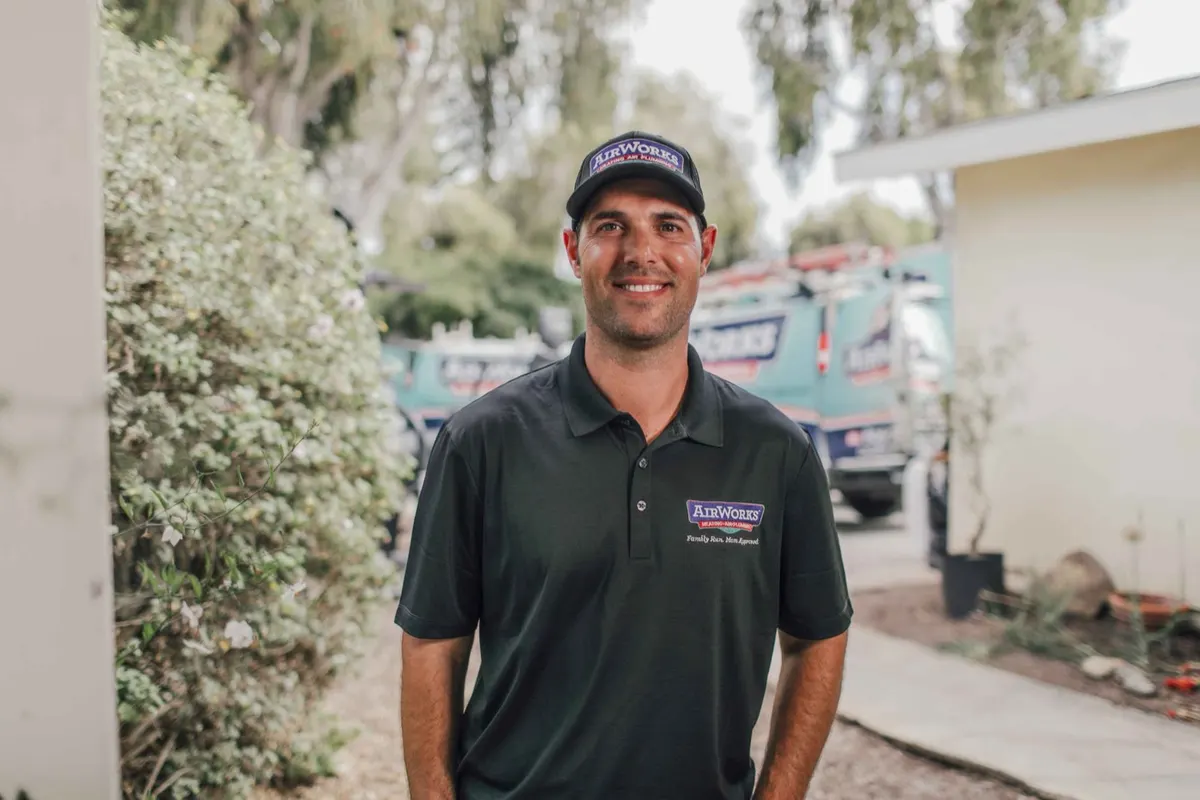
About the Author
Kevin Allen
Co-Founder & Service Lead
Co-founded AirWorks in 2010 and has worked in Ventura County HVAC since 2002. Leads the service and installation crews — and the fix-what's-actually-broken ethic the company was built on.
Need Help?
Contact us today to discuss your needs. Our team is ready to help.
Related Articles
Options Comparisons for Homeowners: Heat Pump vs. Gas Furnace
Read Options Comparisons for Homeowners: Heat Pump vs. Gas FurnaceWhy Is Your Air Conditioner Hissing When Off? Causes and Diagnostics
Read Why Is Your Air Conditioner Hissing When Off? Causes and DiagnosticsHeat Pump vs. Gas Furnace: Technical Options Comparisons for Homeowners
Read Heat Pump vs. Gas Furnace: Technical Options Comparisons for HomeownersReady to Get Started?
Whether you need a repair, maintenance, or a new installation, our expert team is here to help.