Why Your AC Condensate Drain Line Keeps Clogging Every July
Kevin Allen
Co-Founder & Service Lead

Recurring mid-summer AC water backups are rarely just dirt. If your drain line clogs days after being cleared, you are likely fighting a biological algae cycle.
The Mid-Summer AC Drain Line Dilemma
July brings the kind of blistering heat that makes your air conditioner your home's most critical appliance, but it is also the prime time for a highly specific frustration. If you are wondering why your AC condensate drain line keeps clogging every July, you are definitely not alone. You notice water pooling around your indoor unit, you clear the blockage on a Saturday, and by the following Thursday, the exact same backup happens again. It feels like a never-ending chore that leaves your home vulnerable to water damage during the hottest weeks of the year.
Here is the thing: treating recurring drain clogs is our team's most common mid-summer callback here in the local area. In our years of servicing residential cooling systems, a pattern we see often is homeowners assuming that a clogged drain line is simply packed with household dust, pet hair, or dirt that bypassed the air filter. While debris certainly plays a role, our technicians can confirm that a clog returning just days after being cleared is rarely just dirt. You are likely dealing with a biological issue that thrives in peak season humidity, creating a stubborn barrier inside your plumbing.
When you face a mid-summer July backup that refuses to stay clear, you reach a crucial decision point. You can continue to repeatedly treat the symptom by clearing the physical blockage every few days, or you can address the underlying biological growth conditions in the drain line to stop the cycle entirely. Understanding the true nature of this mid-summer dilemma is the first step toward a permanent fix.
| Clog Characteristic | Standard Debris Blockage | Biological Bloom Clog |
|---|---|---|
| Composition | Dust, pet hair, loose insulation | Algae, mold, and thick biofilm |
| Recurrence Rate | Rarely returns once fully cleared | Often returns within 5 to 10 days |
| Texture | Dry or muddy accumulation | Slimy, gel-like, and highly cohesive |
| Primary Cause | Poor air filtration or missing filters | Continuous moisture and high heat |
The Science of High-Volume Condensation
To understand why these blockages happen, you have to look at the sheer volume of water moving through your cooling system. Your air conditioner does not just cool the air; it conditions it by removing heavy, uncomfortable humidity. As warm indoor air blows across the freezing cold evaporator coil, moisture is pulled out of the air, turning into liquid condensation. This process is identical to the heavy sweat that forms on the outside of an ice-cold glass of water on a hot afternoon.
During a typical summer day, a central air conditioner can produce 5 to 20 gallons of condensation. That is a massive amount of water constantly dripping into the drain pan and flowing out through the PVC condensate pipe. In our experience keeping homes cool across the local area, intense summer heat waves force HVAC systems into maximum duty cycles. They run continuously from late morning until well after sunset. Because the system almost never powers down, the condensate line remains permanently wet, maximizing the condensation output and creating an unrelenting flow of water.
- Latent cooling: The process of removing moisture from the air, which accounts for a massive portion of your system's workload.
- Continuous saturation: Because the AC runs constantly in July, the PVC pipe never gets a chance to dry out.
- The baseline environment: This non-stop flow of 5 to 20 gallons of water creates the perfect, permanently damp incubator for issues to develop.
This high-volume water production is a sign that your air conditioner is doing its job perfectly. However, this unrelenting moisture is exactly what sets the stage for the stubborn blockages that plague homeowners every summer. You are essentially operating a small, dark, indoor river inside your utility closet.
Biological Blooms: The Real Culprit Behind Recurring Clogs
Once you understand the volume of water involved, it requires a shift in how you view the problem. You must shift the paradigm from a simple "dirt blockage" to a rapid "algae or mold bloom." The reason your system backs up repeatedly is that algae and mold thrive in dark, damp environments where temperatures sit comfortably between 70 and 85 degrees Fahrenheit. These temperatures perfectly match the internal conditions of an AC drain line sitting in a hot garage, attic, or utility closet during the summer months.
Unlike static debris that simply gets stuck in a pipe, biological growth is a living organism. When airborne spores inevitably make their way into your HVAC system, they find a welcoming home in the wet drain pan. As soon as they settle into that 70-to-85-degree water, they begin to feed and multiply. They form a thick, gelatinous biofilm that coats the inner walls of the PVC pipe. As the days get hotter and the AC runs longer, this biofilm expands rapidly, eventually choking off the narrow pipe entirely.
This aggressive growth cycle is the exact answer to why your AC condensate drain line keeps clogging every July. The extreme mid-summer heat provides the temperature, and the constant AC operation provides the water. It is not that more dirt is entering your system; it is that the living algae inside the pipe is reproducing faster than the water can wash it away.

Why Physical Clearing Doesn't Stop the Cycle
When a homeowner discovers a backed-up drain line, the immediate reaction is to grab a tool to force the water out. While this solves the immediate crisis of an overflowing drain pan, it fundamentally fails to address the root cause of the problem. There is a massive scientific difference between clearing a physical clog and neutralizing a biological bloom.
When you encounter a recurring issue in mid-summer July, relying solely on physical extraction is a losing battle. The warm, wet environment allows the remaining algae to immediately reproduce. This rapid reproduction cycle is the scientific reason the line clogs again so quickly, turning a simple maintenance task into a weekly chore.
The Limitations of Wet/Dry Vacuums
The quick fix: Attaching a wet/dry vacuum to the outside termination point of the drain line is the most common method for clearing a backup. Our technicians frequently arrive at homes where a homeowner has used this exact trick to easily pull out the bulk mass of the clog, along with gallons of trapped water. The pipe appears clear, and the AC begins draining normally again.
However, vacuums only remove the central mass of the blockage. They cannot sanitize the pipe walls. The sticky biofilm remains clinging to the inside of the PVC, completely unaffected by the suction. Furthermore, moisture remains trapped in the line, providing instant fuel for the next bloom. The vacuum has simply pruned the algae, rather than eliminating it.
Microscopic Spores Left Behind
Algae and mold spores are invisible to the naked eye and incredibly resilient. Even if you use compressed air or a stiff brush to push the blockage out, millions of microscopic spores are left behind in the damp environment.
Without chemical or biological neutralization, the bloom cycle restarts immediately. Within hours of the system turning back on and delivering fresh condensation to the pipe, those spores begin to multiply. Because the foundational layer of the biofilm was never removed, the new growth has a perfect surface to cling to, allowing the clog to rebuild itself in a matter of days.
The Risks of Ignoring a Recurring Biological Clog
Allowing this cycle of clogging, clearing, and re-clogging to continue throughout the summer is a risky game. A backed-up condensate line is not just an annoyance; it is a direct threat to your home's infrastructure and your HVAC system's functionality. When the water cannot exit the home, it has no choice but to back up into the primary drain pan located beneath the indoor evaporator coil.
Severe water damage: If the primary pan overflows, the water rapidly escapes the air handler. If your unit is located in the attic, this water will pool on the floorboards and eventually soak through your ceiling drywall. This leads to massive structural damage, ruined paint, and the potential for ceiling collapses. If you ever notice an overflow pipe leaking, it is a critical warning sign that your primary drain has failed and water is actively threatening your home.
Degraded indoor air quality: Biological growth does not always stay confined to the PVC drain pipe. If the pan remains constantly full of stagnant, algae-filled water, that biological growth can spread upward into the evaporator coil. As air blows across the contaminated coil, it picks up mold spores and musty odors, distributing them through your ductwork and into the air your family breathes.
System shutdowns during peak heat: Modern air conditioning systems are equipped with overflow safety float switches. These small devices sit in the drain pan or on the edge of the pipe. When water backs up and lifts the float, the switch instantly cuts power to the air conditioner to prevent a flood. While this saves your ceiling, it leaves you without air conditioning during the hottest days of the year until the underlying biological clog is fully resolved.
Breaking the Cycle: Professional Treatment and Prevention
To truly solve the mid-summer July drain line dilemma, you have to move beyond temporary physical clearing and focus on long-term prevention. The necessity lies in neutralizing the biological growth rather than just temporarily removing its bulk mass. At our business, we approach recurring clogs not just as technicians clearing a pipe, but as specialists treating a biological ecosystem.
Routine maintenance scheduling is the best way to proactively manage the drain line ecosystem before peak summer hits. However, if you are already trapped in the cycle of recurring clogs, professional intervention involves specific, targeted steps to restore the pipe.
Targeted Biological Neutralization
- Thorough extraction: Professionals will still begin by removing the bulk of the standing water and the primary blockage to restore flow.
- Chemical neutralization: Once the line is clear of heavy water, technicians use specific, professional-grade solutions designed to destroy microscopic spores. These treatments break down the sticky biofilm without damaging or degrading the PVC pipes.
- Residual protection: High-quality treatments are designed to leave a residual barrier inside the pipe. This active coating prevents new airborne spores from attaching to the walls and reproducing, effectively breaking the rapid growth cycle.
Long-Term Moisture Management
- Verifying gravity drainage: Even with a clean pipe, water that sits stagnant will eventually grow algae. Professionals ensure the drain line has the correct slope (or pitch). Over time, homes settle and pipes can sag, creating low spots where water pools. Correcting the slope ensures water flows rapidly out of the system.
- System airflow inspection: Technicians will inspect the system for proper airflow. Dirty filters or blocked vents can cause the evaporator coil to freeze and thaw rapidly, overwhelming the drain pan with sudden rushes of water that the pipe cannot handle. Regulating the condensation rate helps keep the drain line ecosystem stable.
Stop the Summer Clog Cycle for Good
The most important takeaway is that if you are constantly fighting a backed-up system, it is a biological issue, not just a dirt issue. Understanding exactly why your AC condensate drain line keeps clogging every July empowers you to stop wasting time on temporary fixes. By recognizing the role that extreme heat, continuous condensation, and rapid algae blooms play, you can take the right steps to protect your home.
We highly encourage proactive professional treatment to break the algae cycle permanently. If you are tired of wet/dry vacuuming your system every weekend, reaching out to our team for targeted AC troubleshooting services will provide the technical neutralization and peace of mind you need to enjoy the rest of your summer.
Frequently Asked Questions
Why does my AC drain line keep clogging?
Your drain line keeps clogging because peak summer heat and continuous AC operation create the perfect environment for rapid biological growth. While dirt and dust contribute, the primary cause of recurring clogs is usually a fast-growing algae or mold bloom. These organisms form a thick biofilm inside the wet pipe that expands until it blocks the flow of water.
How do I stop algae from growing in my AC drain line?
Stopping algae requires neutralizing the spores and preventing them from reattaching to the pipe walls. This is best achieved through routine professional maintenance that applies specialized, PVC-safe biocides or algaecides. Additionally, ensuring your drain line has the proper downward slope prevents water from sitting stagnant, which removes the breeding ground for new growth.
Can I put vinegar in my AC drain line?
Many homeowners use a cup of white vinegar poured down the access pipe as a mild, DIY preventive measure to deter algae. While vinegar is safer for PVC than harsh chemicals like bleach, it is often not strong enough to break down a severe, established biofilm. It is best used as a light maintenance step rather than a cure for a fully blocked system.
How often should AC drain lines be cleaned?
AC drain lines should be professionally inspected and cleaned at least once a year, ideally during a spring tune-up before the heavy summer cooling season begins. In climates with extreme heat and high humidity, or if your system runs constantly, having the line checked twice a year can prevent surprise mid-summer backups.
What temperature does algae grow fastest in AC lines?
Algae and mold thrive most aggressively in dark, damp environments where temperatures range between 70 and 85 degrees Fahrenheit. Because the water dripping off your evaporator coil often sits right in this temperature band as it travels through a hot attic or garage, the PVC pipe becomes an ideal incubator during peak summer months.
Is a recurring AC clog a sign of a bigger problem?
Yes, a clog that returns frequently can indicate underlying issues beyond just algae growth. It often points to a sagging drain line that lacks the proper gravity slope, allowing water to pool constantly. It can also indicate severe airflow issues or a deeply contaminated evaporator coil that is continuously shedding biological matter into the drain pan.
About the Author
Kevin Allen
Co-Founder & Service Lead
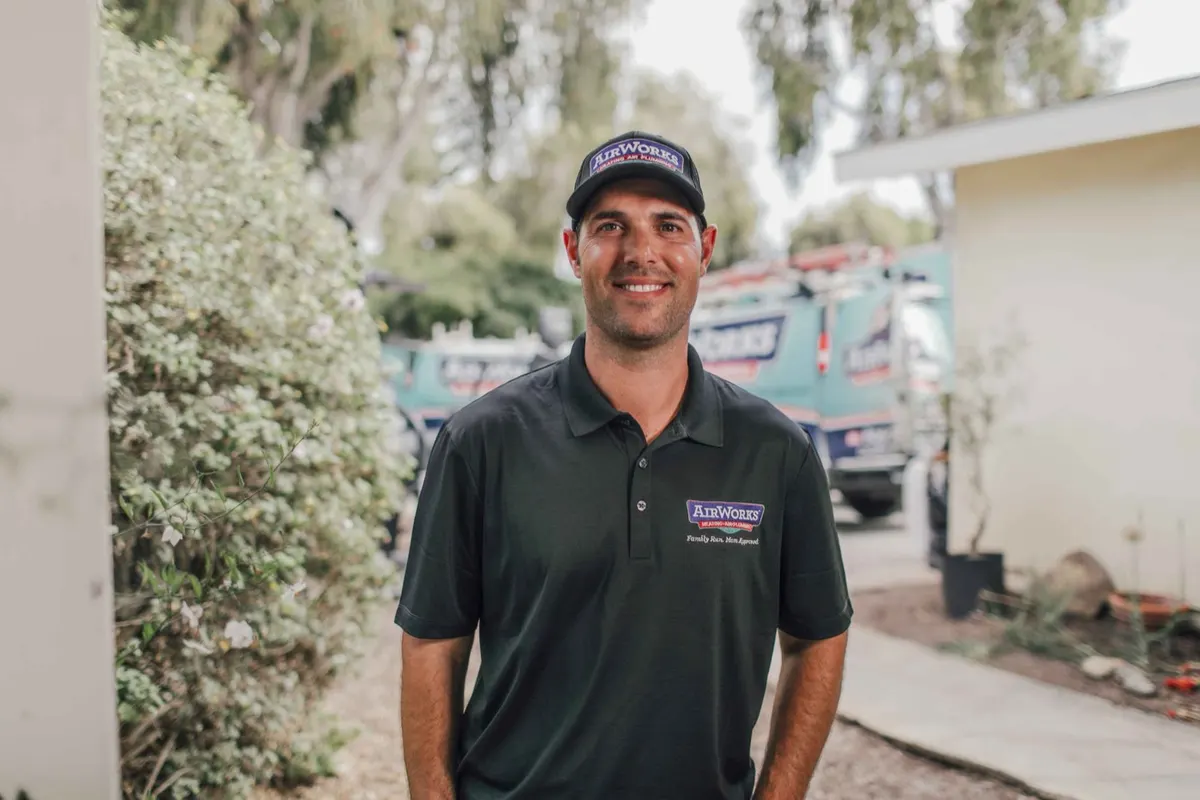
Co-founded AirWorks in 2010 and has worked in Ventura County HVAC since 2002. Leads the service and installation crews — and the fix-what's-actually-broken ethic the company was built on.
Need Help?
Contact us today to discuss your needs. Our team is ready to help.
Related Articles
Options Comparisons for Homeowners: Heat Pump vs. Gas Furnace
Read Options Comparisons for Homeowners: Heat Pump vs. Gas FurnaceWhy Is Your Air Conditioner Hissing When Off? Causes and Diagnostics
Read Why Is Your Air Conditioner Hissing When Off? Causes and DiagnosticsHeat Pump vs. Gas Furnace: Technical Options Comparisons for Homeowners
Read Heat Pump vs. Gas Furnace: Technical Options Comparisons for HomeownersReady to Get Started?
Whether you need a repair, maintenance, or a new installation, our expert team is here to help.