How R-454B Refrigerant Changes Impact Your Upcoming AC Replacement
Kevin Allen
Co-Founder & Service Lead

Facing a failing air conditioner during the EPA's regulatory shift? This straightforward breakdown helps you decide whether to replace your system now or wait for new R-454B technology.
Navigating the Changing Landscape of AC Refrigerants
If your cooling system is struggling to keep your home comfortable, you are likely wondering exactly how R-454B refrigerant changes impact your upcoming AC replacement. Your air conditioner is running constantly, but the house still feels warm, and you know a major repair or a full system replacement is on the horizon. However, the heating and cooling industry is currently in the middle of a massive regulatory shift. At our business, our team typically sees homeowners across the local area struggling to decide how this industry-wide transition impacts the cost, timing, and technology of a necessary AC replacement.
You are facing a distinct dilemma: do you invest in current, proven cooling technology right now, or do you wait for the next generation of cooling systems to hit the market? Making the wrong choice could mean making a substantial financial investment in a system that becomes expensive to maintain, or suffering through brutal summer heat while waiting for new equipment to become available. The core decision point is whether to replace a failing AC unit now using existing refrigerant technology or hold out for the new standards.
To make an informed choice, you need to understand the upcoming EPA phase-out deadlines for older refrigerants. The regulatory jargon can be overwhelming, filled with acronyms and environmental metrics. However, when deciding to replace an AC unit ahead of the phase-out, the primary consideration is how these changes affect your wallet, your home's safety, and your equipment's longevity. By cutting through the noise, you can evaluate your current system's health and make a strategic choice that protects your comfort for the next fifteen years.
Understanding the EPA AIM Act and the Shift to R-454B
To understand why the industry is overhauling its equipment, you have to look at the legislation driving the change. The American Innovation and Manufacturing (AIM) Act is a federal mandate designed to phase down the production and consumption of hydrofluorocarbons (HFCs). These HFCs, including the current standard R-410A refrigerant, have a high Global Warming Potential (GWP). The goal is not to punish homeowners, but to transition the entire country toward more environmentally responsible cooling solutions.
The AIM Act establishes a strict timeline for manufacturers. They are required to reduce HFC production by 40% in 2024, and by 85% by the year 2036. Because manufacturers cannot produce as much of the old refrigerant, they must pivot to new chemical formulas. This is where the new standard comes in. The industry has largely settled on R-454B as the replacement. R-454B has a GWP of 466, which represents a massive 78% reduction in global warming potential compared to older legacy refrigerants.
Because the chemical composition is different, new R-454B A2L refrigerant systems operate under a different safety classification. You will often hear the term "A2L" thrown around in these discussions. In the safety classification system, "A" stands for non-toxic, and "2L" stands for mildly flammable. It is important to view this in plain, non-alarmist terms. Mildly flammable does not mean highly explosive; it means the substance requires a direct, sustained flame source and a highly specific concentration of leaked gas to ignite. Everyday household items like hairspray and nail polish remover are significantly more flammable than A2L refrigerants.
The Phase-Down Timeline Explained
The transition is happening in distinct stages. Understanding these milestones will help you plan your next move:
- January 1, 2024: The EPA mandated a 40% reduction in the baseline production of high-GWP HFCs. This squeezed the supply chain for older refrigerants.
- January 1, 2025: Manufacturers must stop building new residential air conditioning systems that use R-410A. All newly manufactured equipment must use a low-GWP alternative like R-454B.
- Sell-Through Period: Distributors and contractors are permitted to sell and install their existing inventory of R-410A systems until that inventory is depleted. Phase-down does not mean an immediate ban on using or installing existing stock.
How the Phase-Out Affects Your Current Air Conditioner
The problem: Many homeowners worry that the upcoming EPA phase-out deadlines mean their current air conditioner will suddenly become illegal to operate, forcing them into an unexpected and expensive early replacement.
The cause: This anxiety stems from confusing a "phase-down" of production with an outright "ban" on usage. The EPA regulates what chemical manufacturers can produce and what equipment factories can build. They do not regulate what you are allowed to keep running in your backyard. Existing R-410A systems will not be outlawed, and nobody is going to force your current, functioning unit into early retirement.
The solution: The most practical approach is to focus on the long-term realities of maintaining your older system. As the production of R-410A decreases over the next decade, the law of supply and demand will take effect. The refrigerant will become scarcer, which means the cost per pound will inevitably rise. If your current system develops a severe leak five or eight years from now, recharging it will be significantly more expensive than it is today.
Because of this, your routine maintenance schedules might shift. Preventative care becomes vastly more important when the cost of replacement fluids skyrockets. Keeping your coils clean, ensuring your blower motor is operating efficiently, and having a professional check your line sets for micro-leaks annually will protect your investment. For a deeper understanding of how often you should be checking these levels, reviewing an AC refrigerant frequency guide can help you plan your maintenance budget effectively over the next few years.
Weighing the Option to Wait for the Newest Technology
If your current air conditioner is still limping along, you might be tempted to delay your replacement and hold out for the newest R-454B A2L refrigerant systems. There are valid reasons to consider this path, provided your existing equipment can survive another season or two without requiring major financial investments.
The environmental benefits: The most significant advantage of waiting is environmental responsibility. Adopting a system with a 78% lower GWP aligns with modern energy efficiency goals. These new units are designed from the ground up to optimize the thermodynamic properties of R-454B, often resulting in exceptionally efficient heat transfer and lower monthly utility bills.
Updated technology and sensors: Because of the A2L classification, these upcoming systems are heavily engineered for safety. They feature integrated, updated leak detection sensors. If a sensor detects a refrigerant leak inside the home, the system is programmed to automatically shut down the compressor while simultaneously turning on the indoor blower fan. This rapidly dissipates any leaked gas, preventing it from ever reaching a flammable concentration. You are getting a highly advanced piece of machinery.
The reality of early adoption: However, waiting comes with its own set of challenges. During the early stages of the 2025 rollout, there will be limited equipment availability. Manufacturers are ramping up production, but specific tonnages or preferred models might be backordered. Furthermore, because these units require specific installation protocols and specialized components, the initial cost of the equipment is expected to be higher than the outgoing R-410A models. You have to weigh the benefits of new technology against the likelihood of higher upfront costs and potential supply chain delays.
The Case for Replacing Your Failing AC Unit Now
On the other side of the decision matrix is the choice to replace your failing system immediately using the current, readily available R-410A technology. If your unit is already breaking down frequently, waiting for upcoming EPA phase-out deadlines to pass might be a risky gamble.
Proven reliability: Current R-410A technology has been the industry standard for over a decade. The equipment is highly refined, the parts are universally available in every supply house, and the installation procedures are second nature to experienced technicians. You are investing in a proven, mature technology that has had all the manufacturing bugs worked out years ago.
Avoiding climate-driven emergencies: The local climate plays a massive role in this decision. In our experience serving the local area, our team typically sees that risking a mid-summer breakdown on a failing system is dangerous. Nursing a dying compressor through peak heat while waiting for new R-454B stock to arrive leaves your home vulnerable to severe discomfort and potential health hazards. When the heat wave hits, you need reliable cooling immediately, not a backordered promise.
Full lifespan of serviceability: A common misconception is that an R-410A system installed today will be obsolete in five years. This is simply not true. A new system installed right now will still have a full 12 to 15-year lifespan of serviceability. Manufacturers are legally required to produce replacement parts for years to come, and reclaimed R-410A will remain available for servicing. Replacing now secures your comfort immediately, often at a lower initial price point than the upcoming next-generation models.
A First-Hand Look at Installation and Safety Updates
The transition to R-454B A2L refrigerant systems isn't just a change in the factory; it fundamentally changes how technicians work in your home. At our business, our team is actively navigating these industry changes, undergoing the necessary A2L training, and preparing to guide homeowners in the local area through safe, compliant installations. Because of this hands-on preparation, we see exactly what this looks like at the field level.
Demystifying the updated safety standards is critical. Here is what A2L truly means for your home's air conditioning installation:
- Advanced ventilation requirements: New installations will require specific calculations regarding the volume of air in your home versus the total charge of refrigerant in the system. This ensures that even in the event of a total line rupture, the gas cannot concentrate enough to pose a risk.
- Active mitigation boards: The indoor air handler or furnace will be equipped with an active mitigation control board. This board communicates constantly with the new leak detection sensors.
- Spark-free environments: The internal components of the new air handlers, such as contactors and relays, are sealed or redesigned to prevent any accidental sparking during normal operation.
- Specialized technician training: Technicians are undergoing rigorous, specialized training to handle the transition smoothly. This includes learning how to use new, spark-proof recovery machines, specialized vacuum pumps, and specific brazing techniques required for A2L chemicals.
The transition requires a higher level of precision from the installer. The days of "eyeballing" a refrigerant charge are entirely over. The new systems demand exact, mathematically verified installations to ensure both peak efficiency and absolute safety.
Your Practical Go/No-Go Decision Matrix
Making the right choice comes down to the current condition of your equipment. Use this practical framework to evaluate your situation ahead of the upcoming EPA phase-out deadlines.
| Current System Status | Recommendation | Reasoning |
|---|---|---|
| Under 10 years old, running well | Wait and Maintain | Your system still has years of life left. Keep up with annual maintenance to prevent leaks and wait for the new R-454B technology to mature. |
| Over 12 years old, frequent repairs | Replace Now | Nursing a dying system is expensive. Replace now with proven R-410A equipment to avoid a peak-season emergency and secure lower upfront costs. |
| Catastrophic failure today (e.g., dead compressor) | Replace Now | Waiting for upcoming models is not feasible without cooling. Install a new R-410A system immediately to restore your home's safety and comfort. |

Common Questions About the 2025 Refrigerant Transition
Should I buy a new AC now or wait for the new refrigerant?
The short answer is that it depends entirely on the health of your current system. If your air conditioner is over a decade old and requires frequent, expensive repairs, replacing it now with a proven R-410A system is the safest financial choice. If your system is relatively new and running efficiently, you should wait for the new R-454B A2L refrigerant systems to become the standard.
Will R-410A be banned?
No, R-410A will not be banned for use in existing systems. The EPA regulations target the manufacturing and production of new equipment and virgin refrigerant, not the operation of units already installed in homes. You can legally continue to run, repair, and maintain your current R-410A air conditioner for the rest of its natural lifespan.
What is the new AC refrigerant for 2025?
The primary new refrigerant for residential air conditioning in 2025 is R-454B. This chemical blend was chosen because it offers a 78% lower Global Warming Potential (GWP) than the outgoing standard, meeting the strict environmental requirements set by the federal AIM Act while providing excellent cooling capacity.
Is R-454B flammable?
R-454B is classified as an A2L refrigerant, which means it is mildly flammable. However, it requires a significant concentration of leaked gas and a direct, sustained open flame to ignite. It is vastly less flammable than common household items like rubbing alcohol or aerosol sprays, and new systems are equipped with advanced sensors to prevent any risk.
What does A2L mean for home air conditioning?
For home air conditioning, the A2L classification means that new equipment will come with enhanced safety features built directly into the unit. This includes active leak detection sensors and automated ventilation protocols that shut off the compressor and run the blower fan if a leak is detected, ensuring the gas safely dissipates.
How will the R-454B transition affect my current AC's lifespan?
The transition itself does not directly shorten your current AC's lifespan, but it will eventually make major repairs more expensive. As the production of older refrigerants decreases, the cost to recharge a system after a leak will rise. Regular, proactive maintenance is the best way to protect your current system and maximize its remaining years of service.
Making an Informed Choice for Your Home's Comfort
Ultimately, navigating the upcoming EPA phase-out deadlines doesn't have to be stressful. The right choice depends entirely on the current health of your existing equipment and your tolerance for enduring a potential breakdown during the hottest months of the year. Both replacing now with proven technology and waiting for the next generation of efficiency are valid paths when guided by a clear understanding of your home's needs.
You do not have to make this decision in the dark. The most effective way to determine your best path forward is to seek a professional evaluation of your current system. A thorough inspection will reveal whether your unit can reliably handle another summer or if a proactive replacement is the smarter financial move. By getting the facts about your specific equipment, you can secure a straightforward, stress-free decision framework that guarantees your home stays cool and comfortable for years to come.
About the Author
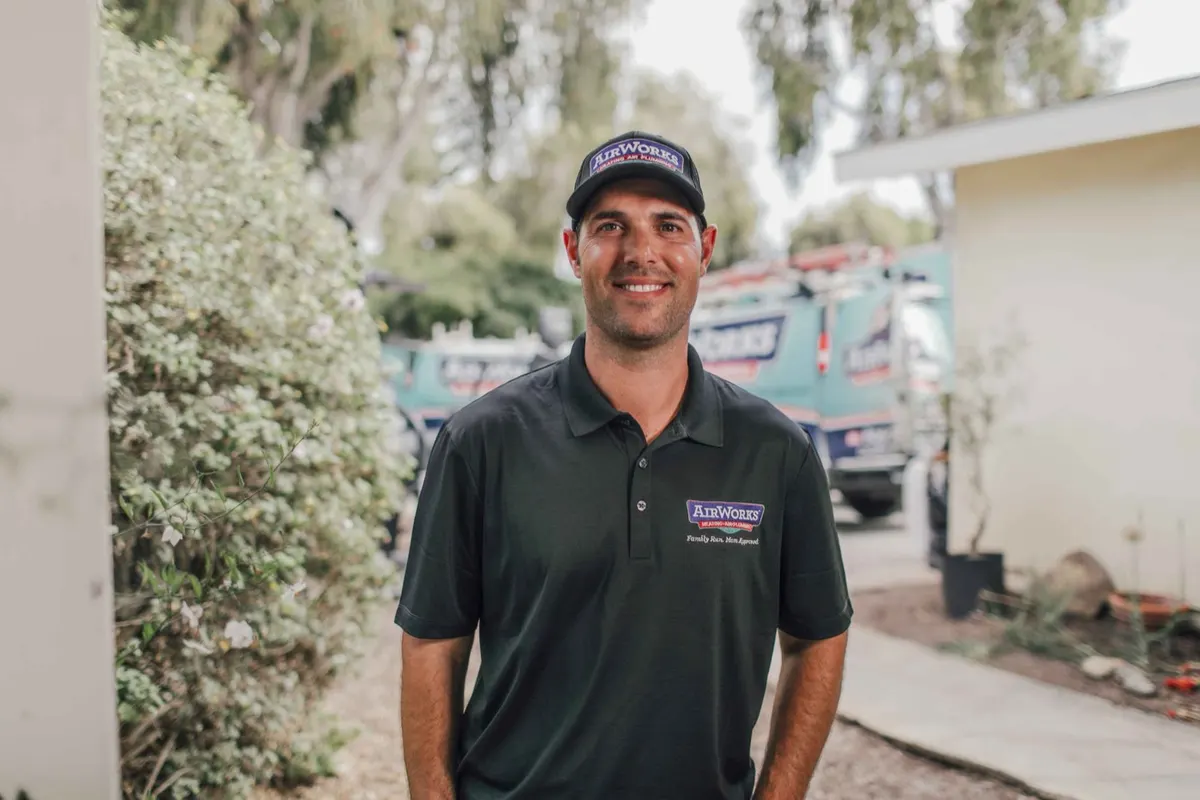
Kevin Allen
Co-Founder & Service Lead
Co-founded AirWorks in 2010 and has worked in Ventura County HVAC since 2002. Leads the service and installation crews — and the fix-what's-actually-broken ethic the company was built on.
Need Help?
Contact us today to discuss your needs. Our team is ready to help.
Related Articles
Options Comparisons for Homeowners: Heat Pump vs. Gas Furnace
Read Options Comparisons for Homeowners: Heat Pump vs. Gas FurnaceWhy Is Your Air Conditioner Hissing When Off? Causes and Diagnostics
Read Why Is Your Air Conditioner Hissing When Off? Causes and DiagnosticsHeat Pump vs. Gas Furnace: Technical Options Comparisons for Homeowners
Read Heat Pump vs. Gas Furnace: Technical Options Comparisons for HomeownersReady to Get Started?
Whether you need a repair, maintenance, or a new installation, our expert team is here to help.