Why Is Your Air Conditioner Hissing When Off? Diagnostics & Replacement Options
Kevin Allen
Co-Founder & Service Lead

Hearing a Hissing Sound After Your AC Shuts Off?
Hearing a strange noise from your outdoor unit can be stressful, especially when you are already researching options comparisons for homeowners facing unexpected equipment failures. At AirWorks Heating, Air & Plumbing, our technicians often receive frantic calls during the early fall transition from homeowners who walk past their condenser after a cooling cycle shuts off, expecting silence, but instead are greeted by a persistent hiss. That sound instantly raises questions about safety, impending repair bills, and whether your system is finally giving out. While some minor noises are a normal part of the cooling cycle winding down, a loud or continuous hiss often points to a system under severe stress. Catching this warning sign during the early fall transition provides a strategic window to evaluate your entire home comfort system before the cold weather sets in.
If you are concerned about strange noises coming from your cooling equipment, our comprehensive air conditioning services can pinpoint the problem before it escalates.
Normal Pressure Equalization vs. Problematic Refrigerant Leaks
To understand what your air conditioner is trying to tell you, it helps to know how the system operates under pressure. Your cooling equipment relies on a continuous loop of refrigerant, which transitions between high-pressure gas and low-pressure liquid to absorb and release heat. When the cycle ends, those pressures need to balance out.
The Sound of Normal Operation
Normal pressure equalization happens immediately after the compressor shuts down. As the high side and low side of the system balance out, you might hear a faint, light hissing or a soft whooshing noise. This sound is completely benign and typically lasts no more than a few seconds. It is simply the internal valves allowing the refrigerant to settle.
The Warning Signs of a Refrigerant Leak
Conversely, a continuous, loud hissing or bubbling sound is a major red flag. In our experience servicing Somis homes, this strongly indicates a high-pressure refrigerant leak. Because refrigerant operates under intense pressure, a crack in the copper lines, the evaporator coil, or the condenser coil will force the gas out rapidly, creating a distinct hissing noise. Refrigerant leaks are hazardous to the environment and detrimental to your equipment, requiring immediate, objective evaluation from our team rather than a quick do-it-yourself patch.
| Symptom | Normal Pressure Equalization | Refrigerant Leak |
|---|---|---|
| Duration | Lasts only a few seconds after shutting off | Continuous, lasting minutes or hours |
| Volume | Faint, soft whooshing sound | Loud, sharp hiss or bubbling noise |
| Cooling Performance | Home cools normally | System struggles to reach the set temperature |
| Physical Signs | None | Ice on coils or oily residue near the leak |
Accurate diagnostics are critical when these symptoms appear. For instance, during a recent early fall service call, our team was dealing with an undisclosed root cause affecting a local homeowner's system performance. We thoroughly investigated the equipment, determined the exact source of the problem, and provided clear advice for further checks. This commitment to honest, professional diagnostics ensures you are never sold unnecessary repairs for normal system sounds. If you are unsure about the noises your unit is making, reviewing what to check if your AC won't turn on can provide additional context for troubleshooting.
When a Hissing AC Signals a Failing Unit
A severe refrigerant leak is rarely an isolated issue; it is often a symptom of broader system degradation. When our team traces a hissing sound back to a fatal leak in an aging compressor or a deeply corroded coil, it usually means the unit has reached the end of its operational lifespan. The compressor is the heart of your cooling system, and replacing it is one of the most extensive repairs a homeowner can face.
Running a system with low refrigerant forces the equipment to overwork drastically. The compressor relies on the refrigerant not just to cool your home, but to cool the compressor motor itself. When the charge drops, the motor overheats, drawing excessive electricity and accelerating wear and tear. Eventually, this leads to catastrophic failure.
Why patching isn't always the answer:
- System age: If your unit is over a decade old, patching a leak is often a temporary fix for a deteriorating system.
- Refrigerant type: Older systems utilize obsolete refrigerants that are phased out and difficult to source, making recharges impractical.
- Efficiency loss: A patched system rarely regains its original efficiency, leaving you with higher utility bills.
When a major component fails during a pre-season tune-up, investing in a new system is often much more practical than patching an obsolete unit. Taking action during the early fall transition allows you to secure an emergency AC repair or a full replacement on your own timeline, rather than waiting for a complete breakdown.
Evaluating Your HVAC Replacement Options for Homeowners
Discovering that your air conditioner needs to be replaced opens the door to a broader conversation about your home's entire climate control strategy. Replacing an AC unit is the perfect time to evaluate the heating system as well, especially if your furnace was installed at the same time as the failing air conditioner. Because the indoor coil and the outdoor unit must communicate seamlessly, mismatched systems—where a new AC is paired with an old furnace—often suffer from reduced efficiency and premature breakdowns.
The Two Primary Replacement Paths
When our installation experts sit down with homeowners to look at a full system overhaul, we generally help them weigh two main options:
- Traditional Split System (Gas Furnace + AC): This setup uses a gas-powered furnace to generate heat during the winter and a standard air conditioner for summer cooling. It is the conventional standard for many older homes.
- Unified Heat Pump System: A heat pump handles both heating and cooling from a single unit. In the summer, it acts exactly like an air conditioner. In the winter, it reverses the flow of refrigerant to extract ambient heat from the outside air and pull it indoors.
Making this decision proactively avoids the stress of emergency replacements during the peak of winter heating demand. In Somis, CA, we regularly recommend heat pumps because the mild winter climate makes them highly efficient. Because temperatures rarely drop to extreme freezing levels, a heat pump can operate at peak performance year-round. This shifts the decision focus away from extreme heating capacity and heavily toward installation compatibility and infrastructure readiness.
Heat Pump vs. Gas Furnace: Ductwork Requirements
Transitioning from a traditional gas furnace to a modern heat pump is not always a simple plug-and-play swap. The two systems condition your home using fundamentally different mechanical processes, which directly impacts how air moves through your ductwork.
Gas furnaces generate heat through combustion. They create very hot air (often between 120°F and 140°F) and push it through the ducts in shorter, intense blasts. Because the air is so hot, the furnace doesn't need to move as much volume to warm the house. Heat pumps, however, transfer heat rather than generating it. They produce a milder, more consistent heat (usually around 90°F to 100°F). To achieve the same comfortable room temperature, a heat pump must move a significantly larger volume of air over a longer period.
The Static Pressure Problem:
Because heat pumps require higher airflow volumes, our crews frequently notice that existing gas furnace ductwork might be undersized for the new system. Pushing a high volume of air through narrow ducts increases static pressure—essentially creating resistance that the blower motor has to fight against.
- Increased noise: High static pressure creates loud whistling or rushing sounds at the vents.
- Short cycling: The system may overheat and shut down prematurely to protect itself.
- Premature failure: Blower motors forced to work against undersized ducts burn out much faster.
This is why having our licensed HVAC professionals evaluate your home's static pressure and duct condition is a vital step before finalizing a system choice. If the ducts are too small, they may need modifications or a transition to a multi-stage system that can manage airflow more effectively.
Electrical Panel Upgrades and System Compatibility
Beyond ductwork, the most significant infrastructure hurdle we see when switching from a gas furnace to a heat pump is the electrical panel. Gas furnaces use electricity primarily to run the blower motor and the ignition sequence, which draws a relatively small amount of power. The heavy lifting for heating is done by the natural gas.
When you transition to a heat pump, you are moving to a fully electric heating solution. The outdoor compressor requires a substantial amount of power to operate, and most heat pumps also include auxiliary electric heat strips inside the air handler to assist during unusually cold spikes.
Understanding Amp Draw
This transition often requires dedicated 220V circuits. While a gas furnace might run comfortably on a standard 110V circuit, a heat pump system demands significantly more capacity. Older homes built decades ago were often equipped with 100-amp electrical panels. Today, safely supporting a modern heat pump, along with all your other household appliances, frequently requires a full electrical panel upgrade to 200 amps.
During a routine early fall checkup, one of our AirWorks Heating, Air & Plumbing technicians evaluated a customer's heating setup, confirmed the system was operating safely, and even walked them through thermostat programming. This level of thoroughness highlights why a complete site inspection is mandatory. Mapping out these hidden infrastructure requirements ensures there are no surprises or blown breakers during installation. If you are considering a system upgrade, scheduling an AC inspection in Somis will help determine if your current electrical panel is ready for the transition.

Maximizing Generic Rebates During Your Fall Installation
Upgrading your home comfort system is a significant investment, but making the switch to high-efficiency equipment often unlocks various financial incentives. As the push for home electrification grows, programs at both the federal and state levels are designed to ease the transition from fossil fuels to electric alternatives.
Upgrading to high-efficiency systems, particularly heat pumps, may qualify for generic federal tax credits. These credits are designed to reward homeowners who improve their property's energy footprint. In addition to federal programs, state-level utility rebate programs often incentivize the transition from gas to electric heating. Because utility grids benefit from the installation of highly efficient, load-managed equipment, local power companies frequently offer rebates to homeowners who make the switch.
Taking advantage of the early fall transition is ideal because many utility rebate programs operate on annual budgets that can deplete by the end of the year. By planning your installation now, you position yourself to utilize these programs while funds are still available. We strongly advise our customers to consult with their utility provider or a qualified tax professional to verify current programs, eligibility requirements, and exact benefits before scheduling the installation.
Make an Informed Decision on Your Home's Comfort System
A hissing air conditioner is a critical warning sign that shouldn't be ignored, especially when it points to a major refrigerant leak or a failing compressor. Discovering this issue during the early fall gives you the advantage of time—time to properly evaluate whether repairing an obsolete unit makes sense, or if a full system replacement is the smarter long-term strategy.
Understanding the fundamental infrastructure differences between heat pumps and traditional gas furnaces is the key to a successful upgrade. By accounting for ductwork sizing, static pressure, and electrical panel capacities, you ensure that your new system will operate efficiently and reliably for years to come. Do not wait for the first winter freeze to find out your heating system cannot keep up. We encourage you to schedule a professional AC diagnostic with our licensed HVAC professionals to thoroughly evaluate your current setup and explore the best replacement options for your home.
Frequently Asked Questions
Is a hissing air conditioner dangerous?
A continuous hissing sound often indicates a high-pressure refrigerant leak, which can be hazardous. Refrigerant chemicals are harmful to the environment and can cause health issues if allowed to vent freely in enclosed spaces. Furthermore, running a system with a severe leak will quickly destroy the compressor, leading to catastrophic equipment failure.
Do I need to upgrade my electrical panel for a heat pump?
Transitioning from a gas furnace to a heat pump frequently requires an electrical panel upgrade. Heat pumps require dedicated 220V circuits and draw significantly more amperage than gas furnaces, which only use electricity for the blower motor. Older homes with 100-amp panels usually need to be upgraded to 200 amps to safely support the new system.
Can I use my existing ductwork for a heat pump?
While you can often use existing ductwork, it must be thoroughly evaluated by a professional first. Heat pumps transfer heat rather than generating it, requiring a larger volume of air to warm your home compared to the intense, low-volume heat of a gas furnace. If your existing ducts are too small, it will cause high static pressure, leading to noise and premature blower motor failure.
What are the disadvantages of a heat pump in mild climates?
In mild climates like ours in Somis, heat pumps have very few disadvantages and are highly efficient year-round. The primary hurdles are the initial installation requirements, such as potential electrical upgrades and ductwork modifications. Once properly installed, they provide excellent comfort and energy efficiency without the need for a separate combustion heating system.
Why is early fall the best time to replace an HVAC system?
Early fall provides a strategic window between the peak summer cooling season and the intense winter heating demand. Scheduling a replacement during this transition means you won't be left without climate control during extreme weather. It also allows you to thoughtfully evaluate your system options and infrastructure needs without the pressure of an emergency breakdown.
About the Author
Kevin Allen
Co-Founder & Service Lead
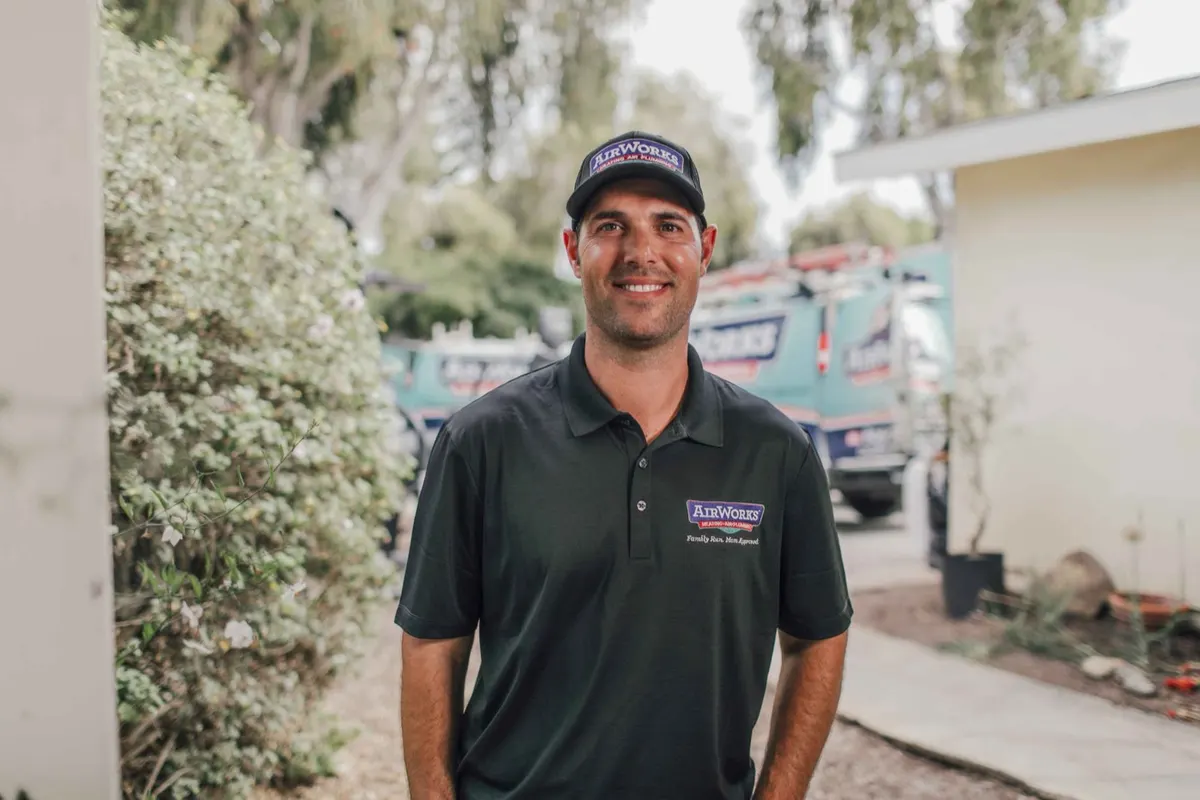
Co-founded AirWorks in 2010 and has worked in Ventura County HVAC since 2002. Leads the service and installation crews — and the fix-what's-actually-broken ethic the company was built on.
Need Help?
Contact us today to discuss your needs. Our team is ready to help.
Related Articles
Common Homeowner Questions Answered: Fall Heating Smells & AC Hissing
Read Common Homeowner Questions Answered: Fall Heating Smells & AC HissingWhy Is Your Air Conditioner Hissing When Off? Causes & Diagnostics
Read Why Is Your Air Conditioner Hissing When Off? Causes & DiagnosticsWhy Is Your Air Conditioner Hissing When Off? Diagnostics and Causes
Read Why Is Your Air Conditioner Hissing When Off? Diagnostics and CausesReady to Get Started?
Whether you need a repair, maintenance, or a new installation, our expert team is here to help.