Recognizing the Signs of a Small Gas Leak Around the Furnace During Fall Startup
Kevin Allen
Co-Founder & Service Lead

The November Heating Startup: Odors You Shouldn't Ignore
As the first chilly fall night arrives, knowing how to spot the signs of a small gas leak around the furnace during your November pre-winter furnace startup is a critical homeowner responsibility. When your heating system fires up for the very first time after months of sitting idle, it brings a mix of expected warmth and unexpected odors into your living space. The initial cycle often pushes out smells that can be confusing or even alarming to a homeowner who hasn't run their heater since early spring. While some of these smells are a completely normal part of the heating cycle, distinguishing between harmless seasonal dust and a dangerous chemical warning is a line you must know how to draw.
Here at AirWorks Heating, Air & Plumbing, we frequently help Somis homeowners navigate these seasonal startups. For reliable peace of mind, our team provides comprehensive HVAC services and fast emergency repair services to ensure your system operates safely all winter long.
Ignoring a faint, intermittent odor near the furnace can allow a minor mechanical issue to escalate rapidly into a significant safety hazard for your household. Many homeowners make the mistake of waiting to see if a strange smell simply dissipates on its own. However, the critical decision point for any family is knowing exactly when to shut off the gas supply and evacuate the premises rather than second-guessing the symptoms. Understanding the exact nature of your heating equipment and the fuels it uses is the foundation of a safe, comfortable winter season.
The Anatomy of a Furnace Startup
To understand why your furnace produces odors in the fall, it helps to know what happens inside the metal cabinet when your thermostat calls for heat. First, the inducer motor kicks on to clear the heat exchanger of any lingering gases. Next, the igniter glows hot, and the gas valve opens to allow fuel into the burners. Finally, the main blower fan engages, pushing air over the hot heat exchanger and distributing it through your ductwork. At any point in this sequence, settled debris or compromised fuel lines can introduce distinct smells into your home's airflow. Knowing which smells belong to the debris and which belong to the fuel is your first line of defense.
Normal Dust Burn-Off vs. Faint Mercaptan Odors
During the long summer months, dust, pet dander, and airborne lint naturally settle on your furnace's internal components, particularly the heat exchangers and burners. When the heating system fires up for the first time in late fall, this accumulated debris literally burns off the hot metal surfaces. This creates a temporary, distinct smell that many homeowners describe as resembling burning hair, toasted lint, or hot dust. If you are wondering why your heater smells like burning, this seasonal burn-off is almost always the culprit. The odor typically dissipates entirely within the first thirty to sixty minutes of operation and does not return for the rest of the season.
However, natural gas is an entirely different matter. In its natural state, the gas pumped into your home is completely odorless, colorless, and tasteless. This means a dangerous leak would naturally go completely undetected by human senses until it was too late. To prevent this, utility companies deliberately add a harmless chemical compound to the municipal gas supply. This additive creates a faint mercaptan (rotten egg) odor, serving as an unmistakable, built-in early warning system for leaks.
Comparing the Symptoms
Understanding the difference between these two distinct smells can save your home from a catastrophic event. Below is a breakdown of what to expect from normal operation versus a compromised gas line.
| Characteristic | Normal Dust Burn-Off | Faint Mercaptan Odor (Gas Leak) |
|---|---|---|
| Scent Profile | Burning hair, hot metal, or toasted lint | Rotten eggs, sulfur, or a skunk-like smell |
| Duration | Fades within 30 to 60 minutes of the first startup | Persists, worsens, or returns intermittently |
| Location | Noticeable throughout the home via the air vents | Strongest directly near the furnace or gas meter |
| Required Action | Open a window to ventilate; no repair needed | Immediate evacuation and professional intervention |

Why Micro-Leaks Develop During the Long Off-Season
Homeowners often wonder how a furnace that worked perfectly in March can suddenly develop a gas leak by November. The answer lies in the basic laws of physics and the nature of mechanical seals. Furnace gas valves, union joints, and threaded pipe connections are subjected to ongoing thermal expansion and contraction over their lifespan. Every time the furnace heats up and cools down, the metal components expand and shrink by microscopic amounts. Over years of use, this constant shifting puts immense stress on the connections that keep the highly pressurized natural gas safely contained.
In mild climates like Somis, CA, furnaces often sit completely dormant for 8 to 9 months out of the year. Over our years of providing heating maintenance across the area, the AirWorks Heating, Air & Plumbing team frequently sees this extended off-season significantly increase the likelihood of gas valve seals drying out compared to regions with year-round HVAC usage. Long periods of total inactivity cause rubber O-rings, internal gaskets, and pipe thread compounds to dry out, shrink, or subtly deteriorate in the ambient heat of a utility closet or attic.
The Hidden Impact of Thermal Expansion
When pressurized natural gas flows through these weakened, dried-out connections during the initial pre-winter startup, micro-leaks that formed silently over the long summer are finally revealed. Because the system was off, there was no active flow to push the mercaptan odor into the surrounding air. The moment the valve opens, the compromised seals fail to hold the pressure.
Preventative maintenance is the most effective way to catch these dried-out connections before they become active, dangerous leaks. A thorough inspection evaluates the integrity of the rubber and threading before the system is put under the stress of daily winter heating. Waiting until the system fails under pressure puts unnecessary risk on your household.
Visual and Auditory Clues of a Failing Gas Valve
While the distinct rotten egg smell is the most famous indicator of a problem, it is not the only sign. Micro-leaks can sometimes be so small that the odor is easily masked by household cleaners, cooking smells, or the normal dust burn-off of the furnace. Our technicians always remind customers that looking for additional, non-scent-based signs of a gas leak helps identify issues before they escalate. If you notice any of the following symptoms near your heating equipment, you should treat the situation as an active emergency.
- A faint hissing or whistling sound: Listen closely near the gas line, union joint, or shutoff valve while the heating system is totally dormant. A pressurized gas line pushing through a microscopic crack in a dried-out seal will often create a distinct, high-pitched hiss.
- Unexplained dead or dying houseplants: Natural gas displaces oxygen in the air and the soil. If you have potted plants situated near the utility closet or basement furnace area that suddenly wilt, turn yellow, or die despite proper watering, a slow gas leak may be suffocating them.
- Physical symptoms in your household: Pay attention to unexpected headaches, dizziness, fatigue, or nausea when spending time near the heating unit. Because gas displaces the breathable oxygen in an enclosed space, mild exposure can mimic the symptoms of a sudden flu or extreme fatigue.
- Soot or unusual discoloration: Look for black soot, scorch marks, or brownish discoloration around the burner area of the furnace. While this is primarily a sign of improper combustion, it is frequently linked to gas flow issues, failing valves, or compromised burner assemblies that require immediate professional attention.
Why Relying Solely on Smell is Dangerous
Depending entirely on your nose to detect a failing gas valve is a risky strategy. Drafty basements, strong cross-breezes from open windows, or a furnace located in a well-ventilated attic can easily disperse the mercaptan odor before it becomes concentrated enough for you to notice. Furthermore, the human nose is highly susceptible to missing gradual changes in ambient scents. By learning to look and listen for the physical and auditory clues of a failing system, you add critical layers of safety to your home maintenance routine.
Immediate Safety Protocols if You Suspect a Furnace Leak
The moment you suspect a gas leak—whether from a rotten egg odor, a hissing sound, or physical symptoms—your response must be immediate and decisive. This is the critical decision point where hesitation can lead to disaster. We outline these strict, non-negotiable safety steps to protect your property and your family. There is no room for DIY experimentation when dealing with highly combustible natural gas.
- Evacuate the premises immediately: Gather all family members and pets and leave the house. Do not stop to pack bags or investigate the furnace cabinet. Leave the doors wide open behind you to provide maximum ventilation and allow the trapped gas to escape.
- Do not touch any electrical devices: Do not turn on or off any light switches, unplug appliances, or use a cell phone while inside the home. Even the microscopic, invisible spark generated by flipping a standard light switch or a thermostat relay can be enough to ignite concentrated natural gas.
- Shut off the main gas supply if safe: If the main gas shutoff valve at the outdoor meter can be accessed safely without re-entering the immediate hazard zone, turn it off using an adjustable wrench. Give the valve a quarter turn until it is perpendicular to the pipe. If you do not know how to do this, do not attempt it—just evacuate.
- Call for emergency help from a distance: Once you are a safe distance away from the property—such as across the street or at a neighbor's house—contact your local utility company or dial emergency services to report the suspected leak.
The Danger of DIY Diagnostics
Never attempt DIY soap-and-water bubble tests or try to tighten gas valves with a wrench yourself. While you may have seen videos of people brushing soapy water onto pipes to look for bubbling leaks, doing this on an active, suspected leak without professional training can worsen the breach or accidentally cause a spark if metal tools strike against each other. Leave the diagnostics to the licensed professionals who have the proper safety gear and training.
How Professionals Detect Hazards That Human Senses Miss
When you call a licensed professional to investigate a suspected issue, they do not rely on their noses. Human noses quickly acclimate to smells—a biological phenomenon known as olfactory fatigue. This means that if you stand in a room with a faint, intermittent leak, your brain will stop registering the rotten egg smell after just a few minutes, tricking you into thinking the danger has passed. Because of this, faint leaks are incredibly difficult to track accurately without specialized technology.
Licensed technicians utilize specialized electronic combustible gas sniffers that can detect parts-per-million concentrations of raw gas in the air. These highly sensitive wands are passed over every inch of the gas line, the union joints, the shutoff valve, and the internal furnace components. When the wand detects even microscopic traces of combustible fuel, it triggers an escalating auditory alarm, allowing the technician to pinpoint the exact location of the failure.
Advanced Professional Methodology
Once the general area of the leak is identified by the electronic sniffer, professionals use industrial-grade micro-leak detector fluids to confirm the exact point of the breach safely. Unlike household dish soap, these specialized fluids are non-corrosive and formulated to create highly visible, long-lasting bubbles even on microscopic hairline fractures in the metal.
This level of professional intervention frequently prevents major disasters. In fact, a local homeowner recently reached out to our AirWorks Heating, Air & Plumbing team during the late fall season when a failing, aging heater began exhibiting concerning symptoms. Upon arrival, our technicians utilized professional diagnostic tools and discovered dangerous levels of carbon monoxide stemming from the compromised unit. Because we pinpointed the exact nature of the failure quickly, we were able to condemn the dangerous unit, order a replacement, and complete the installation—while advising the homeowner to check if federal tax credits or generic utility incentives applied to their new energy-efficient upgrade. This ensured a safe new heater was fully operational within two days. This comprehensive diagnostic testing ensures the entire heating system, from the gas line to the heat exchanger, is verified as completely safe before operation.
If you need your system evaluated for safety and performance, scheduling professional system inspection and testing is the only way to guarantee your equipment is secure.
The Importance of Cross-Trade Expertise for Gas Systems
Gas furnaces sit squarely at the complex intersection of two distinct trades: advanced HVAC mechanics and critical plumbing/gas line infrastructure. Diagnosing and resolving a gas valve issue safely requires specific licensing and a deep understanding of how these two systems interact. A standard heating technician who lacks proper gas line expertise might perfectly tune the blower motor but completely miss subtle union joint deterioration on the incoming fuel line during a routine check.
At AirWorks Heating, Air & Plumbing, we know that ensuring comprehensive safety requires a holistic approach to evaluating how your home's utilities interact with the climate control system. Working with a team that possesses rigorous safety testing protocols and licensed cross-trade expertise in handling both HVAC systems and plumbing/gas lines safely positions them as the uniquely qualified choice for this intersection of utilities. They understand the exact pressure requirements, the specific thread sealants required for natural gas, and the precise torque needed to secure a valve without cracking the internal housing.
Protecting Your Home's Infrastructure
When a gas leak occurs, the repair often involves shutting down the utility, cutting and re-threading iron pipes, installing new heavy-duty shutoff valves, and then recalibrating the furnace's internal manifold pressure to match the new flow. This is not a job for a handyman. It requires the precision and legal compliance of a dual-licensed professional who can guarantee that both the plumbing side and the heating side of the equation are flawlessly executed.
Frequently Asked Questions About Furnace Gas Safety
Is it normal for a furnace to smell like gas when first turned on?
A brief burning dust or toasted lint smell is entirely normal during the first startup of the season. However, a distinct rotten egg, skunk, or sulfur smell is never normal and indicates a potential fuel leak. If you smell raw gas, you should immediately shut down the system and seek professional help.
What does a minor gas leak smell like?
A minor natural gas leak smells like faint traces of sulfur, rotten eggs, or a skunk-like odor. Because the leak may be microscopic, the smell might be intermittent, becoming noticeable only when the furnace blower engages and circulates the air, or when you are standing directly next to the utility closet.
What should I do if I suspect a furnace gas leak?
You must evacuate the home immediately, leaving doors open behind you to allow the gas to vent. Do not touch any electrical switches, thermostats, or appliances, as a tiny spark can ignite the gas. Once you are safely outside and away from the property, call your utility company or emergency services.
Can a small gas leak cause carbon monoxide poisoning?
Raw natural gas and carbon monoxide are two different hazards; raw gas causes explosions and oxygen displacement, while carbon monoxide is a toxic byproduct of burning fuel. However, a malfunctioning gas system with compromised valves often produces carbon monoxide due to incomplete combustion, making both a severe risk to your household.
How often should furnace gas valves be inspected?
Furnace gas valves and connections should be professionally inspected annually, strictly prior to the winter heating season. Routine professional inspections catch dried seals, loose union joints, and minor deterioration before they become active leaks under the stress of daily winter operation.
Ensuring a Safe and Warm Winter with Expert Support
Recognizing the signs of a small gas leak around the furnace is the first and most crucial step in protecting your home and your loved ones. You should never leave your family's safety to chance or attempt dangerous, unverified DIY diagnostic methods when dealing with highly combustible fuels. Rely on clear, non-alarmist professional guidance to verify your system is completely secure from the gas meter to the heat exchanger. Schedule a thorough pre-winter evaluation today to enjoy the upcoming heating season with complete peace of mind, knowing your home is safe, warm, and professionally protected.
About the Author
Kevin Allen
Co-Founder & Service Lead
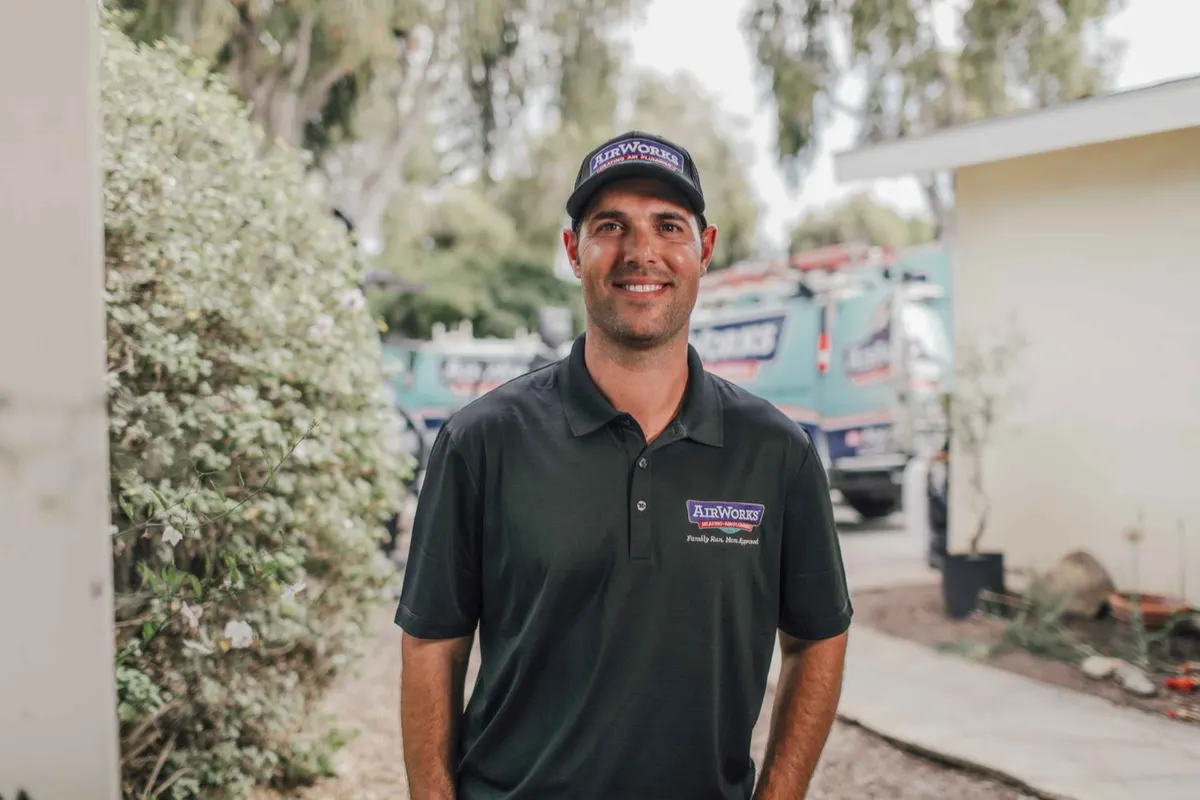
Co-founded AirWorks in 2010 and has worked in Ventura County HVAC since 2002. Leads the service and installation crews — and the fix-what's-actually-broken ethic the company was built on.
Need Help?
Contact us today to discuss your needs. Our team is ready to help.
Related Articles
How a Boiler System Heats a Home: Understanding the Mechanics Before the First Freeze
Read How a Boiler System Heats a Home: Understanding the Mechanics Before the First FreezeWhy Is My Boiler Making a Banging Noise? The Circulator Pump Connection
Read Why Is My Boiler Making a Banging Noise? The Circulator Pump ConnectionWhat Professionals Find When a Furnace Safety Switch Keeps Tripping in November
Read What Professionals Find When a Furnace Safety Switch Keeps Tripping in NovemberReady to Get Started?
Whether you need a repair, maintenance, or a new installation, our expert team is here to help.