Why Is My AC Running But Not Cooling? A Homeowner's Diagnostic and Comparison Guide
Kevin Allen
Co-Founder & Service Lead

Beating the Summer Heat: When Your AC Runs But Blows Warm Air
Summer weather shifts quickly, and discovering your air conditioner is running constantly while blowing warm air is an immediate frustration. When you are sweating through a heatwave, reviewing objective options comparisons for homeowners helps you decide whether you need a basic adjustment or a professional evaluation. You hear the familiar hum of the outdoor unit and the rush of air from the vents, but the temperature inside your house refuses to drop. This disconnect between the system running and the system actually cooling is one of the most common issues property owners face during peak cooling season.
With sustained high temperatures during California summers—especially in areas like Ventura County—minor airflow restrictions can rapidly turn into complete cooling failures. At our business, we've spent years helping homeowners across the local area navigate these exact situations. The longer a system runs without actively lowering the indoor temperature, the more strain it places on critical mechanical components like the compressor and blower motor. A typical search pattern our team sees is homeowners looking for repair vs replace local service advice once they realize the system is struggling to keep up with the afternoon heat.
This guide provides a neutral, structured framework to help you diagnose basic issues safely and weigh your long-term service options. If you are already dealing with a breakdown and need immediate help, scheduling an AC repair in Sacramento is the safest next step to protect your equipment from further damage.
Safe Initial Checks: Thermostats, Breakers, and Air Filters
Before you assume your air conditioning system has suffered a major mechanical failure, our technicians recommend a few safe diagnostic steps you can take. Many cooling complaints stem from simple oversights or minor maintenance issues that do not require a professional technician. By ruling out these basic factors, you can save time and narrow down the potential causes.
Here are the only safe DIY AC troubleshooting steps you should perform before calling a licensed professional:
- Verify the thermostat settings: It sounds overly simple, but thermostats are frequently bumped or incorrectly programmed. Ensure the system is set to "COOL" rather than "HEAT." Next, check the fan setting. If the fan is set to "ON," the blower will circulate air continuously, even when the cooling cycle is resting. This makes it feel like the system is blowing warm air. Switch the fan to "AUTO" so it only runs when actively cooling.
- Inspect the electrical panel: Your central air conditioner relies on two separate electrical circuits—one for the indoor air handler and one for the outdoor condenser. If the breaker for the outdoor unit trips, the indoor fan will continue to blow air, but the outdoor compressor will not chill the refrigerant. Check your main electrical panel for any tripped breakers and reset them carefully. If a breaker trips a second time, leave it off; this indicates a serious electrical fault.
- Replace a dirty air filter: A clogged air filter is the leading cause of poor cooling performance. When the filter is packed with dust, pet hair, and debris, the system cannot pull enough warm air across the indoor coils to cool your house. According to the Department of Energy, replacing a dirty, clogged filter with a clean one can lower an air conditioner's energy consumption by 5 to 15 percent while restoring proper airflow.
Once you have checked the thermostat, verified the breakers, and replaced a dirty filter, your safe troubleshooting boundary ends. Any further investigation requires opening electrical panels or handling refrigerants, which must be left to a qualified expert.
Airflow Restrictions and Condenser Blockages
If your basic checks did not resolve the warm air issue, the next most common culprit is a severe airflow restriction. An air conditioner does not actually "create" cold air; instead, it absorbs heat from inside your home and releases it outside. This heat transfer process relies entirely on unrestricted airflow across two specific sets of coils: the indoor evaporator coil and the outdoor condenser coil.
The outdoor condenser: Take a walk outside and look at your outdoor unit. Our team frequently responds to calls where the outdoor unit is surrounded by overgrown bushes, tall grass, or a buildup of leaves and cottonwood. The outdoor unit needs at least two feet of clear space on all sides to exhaust the heat it pulls from your house. If the metal fins on the outside of the unit are blanketed in debris, the heat remains trapped in the system. The compressor will continue to run, consuming massive amounts of electricity, but the air blowing from your vents will remain stubbornly warm.
The indoor evaporator coil: Inside your home, the evaporator coil sits above your furnace or air handler. If you have run the system without a filter, or used cheap fiberglass filters that let debris pass through, the indoor coil can become coated in a thick layer of grime. This dirt acts as an insulating blanket, preventing the cold refrigerant inside the coil from absorbing the heat from your indoor air.
During peak heat, AC units run almost continuously. When airflow is restricted, this continuous operation accelerates wear and tear on the blower motor and compressor. Maintaining a clear perimeter around your outdoor unit and strictly adhering to a filter replacement schedule are the best preventative measures a homeowner can take.
Complex Cooling Failures: Refrigerant Leaks and Frozen Coils
When airflow issues are ruled out, a system that runs but fails to cool is usually suffering from a complex mechanical or chemical failure. In our experience at our business, these issues cross the line from safe homeowner maintenance into mandatory professional diagnostics.
Refrigerant leaks: Central air conditioners operate on a closed-loop system. The refrigerant charge should never run out or need to be "topped off" unless there is a physical leak in the copper lines or coils. If your system is low on refrigerant, it physically cannot absorb enough heat to cool your home. Symptoms of a refrigerant leak include a faint hissing or bubbling sound near the indoor or outdoor unit, unexpectedly high energy bills, and ice forming on the copper refrigerant lines outside.
Frozen evaporator coils: It seems contradictory, but an air conditioner blowing warm air might actually be frozen solid inside. When airflow is severely restricted or refrigerant levels drop, the temperature of the indoor coil plummets below freezing. The natural humidity in your home's air condenses on the freezing coil and turns to ice. Eventually, a solid block of ice encases the coil, entirely blocking the air from passing through. You will hear the fan running, but feel very little air coming from the vents—and what does come out will not be cold.
Strict DIY boundaries: If you discover a frozen coil, turn the thermostat off immediately to let the ice melt and prevent damage to the compressor. Never attempt to chip the ice away with a tool, as the delicate copper tubing punctures easily. Handling refrigerant, repairing leaks, or diagnosing compressor electrical faults requires specialized licensing and equipment. When you suspect a leak or a frozen system, scheduling professional HVAC repair in Roseville or your surrounding community is the only safe path forward.
Weighing Your Options: A Framework for Repair vs. Replacement
Once our professionals diagnose the exact cause of your cooling failure, you face a critical decision: pay to fix the broken component, or invest that money into a brand-new system. Making this choice without an objective framework often leads to regret, whether from overspending on a dying unit or prematurely replacing a system with plenty of life left.
Central air conditioners generally last 15 to 20 years with proper maintenance. To evaluate your long-term return on investment, we often recommend the "5,000 rule." This is a simple mathematical guideline: multiply the age of your equipment by the estimated repair investment index. If the resulting number is greater than 5,000, replacing the system is generally the wiser financial decision. If the number is lower, a repair makes sense.
| Evaluation Factor | Targeted Repair | Full System Replacement |
|---|---|---|
| System Age | Under 10 years old | Nearing or past 15 years old |
| Breakdown Frequency | First major issue in years | Multiple service calls in past 24 months |
| Warranty Status | Parts still under manufacturer warranty | Warranty expired; homeowner pays all parts |
| Energy Efficiency | System meets current comfort needs | High energy bills; poor performance |
| Component Failure | Minor parts (capacitor, fan motor) | Major parts (compressor, evaporator coil) |
When to Opt for a Targeted Repair
Choosing to repair the system is usually the right path when the equipment is relatively young—typically under 10 years old. At this stage, the core components like the compressor are still robust, and the failure is likely isolated to a smaller, replaceable part like a dual run capacitor, a contactor, or a blower motor.
If your overall cooling performance has historically been satisfactory and your energy bills are stable, fixing a single failed component restores your comfort without a massive upfront investment. Additionally, if the system is still under the manufacturer's parts warranty, the repair makes obvious sense.
When to Consider a Full System Replacement
Replacement becomes the logical choice when the system is nearing or past the 15-year mark, especially if it requires a major repair like a new compressor or a replacement evaporator coil. Sinking substantial funds into an obsolete system is a poor investment, as another aging component is likely to fail shortly after the first repair.
Frequent breakdowns, escalating energy bills, and uneven cooling throughout the house are all signs that the system is losing efficiency. Furthermore, older systems rely on outdated refrigerants that are no longer manufactured, making any future leak repairs increasingly difficult. Upgrading to a modern, high-efficiency system provides long-term reliability and lowers monthly operating costs.

How California Title 24 Standards Influence Your HVAC Decision
When weighing a major repair against a full replacement, regional regulations play a significant role in the long-term value of your decision. In California, the Title 24 energy efficiency standards dictate strict requirements for how homes consume energy, and these rules directly impact residential HVAC installations.
If you decide to replace your failing air conditioner, the new installation must comply with current Title 24 standards. This often involves mandatory duct testing to ensure your existing ductwork is not leaking conditioned air into your attic or crawlspace. The state also requires new equipment to meet higher SEER2 (Seasonal Energy Efficiency Ratio) ratings, ensuring that modern units consume far less electricity than the systems installed a decade ago.
While these regulations add steps to the installation process, they ultimately protect the homeowner by guaranteeing a highly efficient, properly sealed cooling system. Patching an outdated, non-compliant unit might seem easier in the short term, but upgrading to a Title 24-compliant system offers vastly superior long-term efficiency. If you are researching HVAC repair in Newbury Park or preparing for a replacement, our local experts ensure any major work meets these rigorous state standards, giving you confidence in the quality of the installation.
The Value of Professional Diagnostics for Long-Term Reliability
Guessing at the cause of a cooling failure often leads to wasted money on ineffective band-aid fixes. A homeowner might assume the system just needs more refrigerant, only to find out later that the compressor valves are failing. This is where fast, reliable diagnostics from our team at our business prevent wasted money and repeated frustration.
A comprehensive professional evaluation goes far beyond simply looking at the thermostat. Our technicians use specialized tools to check the electrical loads on the compressor, measure the exact superheat and subcooling temperatures of the refrigerant, and inspect the ductwork for static pressure imbalances. They test the capacitors for proper microfarad readings and ensure the contactor isn't pitted or burning out.
By taking an objective, data-driven approach, we provide you with a clear picture of your system's overall health. This transparency empowers you to make an actionable decision based on your specific home layout, system condition, and comfort goals, rather than relying on guesswork.
Frequently Asked Questions About AC Troubleshooting
Why is my AC running but not blowing cold air?
The most common reasons an AC runs without cooling are a severely clogged air filter, incorrect thermostat settings, or a tripped breaker to the outdoor unit. If the outdoor condenser lacks power, the indoor fan will still circulate room-temperature air. More serious causes include a refrigerant leak or a completely frozen indoor evaporator coil. Always check your filter and breaker panel before assuming the worst.
How do you fix an AC that is running but not cooling?
You start by verifying the thermostat is set to "AUTO" and "COOL," then replace any dirty air filters that might be restricting airflow. Next, check the main electrical panel to ensure the outdoor unit has power. If these basic steps do not restore cold air, the system requires a professional technician to measure refrigerant levels, test electrical components, and inspect the compressor.
Will the AC fan run if the compressor is bad?
Yes, the indoor blower fan operates independently of the outdoor compressor. If the compressor fails, seizes, or loses electrical power, the indoor fan will continue to pull air from your return vents and push it through the supply vents. Because the compressor is not chilling the refrigerant, the air blowing out of the vents will remain warm.
When should I stop repairing my AC and replace it?
At our business, we use a standard guideline called the 5,000 rule: multiply the age of the unit by the repair investment index, and if it exceeds 5,000, replacement is usually better. You should also consider replacement if the system is over 15 years old, requires frequent service calls, uses outdated refrigerant, or leaves your home uncomfortable despite high energy bills.
Can a dirty air filter cause my AC to stop cooling completely?
Absolutely. A clogged air filter acts as a physical barrier, preventing warm house air from reaching the cold evaporator coil. Without proper airflow, the system cannot remove heat from your home, and the indoor coil may eventually freeze solid. Changing your filter regularly is the single most important maintenance task for consistent cooling.
What are the signs that my AC has a refrigerant leak?
The most obvious signs of a refrigerant leak include a noticeable drop in cooling power, longer run times, and higher electricity bills. You may also hear a faint hissing or bubbling noise near the indoor coil or the outdoor refrigerant lines. Additionally, ice buildup on the copper pipes outside or a frozen indoor coil strongly indicates low refrigerant levels.
Taking the Next Step Toward Restoring Your Home's Comfort
Addressing a running but non-cooling air conditioner promptly is the best way to protect your home's comfort and prevent minor mechanical issues from escalating into complete system failures. Letting a struggling system run continuously places immense strain on the equipment and drives up your monthly energy costs.
Having a clear, objective framework for evaluating your repair versus replacement options empowers you to make confident decisions about your property. You do not have to navigate complex mechanical failures alone. If you have checked your filters and settings but still feel warm air, scheduling an AC repair in Sacramento with our team provides the professional insight needed to permanently restore your home's cooling.
About the Author
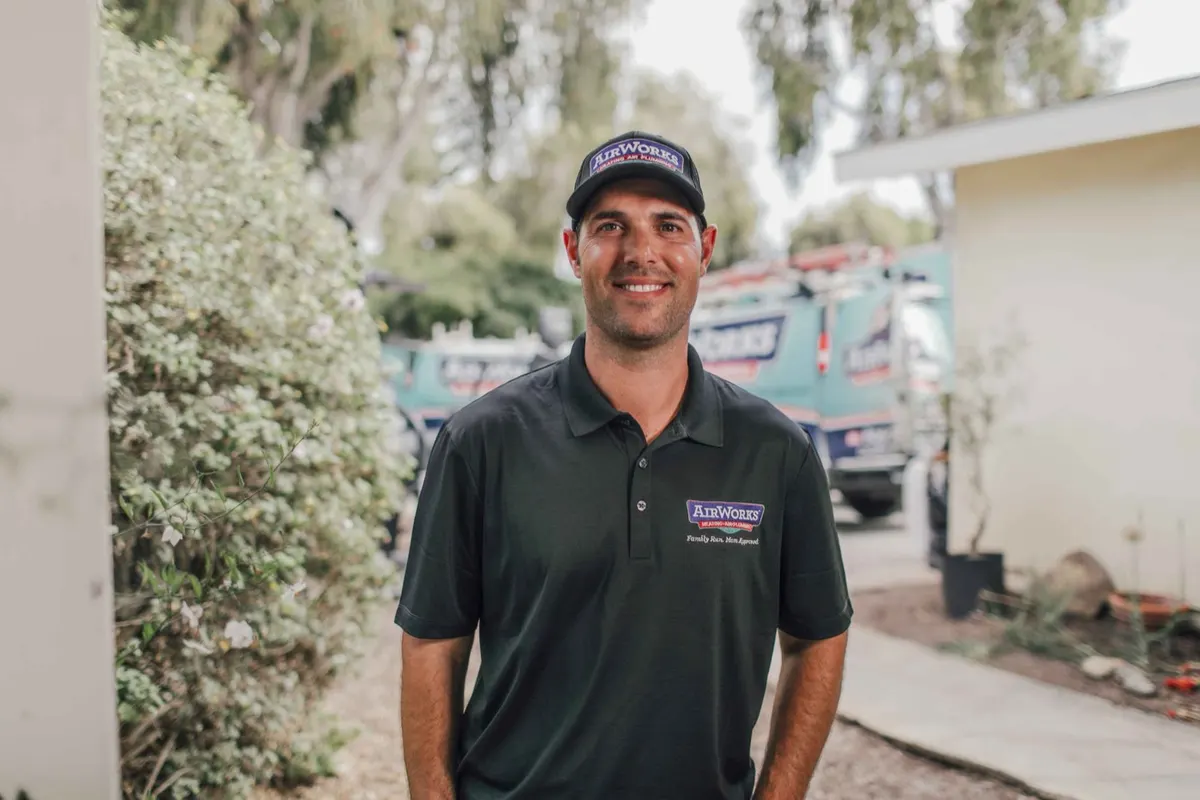
Kevin Allen
Co-Founder & Service Lead
Co-founded AirWorks in 2010 and has worked in Ventura County HVAC since 2002. Leads the service and installation crews — and the fix-what's-actually-broken ethic the company was built on.
Need Help?
Contact us today to discuss your needs. Our team is ready to help.
Related Articles
Options Comparisons for Homeowners: Heat Pump vs. Gas Furnace
Read Options Comparisons for Homeowners: Heat Pump vs. Gas FurnaceWhy Is Your Air Conditioner Hissing When Off? Causes and Diagnostics
Read Why Is Your Air Conditioner Hissing When Off? Causes and DiagnosticsHeat Pump vs. Gas Furnace: Technical Options Comparisons for Homeowners
Read Heat Pump vs. Gas Furnace: Technical Options Comparisons for HomeownersReady to Get Started?
Whether you need a repair, maintenance, or a new installation, our expert team is here to help.