X Things You Need to Know Before Buying Tankless Water Heaters
Kevin Allen
Co-Founder & Service Lead

Is a Tankless Water Heater Worth It? Here's What You Need to Know
Understanding the pros and cons of tankless water heaters is the first step to deciding whether one is right for your home. Here's a quick snapshot:
Pros:
- Heats water on demand — no standby energy waste
- Can be 24%–34% more energy efficient for homes using 41 gallons or less per day
- Lasts 20+ years (compared to 10–15 years for traditional tank models)
- Wall-mounted, compact design saves significant floor space
- Provides continuous hot water — no more cold showers after back-to-back use
- Reduces risk of water damage from tank ruptures
Cons:
- Higher upfront cost than traditional tank water heaters
- Flow rate is limited — running multiple fixtures at once can strain the unit
- Installation may require gas line upgrades, new venting, or electrical panel changes
- Performance can drop in colder climates where incoming groundwater is cooler
- Hard water areas may require more frequent maintenance
- Both gas and electric models depend on power to operate
If your hot water tank has been making sounds that belong in a submarine movie — or you're tired of lukewarm showers when the dishwasher runs — you're probably already weighing your options. Tankless water heaters have grown in popularity for good reason: they offer real energy savings, a longer lifespan, and a continuous supply of hot water. But they're not the right fit for every home or household. The decision comes down to your usage habits, your home's existing infrastructure, and how long you plan to stay.
I’m Kevin Allen. I’ve been working on HVAC systems in Ventura County since 2002, and I co-founded AirWorks in 2010. In the sections below, we’ll walk you through everything you need to know to make a confident, informed decision.

What is a Tankless Water Heater and How Does It Work?
Unlike traditional water heaters that continuously heat and store 40 to 80 gallons of water in a large metal cylinder, a tankless water heater operates on demand. It remains completely idle until a hot water tap is opened somewhere in your home.
The moment a faucet is turned on, a sophisticated flow sensor detects the movement of water entering the unit. This sensor signals the system's control board to activate the heating source—either a high-powered gas burner or heavy-duty electric heating elements.
As the cold water flows through a tightly coiled copper or stainless steel pipe called a heat exchanger, heat is rapidly transferred directly to the water. The water reaches your target temperature in seconds and flows continuously to your tap. Once you turn off the faucet, the flow sensor detects that the water has stopped, and the heating elements instantly shut down.
By only heating water when you actually need it, tankless systems completely eliminate "standby energy loss." In traditional tanks, heat constantly escapes through the walls of the tank, forcing the system to cycle on and off all day and night just to keep the idle water hot. For a detailed breakdown of how these storage systems compare to on-demand units, read our Tankless vs Tank Water Heater Comparison.
Gas Tankless Water Heaters
Gas-fired tankless water heaters are the most common choice for whole-house systems, especially in areas with natural gas infrastructure. They utilize a powerful gas burner to achieve a rapid heat transfer.
Within the gas category, you can choose between non-condensing and condensing models:
- Non-Condensing Models: These units vent hot exhaust gases directly outside. Because the exhaust is highly corrosive and extremely hot, it requires specialized, expensive Category III stainless steel venting.
- Condensing Models: These highly efficient systems feature a second heat exchanger that captures latent heat from the exhaust before it escapes. This cools the exhaust gases significantly, allowing us to use much cheaper, easier-to-install PVC pipes for venting.
Gas models generally deliver much higher flow rates than electric models, making them better suited for multi-bathroom homes. However, they do require dedicated venting and a constant supply of natural gas or propane.
Electric Tankless Water Heaters
Electric tankless water heaters use heavy-duty electric resistance coils to heat the water. They are incredibly efficient—often boasting energy efficiency ratings of over 98%—and do not require any venting or gas lines.
The primary challenge with whole-house electric tankless units is their immense electrical demand. To heat water instantaneously, these systems require a massive amount of power, often demanding multiple dedicated 40-amp or 50-amp circuits. For many older homes, installing a whole-house electric tankless unit is a non-starter unless you are prepared to upgrade your home’s electrical panel to 150 or 200 amps of dedicated capacity.
Because of these power requirements, electric tankless heaters are frequently utilized as small, point-of-use units. These compact systems can be tucked under a kitchen sink or installed in a remote bathroom to provide dedicated hot water to a single fixture without straining the home's main electrical system.
Weighing the Pros and Cons of Tankless Water Heaters
When evaluating the pros and cons of tankless water heaters, it is helpful to look at how these systems perform in real-world scenarios.
The Advantages (The Pros)
- Substantial Energy Savings: Because they eliminate standby energy loss, tankless units are incredibly efficient. According to the U.S. Department of Energy, they can be 24%–34% more energy efficient than conventional storage tanks for homes that use 41 gallons or less of hot water daily. For high-demand homes using around 86 gallons per day, they still offer an 8%–14% efficiency boost.
- Incredible Lifespan: While traditional tank water heaters typically last between 10 and 15 years before the tank corrodes and risks leaking, tankless water heaters have a life expectancy of more than 20 years. Because they are built with easily replaceable individual parts, their operational life can often be extended even further.
- Space-Saving Design: Traditional tanks take up a massive amount of floor space in a garage, closet, or utility room. Tankless units are compact, wall-mounted boxes (roughly the size of a carry-on suitcase) that can be installed indoors or outdoors, freeing up valuable square footage.
- Reduced Risk of Water Damage: Traditional tanks eventually rust and fail, which can lead to catastrophic flooding. Since tankless systems do not store water, the risk of a massive tank rupture is completely eliminated.
- Earthquake Safety: In seismically active areas like Southern California, a heavy, water-filled tank poses a tipping hazard during an earthquake, potentially rupturing gas lines or causing major water damage. A lightweight, wall-mounted tankless unit significantly reduces this risk.
The Disadvantages (The Cons)
- High Upfront Investment: The equipment itself is more complex than a standard tank, and the installation process is significantly more intensive.
- Flow Rate Limits: While a tankless heater provides endless hot water, it does not provide simultaneous hot water without limits. The system can only heat a certain number of gallons per minute (GPM). If you exceed this limit by running too many fixtures at once, the water temperature will drop.
- Installation Complexity: Retrofitting a tankless unit into a home built for a traditional tank often requires infrastructure upgrades, such as resizing gas lines, running new exhaust venting, or upgrading your electrical panel.
- Dependence on Electricity: Even gas-fired tankless water heaters require electricity to power the digital control board, flow sensors, and ignition spark. If the power goes out, you will not have hot water.
The Pros and Cons of Tankless Water Heaters for Large Families
For a busy household, the morning rush can be a logistical nightmare. With a traditional tank, the third or fourth person in line for the shower is almost guaranteed to get an icy surprise once the stored hot water is depleted. The tank then requires a recovery time of 20 to 60 minutes to heat a fresh batch of water.
This is where a tankless system shines: it offers an endless supply of hot water. As long as the unit is running, it will keep producing hot water, meaning back-to-back showers are never an issue.
However, large families must be mindful of simultaneous usage. If one family member is showering while the washing machine is running on hot and the dishwasher is active, the total demand may exceed the unit's maximum flow rate. This can cause a temporary drop in water pressure or temperature. To prevent this, high-demand households must invest in a properly sized, high-capacity gas unit or install multiple units.
Understanding the Pros and Cons of Tankless Water Heaters in Cold Climates
A tankless water heater's performance is deeply tied to the temperature of the incoming groundwater. In the winter, groundwater temperatures drop.
To bring freezing or chilly groundwater up to a comfortable shower temperature (typically around 120°F), the water heater must perform a much larger "temperature rise." Because the heat exchanger has to work harder to heat the cold water, the system must slow down the flow of water to ensure it reaches the target temperature.
In milder climates like Southern California, groundwater remains relatively warm year-round, allowing tankless units to operate at peak flow rates. However, if you live in an area with cold winter transitions, you will need to upsize your unit's heating capacity to ensure you don't experience a drop in water pressure during the coldest months of the year.
Sizing, Flow Rates, and Installation Requirements
Choosing the right tankless water heater requires a clear understanding of your household's peak water demand, measured in Gallons Per Minute (GPM).
To calculate your peak demand, add up the flow rates of all the fixtures you expect to run at the exact same time. Here is a general guide to typical fixture flow rates:
- Low-Flow Showerhead: 1.5 to 2.0 GPM
- Standard Showerhead: 2.5 GPM
- Bathroom Faucet: 0.5 to 1.5 GPM
- Kitchen Faucet: 1.0 to 2.2 GPM
- Dishwasher: 1.0 to 2.0 GPM
- Washing Machine: 1.5 to 3.0 GPM
If you want to be able to run a shower (2.5 GPM) and the washing machine (2.0 GPM) simultaneously, your tankless unit must support a minimum flow rate of 4.5 GPM at your local incoming groundwater temperature.
| Water Heater Type | Typical Flow Rate Range | Power Source Requirements | Best Suited For |
|---|---|---|---|
| Gas Tankless | 5.0 – 10.0 GPM | Natural Gas/Propane + 120V Outlet | Large homes, multi-fixture simultaneous use |
| Electric Tankless | 2.0 – 5.0 GPM | Dedicated 150-200 Amp Panel Capacity | Small homes, apartments, point-of-use |
Retrofitting a tankless system is not a simple "plug-and-play" task. Traditional gas tanks typically use a 1/2-inch gas line and consume around 30,000 to 40,000 BTUs. In contrast, a whole-house gas tankless unit requires a massive burst of energy to heat water instantly, consuming 150,000 to 199,000 BTUs. This almost always requires upgrading to a 3/4-inch dedicated gas line directly from your meter.
Additionally, you must consider venting. Non-condensing gas units require specialized stainless steel venting that must be routed through your roof or an exterior wall.
To learn more about what to expect during a professional installation, check out our Ultimate Tankless Water Heaters Lifespan Guide and our local Tankless Water Heater Installation Thousand Oaks Guide.
Local Installation Services in Ventura County
Because of the strict building codes, gas line sizing requirements, and venting safety regulations in California, professional plumbing installation is highly recommended. Improper installation can void your manufacturer warranty, create fire or carbon monoxide hazards, and result in poor system performance.
At AirWorks Heating, Air & Plumbing, we provide certified, professional installation services tailored to the unique architectural styles and utility setups of local homes. If you are ready to upgrade, explore our localized services:
- Tankless Water Heater Installation Santa Rosa Valley CA
- Tankless Water Heater Installation Newbury Park CA
- Tankless Water Heater Installation Westlake Village CA
Maintenance and Repair Services
A common myth is that tankless water heaters are completely maintenance-free. In reality, because they flash-heat water at high temperatures, minerals like calcium and magnesium quickly settle out of the water and cling to the walls of the heat exchanger.
In hard water areas, this mineral scale acts as an insulating blanket, forcing the heat exchanger to work harder and hotter to heat the water. If left unchecked, scale buildup will drastically reduce your system’s efficiency and can cause the heat exchanger to overheat and fail prematurely.
To protect your investment, we recommend:
- Annual Descaling: Flushing the unit with a food-grade vinegar solution once a year (or every 6 months in extreme hard water areas) to dissolve mineral buildup.
- Water Conditioning: Installing a water softener or scale-inhibiting filter to treat the water before it ever reaches your heater.
- Regular Filter Cleaning: Checking and cleaning the unit’s internal water filter screen to maintain proper flow.
If your system is showing error codes, experiencing temperature fluctuations, or is overdue for a flush, our expert technicians are here to help. Explore our local repair services:
- Tankless Water Heater Repair Thousand Oaks CA
- Tankless Water Heater Repair Camarillo CA
- Tankless Water Heater Repair Ventura CA
Frequently Asked Questions About Tankless Water Heaters
Do tankless water heaters provide instant hot water at the tap?
No. There is a common misconception that "on-demand" means "instant." While the tankless unit heats the water instantly, that hot water still has to travel through your home's plumbing pipes to reach your faucet. If your bathroom is on the second floor and the water heater is in the garage, you will still have to wait a few moments for the cold water sitting in the pipes to flush out.
Additionally, some users experience what is known as the "cold water sandwich" effect. This happens when you turn a hot water tap on, turn it off, and then turn it back on a moment later. A small pocket of cold water that entered the system during the brief shut-off period can travel through the pipes, resulting in a sudden, brief burst of cold water in the middle of your warm shower. To eliminate these issues, we can install a dedicated hot water recirculation system, which keeps hot water constantly primed in your pipes for truly instant delivery.
What happens to a tankless water heater during a power outage?
If your home loses power, your tankless water heater will not work—even if it is a gas-fired model. The electronic control board, digital sensors, safety shut-off valves, and ignition system all require electricity to function.
If you live in an area prone to seasonal power outages, you can install a battery backup system or a small uninterruptible power supply (UPS) dedicated to your water heater. This will keep the low-voltage electronics running so you can still enjoy hot showers during a blackout.
Are there financial incentives or tax credits available for upgrading?
Yes! Because tankless water heaters are highly energy efficient, there are excellent financial incentives available to help offset the initial installation costs.
Under the federal Energy Efficient Home Improvement Credit (Section 25C), homeowners can claim a tax credit of up to $600 for qualifying ENERGY STAR certified gas tankless water heaters with a Uniform Energy Factor (UEF) of 0.95 or higher. Additionally, local utility companies frequently offer rebate programs for homeowners who upgrade from traditional storage tanks to high-efficiency tankless models.
Conclusion
A tankless water heater is an exceptional investment for homeowners who want to enjoy endless hot water, lower their monthly energy bills, reclaim valuable storage space, and secure a system that will last for decades. However, ensuring you get the performance you expect requires proper sizing, professional installation, and routine maintenance.
At AirWorks Heating, Air & Plumbing, we have been providing honest, reliable, and customer-focused plumbing, heating, and AC services across Ventura County since 2010. We can evaluate your home's existing infrastructure, calculate your peak hot water demand, and help you choose the perfect water heating solution for your budget and lifestyle.
Ready to make the switch? Schedule a professional consultation with AirWorks Heating, Air & Plumbing today, and let our expert plumbers guide you every step of the way!
About the Author
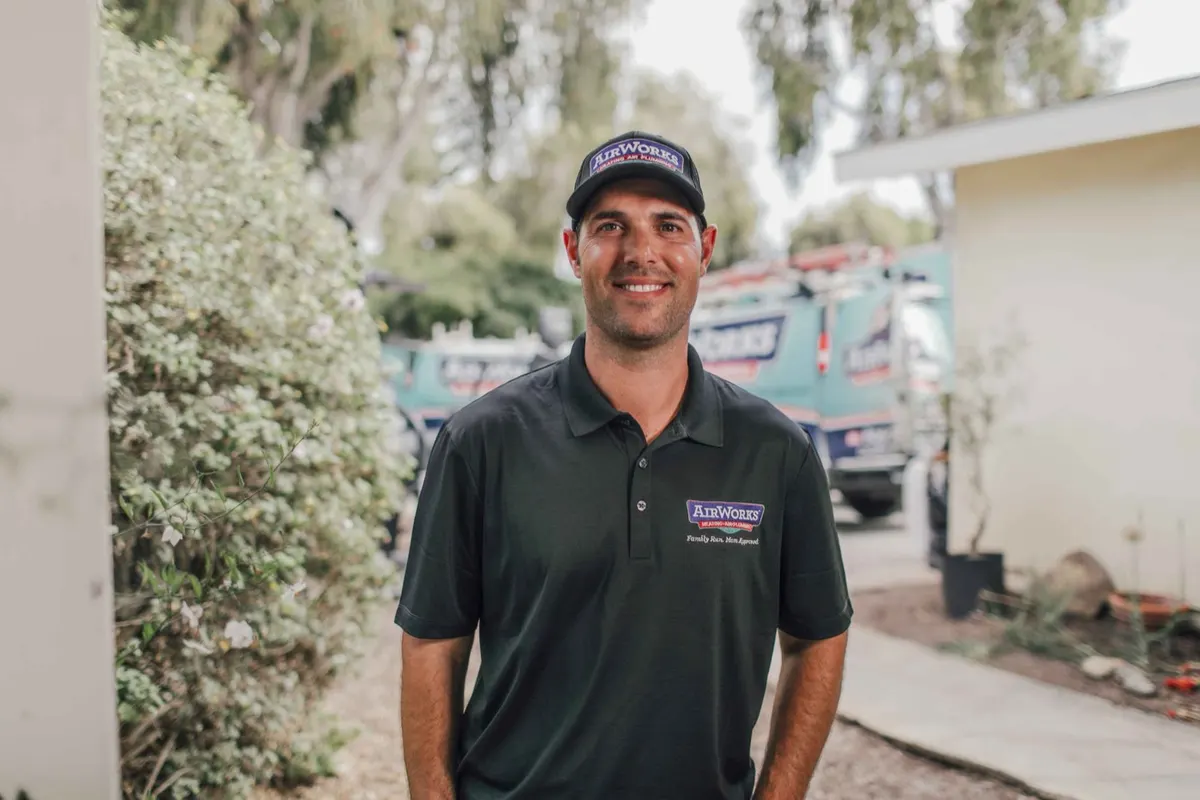
Kevin Allen
Co-Founder & Service Lead
Co-founded AirWorks in 2010 and has worked in Ventura County HVAC since 2002. Leads the service and installation crews — and the fix-what's-actually-broken ethic the company was built on.
Need Help?
Contact us today to discuss your needs. Our team is ready to help.
Related Articles
Options Comparisons for Homeowners: Heat Pump vs. Gas Furnace
Read Options Comparisons for Homeowners: Heat Pump vs. Gas FurnaceWhy Is Your Air Conditioner Hissing When Off? Causes and Diagnostics
Read Why Is Your Air Conditioner Hissing When Off? Causes and DiagnosticsHeat Pump vs. Gas Furnace: Technical Options Comparisons for Homeowners
Read Heat Pump vs. Gas Furnace: Technical Options Comparisons for HomeownersReady to Get Started?
Whether you need a repair, maintenance, or a new installation, our expert team is here to help.