
Outdoor Faucet Freeze Protection: Why Mild Climates Aren't Immune to Winter Damage
Kevin Allen
Co-Founder & Service Lead

The Hidden Threat of November Cold Snaps to Your Spigots
November is here, and while you might still be wearing short sleeves during the afternoon, the time to prioritize outdoor faucet freeze protection is right now. In Southern California, our famously mild autumn weather creates a dangerous false sense of security for homeowners. Over our years of serving the community, our team at AirWorks Heating, Air & Plumbing has seen this firsthand. You might spend a Saturday afternoon enjoying a 75-degree breeze in the backyard, completely unaware that a late fall overnight frost is just hours away. This dramatic temperature swing is the concrete problem facing many local properties, as residents naturally assume that because they don't live in a snowy, blizzard-prone climate, their outdoor plumbing is safe from winter elements.
Unfortunately, ignoring the sudden risk of overnight temperature plummets can lead to disastrous consequences, including burst pipes, flooded landscaping, and severe water damage hidden deep inside your walls. The decision point is simple and urgent: taking proactive steps to winterize your outdoor spigots right now, before the official start of winter, is the only reliable way to safeguard your home. This guide will walk you through the foundational concepts of regional winter plumbing readiness, ensuring you are never caught off guard when the mercury suddenly drops after sunset.
Why Southern California Microclimates Put Plumbing at Risk
To understand why local plumbing is so vulnerable, we have to examine the specific environmental factors at play in our region. A valley microclimate acts much like a massive topographical bowl. During the day, it efficiently collects and traps warmth from the sun. However, as the sun sets and the atmosphere cools, dense, heavy cold air slides down the surrounding hillsides and settles directly onto the valley floor. This geographical phenomenon means that Somis valley microclimates can experience isolated pockets of freezing temperatures overnight, even when weather stations in neighboring coastal or elevated cities report perfectly mild conditions.
At AirWorks Heating, Air & Plumbing, our team understands these specific Southern California microclimates better than generic national plumbing guides. After countless late-fall service calls across Somis, a pattern we see often is homeowners waking up to burst pipes after just one unexpectedly frigid night in neighborhoods that felt completely warm just hours prior. National advice often focuses on prolonged midwestern deep freezes that last for weeks, which requires a completely different approach to home maintenance. Here, the threat is distinct: it is a short-duration, sharp overnight temperature drop that strikes while homeowners are sleeping.
| Environmental Factor | Midwestern Deep Freeze | Southern California Valley Frost |
|---|---|---|
| Duration of Freeze | Continuous days or weeks below freezing | Short 2 to 6 hour windows overnight |
| Home Construction | Heavily insulated pipes and basements | Minimal exterior plumbing insulation; stucco walls |
| Warning Signs | Days of gradual cooling and snow forecasts | Sudden, sharp drop after a warm afternoon |
| Primary Plumbing Risk | Whole-home pipe freezing and main line failure | Exposed outdoor spigots and irrigation supply lines |
Because local homes are primarily built for heat dissipation rather than heat retention, our exterior plumbing lacks the heavy, specialized insulation standard in colder states. Pipes are often routed closer to the exterior stucco to maximize interior space. As a result, it only takes a few hours of freezing temperatures in these unprotected, uninsulated pipes to cause significant, irreversible damage to your fixtures. Understanding this localized risk is the first step in protecting your property.
The Physics of Freezing Pipes: What Happens Inside Your Spigot
To truly grasp the danger of a late fall overnight frost, it helps to look at the basic science of freezing water. When temperatures drop below 32°F, water undergoes a physical transformation that makes it incredibly destructive to standard plumbing materials, whether they are made of copper, brass, or PVC.
The 9 percent expansion rule: When liquid water turns to solid ice, it expands by approximately 9% in volume. In an open environment like a puddle, this expansion is entirely harmless. However, when that water is trapped inside the rigid, confined space of an outdoor spigot, the expanding ice has nowhere to go. It must create space for itself, and it does so by pushing outward with incredible force.
Immense internal pressure: As the ice block grows inside the pipe, it exerts thousands of pounds of pressure per square inch against the walls of the plumbing and the internal valve mechanisms of the faucet. Standard metal pipes simply cannot stretch to accommodate this new volume, leading to stress fractures and structural failure.
"As our master plumbers frequently explain to homeowners: The most dangerous part of a freezing pipe isn't just the ice block itself—it is the immense hydraulic pressure forced backward into the home's interior plumbing as the ice expands."
Backward pressure travel: As the ice expands, it pushes the remaining liquid water backward toward the inside of your home. Because liquid water cannot be compressed, this hydraulic pressure spikes dramatically between the ice blockage and the nearest closed valve indoors. The pressure doesn't just damage the exterior spigot; it can easily travel back into the pipes inside your wall, causing a catastrophic rupture hidden behind your drywall or underneath your flooring.
Standard, non-winterized fixtures are simply not designed to withstand this kind of structural stress. Even a brief freeze can warp the internal brass components, leading to a relentless, dripping leak once the ice thaws the next morning.

Essential Homeowner Steps for Outdoor Faucet Freeze Protection
You do not need to be a plumbing expert to protect your home from the unique challenges of Somis valley microclimates. There are several safe, actionable DIY steps our technicians routinely recommend to secure your exterior fixtures without attempting any professional plumbing work. Taking a few minutes to walk around your property can save you from a major headache later this season.
- Disconnect, drain, and store all garden hoses: This is the single most important preventative step you can take. If you leave a hose attached to the spigot, water remains trapped in the line. When that water freezes, the hose prevents the expanding ice from pushing outward, forcing all that destructive pressure backward into your home's plumbing. Always disconnect hoses before the first frost hits.
- Install insulated faucet covers: Purchase styrofoam or thick, insulated fabric covers for all exposed outdoor hose bibbs. These covers act as a thermal barrier. They trap the ambient heat radiating from your home's interior walls and shield the metal fixture from freezing wind chills. They are inexpensive, easy to install, and highly effective.
- Locate and shut off interior water supply valves: If your home is equipped with dedicated shut-off valves for your exterior plumbing (often located under sinks, in basements, or near the water heater), turn them to the "off" position. This stops new water from flowing to the vulnerable exterior points during a cold snap.
- Drain the remaining water: Once the interior valve is off, go back outside and open the spigot slightly. This allows any remaining trapped water to drain out completely. Leave the valve open just a crack; if any residual moisture does freeze, the open valve gives the expanding ice room to move without bursting the metal casing.
Identifying Vulnerable Fixtures
Before you consider the winterization job done, make sure you have accounted for every water source on your property. It is easy to overlook fixtures that aren't used daily.
- Check both front and backyard spigots: It is easy to remember the hose you use to wash the car in the driveway, but do not forget the hidden spigot behind the side gate, near the AC condenser, or tucked behind landscaping bushes.
- Inspect irrigation system connections: Look for exposed supply lines feeding your sprinkler system or drip irrigation networks, as these are highly susceptible to overnight frost and often sit entirely above ground.
- Ensure covers fit snugly: A loose faucet cover is essentially useless. Ensure the edges of the styrofoam or fabric fit tightly and flush against the exterior stucco or siding to block any cold air drafts from sneaking in behind the insulation.
When to Consider Frost-Free Hose Bibb Upgrades
If you want a more permanent, hands-off solution to combat a late fall overnight frost, our installation team highly recommends looking beyond temporary styrofoam covers and considering a fixture upgrade. A frost-free hose bibb (also known as a freeze-proof sillcock) is a specialized fixture engineered specifically to prevent winter pipe bursts, and it is a solution we install frequently throughout Somis.
Unlike a standard spigot where the water stops right at the exterior wall, a frost-free bibb features a much longer internal copper stem. When you turn off the handle on the outside of the house, the actual water shut-off valve is located several inches to a foot deep inside the warm interior of your house. Because the water stops inside the heated envelope of your home, the exposed exterior portion of the pipe remains completely empty and dry. With no water in the exterior section, there is nothing left to freeze, expand, or burst.
For homes in highly susceptible areas, this upgrade offers incredible peace of mind. You will not have to panic and rush outside in the dark with covers every time the evening news forecasts a sudden temperature drop. The fixture does the protective work for you automatically.
However, it is crucial to clarify that installing these fixtures requires cutting into your existing plumbing, soldering copper pipes, and ensuring the precise downward pitch required for proper drainage. As we always remind our customers, this is not a DIY weekend project; it should always be handled by a licensed professional to ensure the installation meets local building codes, maintains water pressure, and functions safely without leaking.
Important caveat: Even the highest-quality frost-free bibbs require garden hoses to be disconnected in winter to function properly. If a hose is left attached, the water cannot drain out of the long internal stem by gravity, defeating the entire purpose of the frost-free design and leaving the fixture just as vulnerable as a standard spigot.
Beyond the Spigot: Preparing Your Entire Plumbing System for Winter
Securing your outdoor fixtures against Somis valley microclimates is a critical first step, but outdoor winterization is just one piece of a much larger seasonal home preparation strategy. As the weather cools and we spend more time indoors, your home's entire plumbing system faces increased daily demand that can expose hidden weaknesses.
During the colder months, and especially around the holidays, your indoor plumbing systems endure significantly more strain. You are likely cooking more heavy meals (testing the limits of your garbage disposal), running the dishwasher twice as often, and hosting friends and family who drastically increase the load on your showers, water heater, and toilets. A plumbing system that works perfectly well for a family of three or four can quickly become overwhelmed when guests arrive for a long weekend.
This makes transitioning from outdoor protection to indoor readiness vital. If you are expecting company this season, preparing home plumbing for holiday guests is just as important as covering your exterior spigots. Based on our holiday emergency call logs, a backed-up guest bathroom, a clogged kitchen sink during a holiday dinner, or a water heater that runs cold after two showers are concrete problems you want to avoid at all costs while entertaining.
To ensure true peace of mind, we highly recommend a whole-home plumbing inspection before the winter rush begins. Having a professional evaluate your water heater's efficiency, check for hidden leaks in the crawlspace, and clear slow-moving drains ensures that both your indoor and outdoor systems are resilient, efficient, and ready to handle whatever the season brings.
Frequently Asked Questions About Winterizing Spigots
At what temperature do outdoor faucets freeze?
Outdoor faucets typically begin to freeze when the ambient temperature drops to 28°F or lower for at least a few consecutive hours. While water technically freezes at 32°F, the residual heat radiating from your home's exterior walls provides a slight thermal buffer. However, during a late fall overnight frost, wind chill and exposed metal can accelerate the freezing process, meaning severe damage can occur even if the thermometer only briefly dips below the freezing mark.
Do I need to cover my outdoor faucets if it drops below freezing?
Yes, you should always cover your outdoor faucets if the temperature is forecast to drop below freezing. Insulated covers trap the heat radiating from your home's interior, keeping the metal fixture just warm enough to prevent the water trapped inside from turning to ice. It is a highly effective, low-cost preventative measure that takes only minutes to install but can save you from catastrophic pipe bursts and costly water damage.
How do you protect outside faucets from freezing in mild climates?
In mild climates, the most effective protection is disconnecting all garden hoses and installing insulated styrofoam or fabric covers before sudden cold snaps hit. Because homes in warmer regions often lack deep wall insulation, exposed pipes are highly vulnerable to sudden overnight temperature drops. Staying proactive, monitoring the evening weather forecast, and ensuring hoses are never left attached during the winter months are essential strategies for preventing unexpected freeze damage.
Do I need to cover outdoor faucets in California?
Yes, covering outdoor faucets is necessary in many parts of California, particularly if you live in a valley or high-elevation area. While coastal cities rarely see freezing temperatures, inland valleys frequently experience sharp overnight temperature drops that can quickly freeze unprotected pipes. Treating your local microclimate with the same caution as a traditional winter climate is the safest and most responsible approach to home maintenance.
How quickly can an exposed pipe burst during an overnight freeze?
An exposed pipe can burst in as little as four to six hours of sustained freezing temperatures. The exact timing depends heavily on the pipe's material, its exposure to freezing winds, and how much water is trapped inside the line. Because the internal pressure from expanding ice builds incredibly fast, a single cold night is more than enough time to cause a severe rupture in an unprotected spigot.
Secure Your Plumbing Before the Next Temperature Drop
The key takeaway for any homeowner is the importance of taking action before overnight temperatures dip into the danger zone. Southern California winters can be notoriously unpredictable, making readiness essential even when the afternoon sun feels comfortably warm. By understanding the localized risk of Somis valley microclimates, you hold the key to preventing costly, stressful water damage and keeping your property safe.
Disconnecting your garden hoses and adding simple insulated covers takes only a few minutes of your time, but it provides immense protection against sudden weather shifts. If you are unsure about your home's winter readiness, or if you want to explore permanent, worry-free solutions like frost-free hose bibbs, do not wait for the ice to form. Schedule a professional plumbing assessment with AirWorks Heating, Air & Plumbing today to ensure your entire system is secure, resilient, and fully prepared for the cold nights ahead.
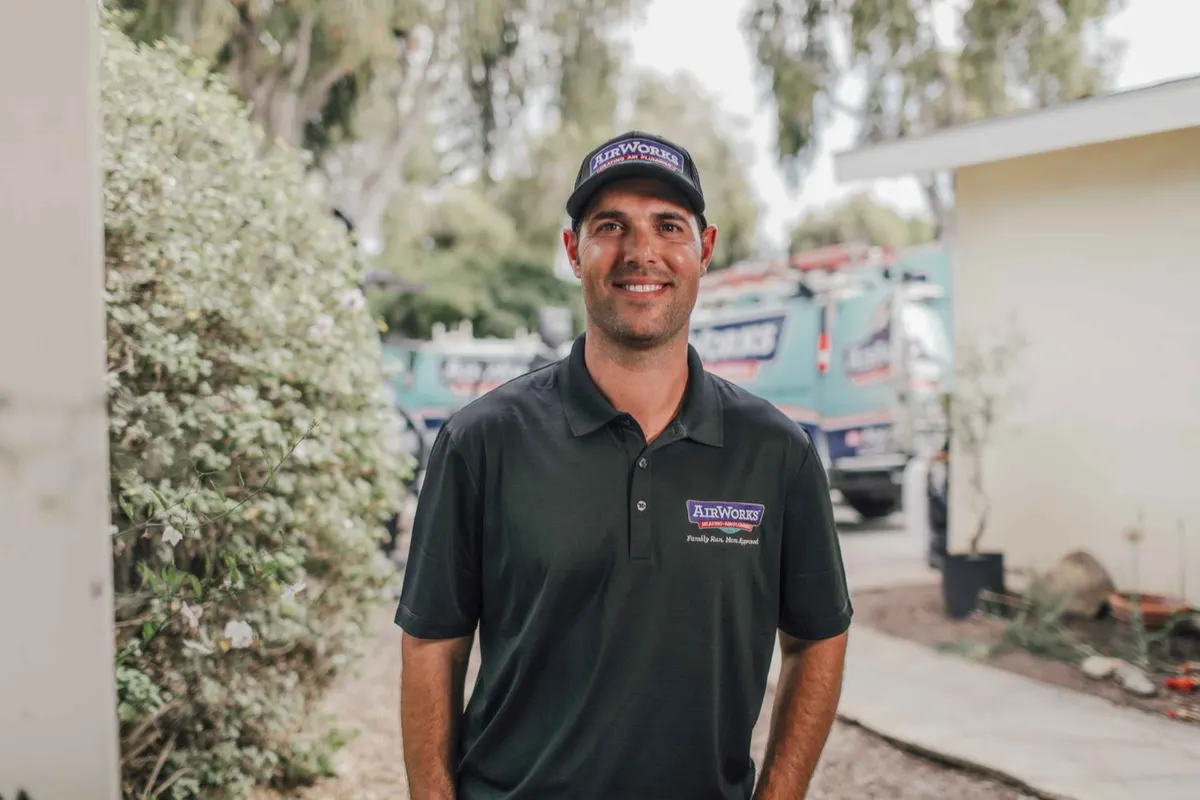
About the Author
Kevin Allen
Co-Founder & Service Lead
Co-founded AirWorks in 2010 and has worked in Ventura County HVAC since 2002. Leads the service and installation crews — and the fix-what's-actually-broken ethic the company was built on.
Need Help?
Contact us today to discuss your needs. Our team is ready to help.
Related Articles
What Happens Inside Your Kitchen Drain When Holiday Cooking Grease Cools
Read What Happens Inside Your Kitchen Drain When Holiday Cooking Grease CoolsPreparing Home Plumbing for Holiday Guests: What We Found Inside a Guest Bathroom Stack After Thanksgiving
Read Preparing Home Plumbing for Holiday Guests: What We Found Inside a Guest Bathroom Stack After ThanksgivingRecognizing the Signs of a Small Gas Leak Around the Furnace During Fall Startup
Read Recognizing the Signs of a Small Gas Leak Around the Furnace During Fall StartupReady to Get Started?
Whether you need a repair, maintenance, or a new installation, our expert team is here to help.