Why Your AC Runs Continuously Without Cooling Your Home
Kevin Allen
Co-Founder & Service Lead

The Frustration of an Air Conditioner Running Non-Stop in a Warm House
Your air conditioner is running nonstop, but the house still feels uncomfortably warm. You can hear the blower motor working, and you might even feel air coming out of the vents, yet the indoor temperature refuses to drop to your thermostat's set point. When dealing with this frustrating situation, relying on local service expertise and area tips is the best way to determine if your system is actually broken or simply overwhelmed. At AirWorks Heating Air Plumbing, we find that a cooling system running continuously without reaching the desired temperature is one of the most common issues our customers face during a July peak heatwave load.
When you need reliable air conditioning services or a professional AC diagnostic, getting the right information early from our experienced team can save you time and discomfort.
It is important to understand that continuous operation does not automatically mean your system has suffered a catastrophic mechanical failure. Air conditioners operate by moving heat from inside your home to the outside. When the outdoor temperatures climb to extreme highs, the amount of heat infiltrating your home can match or exceed the amount of heat your system is capable of removing. Before you assume you need a complete system replacement, you have to diagnose the root cause. The key is distinguishing between normal system limits and actual mechanical failures that require a professional technician to resolve.
Understanding the 20-Degree Differential Rule During Peak Heat
Standard residential air conditioning systems are designed with specific operational limits in mind. One of the most important concepts our technicians explain to homeowners is the 20-degree differential rule. During a severe heatwave in Somis or inland Ventura County, your air conditioner is generally designed to cool your home to approximately 20 degrees below the outdoor temperature.
ACCA Manual J Design Standards Explained
HVAC systems are sized and installed based on ACCA (Air Conditioning Contractors of America) Manual J design standards. These calculations do not size a system for the absolute hottest day of the decade. Instead, they size the system based on average regional highs. If an air conditioner is oversized to handle a rare 110-degree spike, it will short-cycle during normal 85-degree days, leading to poor humidity control and premature wear and tear.
Because systems are sized for average historical highs, an intense inland microclimate heatwave pushes them to their maximum capacity. If it is 100 degrees outside, an indoor temperature of 80 degrees means the system is actually functioning perfectly at its maximum design capacity. We always remind our customers that setting your thermostat to 70 degrees in this scenario will not cool the house faster; it will simply force the unit to run continuously without ever reaching the target.
Why Continuous Operation Isn't Always a Breakdown
A system that runs continuously during peak heat is doing exactly what it was designed to do: removing heat as fast as it enters the home. There is a significant difference between a system maintaining a 20-degree temperature drop and a system that is actively blowing warm air.
| Outdoor Temperature | Expected Indoor Minimum | System Status if Running Continuously |
|---|---|---|
| 85°F | 65°F - 70°F | Should cycle on and off normally |
| 95°F | 75°F | Running heavily, nearing maximum capacity |
| 105°F | 85°F | Running continuously, maintaining maximum 20-degree drop |
Furthermore, continuous operation during these extreme days actually helps dehumidify the home. Lower humidity makes the air feel cooler on your skin, even if the absolute temperature reading on the thermostat remains slightly higher than you would prefer.
Safe, Homeowner-Approved Checks for a Struggling AC
Before you assume your system needs a major repair during a July peak heatwave load, there are several safe troubleshooting steps you can perform. Our team recommends checking these basic components, which can often resolve airflow restrictions that mimic mechanical failures.
- Verify your thermostat settings: Ensure the thermostat is set to "cool" and the fan switch is set to "auto" rather than "on." If the fan is set to "on," the blower will circulate air even when the compressor isn't running, which can feel like warm air blowing from your vents.
- Check and replace dirty air filters: A clogged air filter is a leading cause of restricted airflow. When the blower motor cannot pull enough air through the return ducts, the system loses its ability to transfer heat effectively. Replace standard filters regularly, especially during heavy summer usage.
- Inspect all indoor supply and return vents: Walk through your home and ensure all vents are open and unobstructed. Blocking vents with heavy furniture, rugs, or curtains disrupts the pressure balance of the entire HVAC system, causing it to struggle.
- Examine the outdoor condenser unit: The outdoor unit needs to release the heat it absorbed from your home. Ensure it is free of debris, leaves, and overgrown landscaping. You should maintain at least two feet of clearance around the entire unit for proper airflow.
These are the safest steps you can take on your own. If you want to review more detailed DIY AC troubleshooting tips, remember that any internal mechanical or electrical checks require a licensed professional to ensure safety and compliance with building codes.

Mechanical Failures vs. Normal System Strain
If you have verified your filter is clean and the outdoor temperature is within normal ranges for Somis and inland Ventura County, continuous running may indicate a genuine mechanical failure. It is critical to distinguish between a system struggling against a 100-degree day and a system that has fundamentally broken down.
The Danger of Frozen Evaporator Coils
One of the most common mechanical issues we encounter is a frozen evaporator coil. The indoor coil gets extremely cold as refrigerant expands inside it. Warm air from your home blows over this coil, transferring heat and leaving behind condensation. If airflow is restricted by a dirty filter, or if the system is low on refrigerant, the coil drops below freezing. The condensation turns to ice, eventually blocking all airflow. If you see ice on the indoor unit or the copper lines outside, you must turn the system off entirely to let it thaw before a technician arrives. Running a frozen system can destroy the compressor.
Refrigerant Leaks and Cooling Capacity
Refrigerant is the lifeblood of your cooling system. It is part of a closed loop and is never "used up" like gas in a car. If your system is low on refrigerant, it means there is a leak that must be professionally located and sealed. Signs of a leak include hissing sounds, frozen coils, and a system that runs all day but only blows room-temperature air. Handling refrigerant requires EPA certification due to severe environmental and safety hazards, so this is strictly a job for a licensed technician.
Even well-maintained systems can experience sudden part failures that disrupt cooling. Recently, our team at AirWorks Heating Air Plumbing helped a local homeowner who reached out during the summer when their air conditioning stopped working shortly after a routine maintenance visit. We dispatched a senior representative quickly, and a technician returned to replace a newly failed part, testing the system thoroughly to restore perfect cooling. Whether it is a failing capacitor, a struggling compressor, or a hidden leak, professional diagnostics are required to get to the root of the problem.
How Inland Microclimates Push HVAC Systems to Their Limits
Understanding your local geography is essential when evaluating HVAC performance. The cooling demands in coastal areas are vastly different from the intense, sustained heat experienced in inland valleys. In our years serving the area, we've seen how inland Ventura County and Somis frequently experience consecutive days of 90-plus degree heat, pushing standard HVAC systems past typical coastal design limits.
Older systems that were originally installed based on milder historical averages often struggle against modern, consecutive high-heat days. A system that kept a home perfectly cool fifteen years ago may now run continuously just to maintain a baseline level of comfort. This temperature disparity means inland systems work significantly harder, accumulating wear and tear at a faster rate than units located closer to the ocean.
This environmental reality highlights the importance of proper load calculations. When a system is installed, the calculations must account for local microclimate extremes rather than broad regional averages. If your system is undersized for the inland heat, it will never be able to keep up, no matter how much you repair it. Proactive maintenance is the only way to prepare aging systems for these intense environmental demands. If your system fails completely during a heatwave, knowing who to call for emergency AC repair in Somis can make all the difference in restoring your home's safety and comfort.
Making the Call: When to Repair, Maintain, or Upgrade
When your air conditioner runs continuously without cooling, you eventually face a critical decision: do you continue to repair an aging unit, or is it time to upgrade to a modern system? Navigating this choice requires looking at the age of your equipment, its repair history, and its overall efficiency during a July peak heatwave load.
Evaluating System Age and Efficiency
A common rule of thumb we use in the HVAC industry is to weigh the cost of the repair against the age of the system. If a unit is over 10 to 15 years old and facing a major compressor failure or significant refrigerant leak, pouring more money into it offers diminishing returns. Older systems have lower SEER (Seasonal Energy Efficiency Ratio) ratings.
Modern systems boast significantly higher SEER2 ratings, meaning they are far more capable of handling extreme heat while using less electricity. Upgrading to a modern, high-efficiency heat pump or variable-speed air conditioner can completely resolve persistent peak-load struggles. Variable-speed systems do not just turn on and off; they adjust their output precisely to match the cooling demand of the home, providing superior humidity control and consistent temperatures.
Leveraging Energy Incentives for Upgrades
If you decide that an upgrade is the best path forward, there are ways to offset the initial investment. Generic energy tax credits and utility incentive programs may apply to qualifying high-efficiency installations. Federal tax credits for energy-efficient cooling solutions, particularly advanced heat pump technology, have made upgrading more accessible than ever. We always advise homeowners to consult with tax professionals to maximize available generic rebates and ensure their new system qualifies.
The most important factor in this decision is working with transparent local experts at AirWorks Heating Air Plumbing who educate homeowners on system design limits rather than immediately pushing unnecessary repairs. A thorough, honest diagnostic process provides you with all your options without pressure, allowing you to make the best financial choice for your home.
Restore Your Home's Comfort with Expert Insight
While peak summer heat strains all HVAC systems, an air conditioner that blows warm air, freezes up, or fails to cool the house at night requires expert intervention. Understanding the 20-degree differential rule helps set realistic expectations for Somis and inland Ventura County microclimates, but you should never have to suffer through a mechanical failure.
Whether you are a homeowner or a local business—like a Somis flower shop owner our team recently assisted during a summer emergency when their commercial cooler stopped working, ensuring a technician arrived quickly to get the system running and protect their inventory—you deserve reliable comfort. A proper diagnostic from our team will identify the exact issue, whether it is a simple airflow fix, a necessary repair, or time for a high-efficiency upgrade. Schedule an evaluation today to ensure your system is prepared to handle the rest of the season.
Frequently Asked Questions
Why is my AC running but not cooling the house?
Your AC may be running without cooling due to a dirty air filter, a refrigerant leak, or simply because the outdoor temperature is exceeding the system's design limits. Check your thermostat settings and replace your filter first. If the problem persists, you likely need a professional diagnostic to check refrigerant levels and mechanical components.
Should I turn off my AC if it's not cooling?
Yes, you should turn off your AC if it is blowing warm air or if you suspect it is frozen. Continuing to run a struggling system can cause severe damage to the compressor. Turn the thermostat to "off" and the fan to "on" to help thaw any ice while you wait for one of our technicians.
Why is my central air not cooling below 75?
If the outdoor temperature is 95 degrees or higher, your central air may not cool below 75 degrees because standard systems are designed for a maximum 20-degree temperature drop. If it is milder outside and the system still struggles, you may have restricted airflow, dirty coils, or a mechanical issue requiring service.
Can a dirty air filter cause my AC to stop blowing cold air?
Absolutely, a dirty air filter severely restricts the amount of air the blower motor can pull through the system. This lack of airflow prevents the system from absorbing heat from your home and can cause the indoor evaporator coil to freeze solid, stopping all cold air production.
How do I know if my AC is undersized or just broken?
An undersized AC will run continuously on hot days but will generally function fine during milder weather, whereas a broken AC will struggle to cool regardless of the outdoor temperature. Our professional HVAC technicians can perform a Manual J load calculation to determine if your unit is properly sized for your specific home and local climate.
About the Author
Kevin Allen
Co-Founder & Service Lead
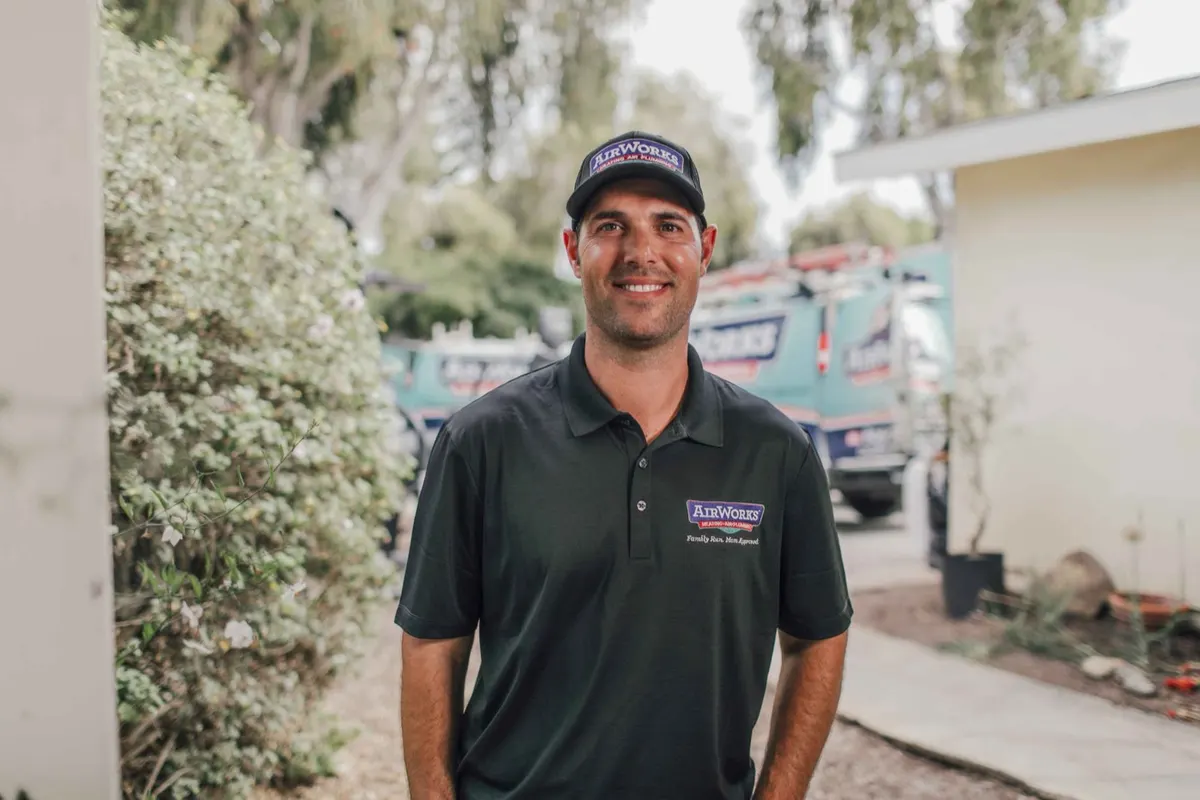
Co-founded AirWorks in 2010 and has worked in Ventura County HVAC since 2002. Leads the service and installation crews — and the fix-what's-actually-broken ethic the company was built on.
Need Help?
Contact us today to discuss your needs. Our team is ready to help.
Related Articles
Options Comparisons for Homeowners: Heat Pump vs. Gas Furnace
Read Options Comparisons for Homeowners: Heat Pump vs. Gas FurnaceWhy Is Your Air Conditioner Hissing When Off? Causes and Diagnostics
Read Why Is Your Air Conditioner Hissing When Off? Causes and DiagnosticsHeat Pump vs. Gas Furnace: Technical Options Comparisons for Homeowners
Read Heat Pump vs. Gas Furnace: Technical Options Comparisons for HomeownersReady to Get Started?
Whether you need a repair, maintenance, or a new installation, our expert team is here to help.