Why Is My AC Running But Not Cooling? Diagnosing Late-Summer System Fatigue
Kevin Allen
Co-Founder & Service Lead

The Frustration of an AC Running Constantly Without Cooling
Your air conditioner has been running nonstop for hours, but the house still feels uncomfortably warm. When you check off the final items on your seasonal home maintenance checklist, the last thing you expect is an HVAC system that refuses to lower the indoor temperature despite running continuously. This specific type of cooling failure is incredibly frustrating, especially when you are relying on your equipment to provide relief from the intense afternoon heat.
An air conditioner that runs without actually cooling your living space is doing more than just wasting energy. It is actively compounding mechanical strain on every moving part within the unit. The longer the system runs in this degraded state, the higher the risk of a catastrophic failure. For comprehensive support, exploring professional air conditioning services is the most effective way to restore your system's performance.
The Critical Decision Point
When you notice this continuous cycling, you face an immediate decision point: determining whether the system is experiencing standard end-of-season sluggishness or if it is suffering from an impending component failure. By the time August late-summer cooling wear sets in, your equipment has already endured hundreds of hours of heavy operation. Distinguishing between a simple airflow restriction and a dying compressor requires a methodical, proactive diagnostic approach. Taking the right steps now prevents minor fatigue from turning into a major breakdown.
Understanding the Cumulative Toll of Late-Summer Heat
The Problem: By the time late summer arrives, your air conditioning system is no longer fresh. It has been battling high temperatures for months, and that continuous operation maximizes physical strain on belts, motors, and electrical components. The intense, dry summer heat in the Somis CA area accelerates this wear and tear, pushing continuous-running systems to their absolute limits.
The Cause: HVAC systems are designed to cycle on and off. When extreme heat forces the system to run continuously, minor issues begin to compound. A slight accumulation of dust in June becomes a severe airflow blockage by August. A tiny drop in refrigerant pressure turns into a frozen coil after weeks of heavy demand. This cumulative toll means that what started as a highly efficient cooling cycle slowly degrades into a state where the system runs constantly just to maintain a baseline temperature.
The Physics of End-of-Season Fatigue
Understanding the mechanics behind this fatigue helps clarify why the air coming from your vents feels lukewarm. Air conditioners do not actually "create" cold air; they remove heat from your indoor environment and transfer it outside. When components are fatigued, this heat transfer process loses efficiency. The compressor has to work harder to pressurize the refrigerant, and the blower motor struggles to push air through partially clogged pathways.
| Operational Phase | System Behavior | Cooling Output |
|---|---|---|
| Early Summer (Peak Efficiency) | Short, effective cycles (15-20 minutes) | Crisp, cold air reaching all rooms |
| Mid-Summer (Heavy Load) | Longer cycles during peak afternoon heat | Adequate cooling, slight temperature variations |
| August (Late-Summer Fatigue) | Continuous, non-stop operation | Lukewarm air, failure to reach thermostat setting |
The Solution: Transitioning from peak-season survival mode to end-of-season diagnostic mode is essential. You must shift from simply lowering the thermostat to actively investigating why the system is underperforming. Scheduling a professional AC diagnostic allows a licensed technician to measure the exact drop in efficiency and identify which components are suffering the most from the cumulative summer heat.
Airflow Restrictions: The First Culprit of Diminished Cooling
Before assuming a major mechanical failure, you must evaluate the most common cause of an AC running without cooling: restricted airflow. Your air conditioner relies on a precise volume of air moving across the indoor evaporator coil. When that airflow is choked off, the entire heat transfer process collapses, forcing the system into continuous, ineffective cycles.
How Static Pressure Impacts the Cooling Cycle
Your HVAC system operates within a carefully balanced static pressure environment. The blower motor is calibrated to push and pull a specific amount of air. When blockages occur, the static pressure increases, and the volume of air circulating through your home plummets. This means the system continues to run, consuming electricity, but the cooled air never reaches your living spaces.
If you are experiencing August late-summer cooling wear, follow these sequential steps to rule out basic airflow restrictions before escalating the issue:
- Inspect the primary air filter: A severely clogged filter acts like a wall, preventing warm indoor air from reaching the cooling coil. Pull the filter out and hold it up to a light source. If you cannot see light passing through the pleats, the filter is choking your system and must be replaced immediately.
- Check all return air vents: Walk through your home and ensure that no furniture, rugs, or heavy drapes are blocking the large return grilles. The system needs to pull warm air in before it can push cold air out.
- Open closed supply registers: It is a common myth that closing vents in unused rooms saves energy. In reality, closing registers increases static pressure, forcing the blower motor to work harder and disrupting the system's balance. Ensure all vents are fully open.
- Inspect the blower motor area for visible debris: While you should never disassemble the unit, take a look around the indoor air handler to ensure nothing is obstructing the intake area.
Addressing these basic airflow issues is the first step in restoring system performance. For more detailed guidance on what you can check safely, review these DIY AC troubleshooting tips.
Outdoor Condenser Coil Blockages and Heat Transfer Failure
The Problem: You walk outside and hear your outdoor unit (the condenser) roaring loudly, running continuously. However, when you go back inside, the air blowing from the vents is barely cool. This classic symptom often points to a failure in the outdoor heat dissipation process.
The Cause: The outdoor condenser coil is responsible for releasing the heat absorbed from inside your home into the outdoor air. This requires clean, unobstructed metal fins. The dry, dusty conditions prevalent in late-summer Ventura County accelerate debris accumulation on these outdoor units. Over months of operation, a thick blanket of dust, pollen, grass clippings, and dirt builds up on the coils. This debris acts as a powerful insulator, trapping the heat inside the system instead of allowing it to dissipate into the atmosphere.
The Mechanics of Heat Dissipation
When the outdoor coil is insulated by dirt, the refrigerant returning to your house is still warm. The system continues to run because the thermostat detects that the indoor temperature has not dropped, but the physical ability to cool the air has been compromised. The compressor works overtime, pushing high-pressure refrigerant through a blocked coil, which drastically increases the operating temperature of the equipment itself.
The Solution: The perimeter around the outdoor unit must be kept completely clear. Ensure there is at least two feet of unobstructed space on all sides of the condenser. Trim back any overgrown bushes, remove tall grass, and clear away leaves or debris that have gathered around the base. While a homeowner can gently rinse the outside of the cabinet with a standard garden hose, deep cleaning of the delicate aluminum fins requires professional chemical cleaners and specialized tools to avoid bending the metal and worsening the airflow restriction. If your system is stationed in Somis CA, regular clearing of this dusty buildup is mandatory for late-summer survival.
Refrigerant Leaks and Frozen Evaporator Coils
If airflow is normal and the outdoor unit is clean, but the AC is still running without cooling, you are likely facing a chemical cooling failure. Continuous prolonged cycles without adequate cooling often indicate a gradual refrigerant leak. Refrigerant is the lifeblood of your air conditioner; it is the chemical substance that physically absorbs and releases heat as it changes from a liquid to a gas.
Why Low Refrigerant Causes Ice Buildup
It sounds counterintuitive, but low refrigerant levels actually cause your indoor evaporator coil to freeze solid. When the system lacks the proper volume of refrigerant, the pressure inside the coil drops significantly. This pressure drop forces the temperature of the remaining refrigerant to plummet below freezing. As warm, humid air blows across this super-chilled coil, the moisture in the air condenses and instantly freezes to the metal.
Once a layer of ice forms, it creates a solid barrier. The air can no longer touch the cold metal of the coil, meaning no heat is absorbed. The system runs continuously, blowing warm air into the house, while a block of ice continues to grow inside the air handler. This is a severe symptom of August late-summer cooling wear that requires immediate intervention.
The Danger of DIY Refrigerant Handling: Refrigerant is a highly regulated chemical under federal law. It operates under immense pressure and poses significant safety and environmental risks. You must never attempt to add refrigerant or repair a leak yourself. This work requires a licensed professional with specialized gauges, recovery equipment, and EPA certification. A typical pattern we see in the field involves an undisclosed system issue causing poor performance; a certified technician determines the root problem—often a hidden leak—and resolves it safely, restoring the system to peak efficiency.
If you suspect a leak or notice ice forming on the copper lines near your indoor unit, immediately turn the thermostat from "Cool" to "Off" and switch the fan to "On" to help thaw the ice. Then, schedule an AC inspection in Somis to accurately locate and repair the leak.
Compressor Strain and Electrical Component Fatigue
When an air conditioner runs continuously without cooling, the mechanical and electrical components endure massive amounts of strain. Late-season continuous cycling degrades these critical parts over time, eventually leading to a scenario where the system runs, but the heavy lifting of the cooling process simply is not happening.
The Danger of Ignoring Electrical Strain
Your air conditioner relies on capacitors to provide the massive jolt of electricity needed to start the compressor and the fan motors. After months of heavy operation in Somis CA, these capacitors begin to lose their ability to hold a charge. A failing capacitor might provide enough energy to start the fan (so you hear the unit running), but fail to start the compressor. If the compressor isn't running, no refrigerant is circulating, and no cooling is taking place.
Furthermore, the compressor itself contains internal valves that pressurize the refrigerant gas. Continuous strain can cause these valves to wear out or break. When compressor valves fail, the motor continues to run and draw power, but it cannot create the pressure differential necessary for the cooling cycle. The system sounds like it is working, but it is effectively pumping empty air.
Listen for the Warning Signs:
- Buzzing sounds: A loud electrical buzz from the outdoor unit often indicates a failed capacitor trying, and failing, to send voltage to the compressor.
- Clicking noises: Repeated clicking usually points to a failing contactor or a relay that is struggling to engage the high-voltage components.
- Silence from the compressor: If the outdoor fan is spinning but you do not hear the deep, steady hum of the compressor, the primary cooling mechanism has failed to start.
Allowing a system to run continuously when it is struggling can turn a minor electrical repair into a total compressor breakdown. Another common pattern involves homeowners seeking AC unit maintenance and information after noticing these sounds; a thorough diagnostic provides useful information for AC unit maintenance and efficiency, yielding valuable long-term maintenance advice and preventing catastrophic failure. If you hear these warning signs, shut the system down and seek emergency AC repair in Somis.
Checklist: Why Your AC Is Running But Not Cooling After Months of Heavy Use
When diagnosing August late-summer cooling wear, having a clear, scannable framework helps you determine the next best step. If your system is running constantly but failing to lower the indoor temperature, review this diagnostic checklist. Partnering with a company that provides expert, certified HVAC diagnostics is the most reliable way to accurately pinpoint these specific late-season wear issues before they cause total system failure.
- Dirty or clogged air filters: Severely restricting indoor airflow and preventing heat absorption.
- Blocked outdoor condenser coils: Insulating the unit with dust and debris, preventing heat release into the outdoor air.
- Incorrect thermostat settings: The fan may be set to "On" instead of "Auto," blowing unconditioned air between cooling cycles.
- Gradual refrigerant leaks: Causing pressure drops that lead to frozen evaporator coils and completely blocked airflow.
- Failing capacitors: Providing enough power to spin the fan, but failing to start the compressor.
- Worn compressor valves: Running continuously but failing to pressurize the refrigerant due to cumulative seasonal strain.

Taking Action Before a Total System Breakdown
Addressing late-season HVAC fatigue promptly is the only way to protect your equipment from permanent damage. When your air conditioner runs continuously without cooling, it is sending a clear signal that the mechanical and chemical processes have degraded. Ignoring this symptom guarantees that the strain will eventually overwhelm the system.
Transitioning from Survival to Diagnostic Mode
Clear, neutral expert diagnostics are the best way to prevent a complete system breakdown. A licensed technician can measure the refrigerant pressure, test the microfarad output of the electrical capacitors, and verify the structural integrity of the compressor valves. If your system is struggling to keep up with the August late-summer cooling wear, taking decisive action now ensures your home remains comfortable and your equipment remains safe. Do not let a struggling system run itself into the ground; secure the professional diagnostics required to restore reliable operation.
Frequently Asked Questions
Why is my AC running but not cooling the house?
This usually indicates a breakdown in the heat transfer process, often caused by restricted airflow or a dirty condenser. When the air filter is severely clogged or the outdoor unit is coated in dust, the system cannot absorb or release heat effectively. The unit continues to run because the thermostat senses the house is still warm, but the mechanical ability to cool the air is compromised. Identifying the specific blockage is the first step in restoring function.
How do I fix an AC that is running but not cooling?
Begin by checking the most common homeowner-accessible issues: inspect and replace a dirty air filter, ensure all indoor vents are open, and clear any debris away from the outdoor condenser unit. If these basic airflow and ventilation checks do not resolve the issue, the problem is likely chemical or electrical. At that point, you must shut the system off to prevent further damage and contact a licensed HVAC professional for a thorough diagnostic.
Will a dirty filter stop AC from cooling?
Yes, a severely dirty filter will absolutely stop an air conditioner from cooling your home. The filter acts as a physical barrier; when it is clogged with dust and debris, it chokes off the air supply to the indoor evaporator coil. Without sufficient warm air blowing across the cold coil, the cooling cycle fails, and the system will run continuously while blowing weak, lukewarm air from the vents.
How do you know if your AC compressor is bad?
A failing compressor often presents with distinct auditory and operational warning signs. You may hear loud buzzing, clicking, or grinding noises coming from the outdoor unit, or you might notice that the outdoor fan is spinning but the deep hum of the compressor is completely absent. Additionally, if the system blows warm air and trips the circuit breaker repeatedly, it strongly suggests the compressor is drawing too much power and failing mechanically.
Should I turn off my AC if it is running but not cooling?
Yes, you should immediately turn the thermostat to the "Off" position if the system is running continuously without cooling. Allowing the equipment to run in a degraded state forces the compressor to work under immense strain, which can turn a minor electrical or airflow issue into a catastrophic mechanical failure. Shutting it down protects the internal components until a professional can diagnose the root cause.
Can low refrigerant cause continuous AC cycling?
Absolutely. Low refrigerant levels cause a significant drop in pressure within the evaporator coil, which prevents the system from absorbing enough heat from your indoor air. Because the air being pushed back into the house is not cold enough to satisfy the thermostat setting, the system is forced to run in continuous, prolonged cycles. This condition frequently leads to the indoor coil freezing solid, completely blocking airflow.
About the Author
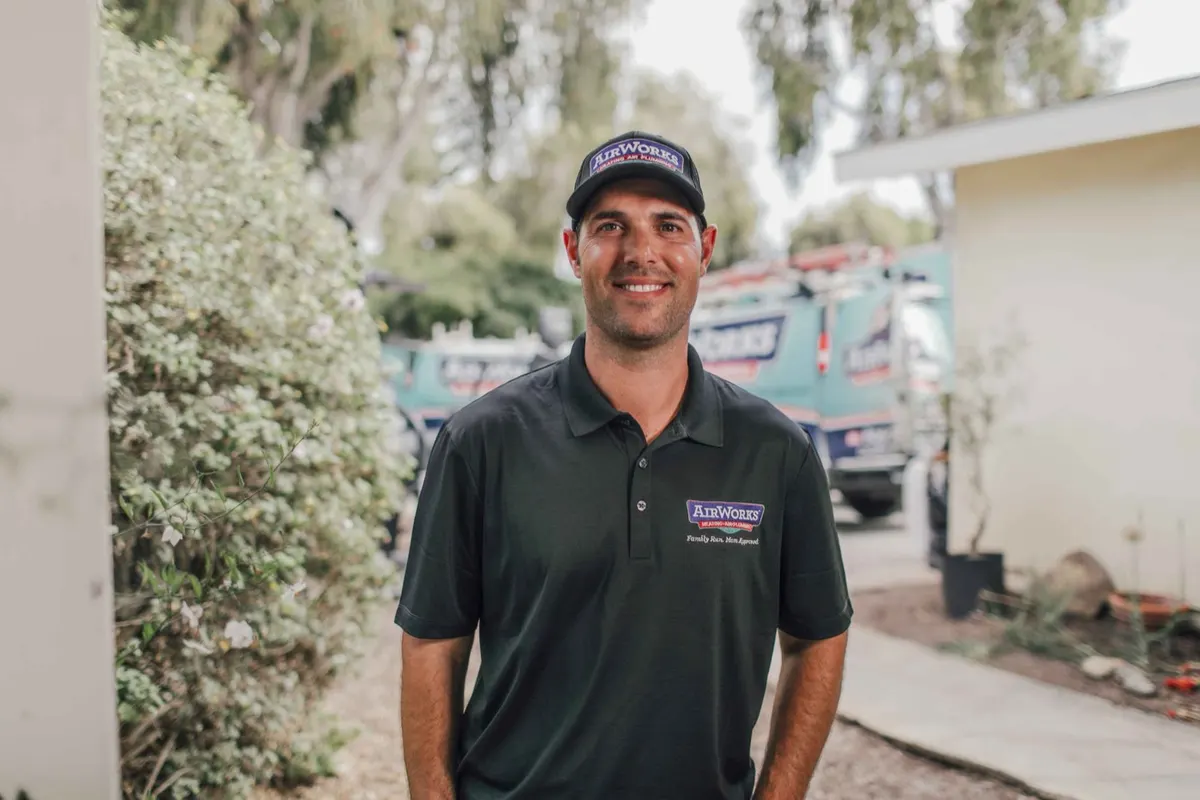
Kevin Allen
Co-Founder & Service Lead
Co-founded AirWorks in 2010 and has worked in Ventura County HVAC since 2002. Leads the service and installation crews — and the fix-what's-actually-broken ethic the company was built on.
Need Help?
Contact us today to discuss your needs. Our team is ready to help.
Related Articles
Options Comparisons for Homeowners: Heat Pump vs. Gas Furnace
Read Options Comparisons for Homeowners: Heat Pump vs. Gas FurnaceWhy Is Your Air Conditioner Hissing When Off? Causes and Diagnostics
Read Why Is Your Air Conditioner Hissing When Off? Causes and DiagnosticsHeat Pump vs. Gas Furnace: Technical Options Comparisons for Homeowners
Read Heat Pump vs. Gas Furnace: Technical Options Comparisons for HomeownersReady to Get Started?
Whether you need a repair, maintenance, or a new installation, our expert team is here to help.