Why Is My AC Running But Not Cooling? Common Homeowner Questions Answered
Kevin Allen
Co-Founder & Service Lead

Is Your AC Running Non-Stop Without Cooling Your Home?
Is your air conditioner running constantly, but your living room still feels like an oven? When the thermostat reads 80 degrees inside but your system hasn't cycled off in hours, getting your common homeowner questions answered quickly is the key to preventing a minor issue from becoming a major breakdown. It is incredibly frustrating to listen to your cooling equipment work overtime while you continue to sweat inside your own house.
If you need immediate assistance, explore our Air Conditioning Services or schedule an AC Emergency Repair today.
As a homeowner, you face a challenging dilemma: figuring out whether your system is simply struggling against extreme weather or if it is suffering from a mechanical breakdown. During a late August heatwave, the sheer volume of heat pressing down on your roof and walls creates massive thermal resistance. Late-summer heat accumulation forces systems to run longer cycles just to maintain baseline comfort. The heat baked into your attic and building materials from weeks of relentless sun means your air conditioner is starting from a disadvantage before it even powers on.
While some basic checks can be done safely at home, certain symptoms require professional intervention. Ignoring a continuously running, non-cooling system does not just result in high utility bills—it puts immense strain on the compressor and electrical components, often accelerating the need for emergency repairs.
Understanding the 15-20 Degree Rule During Extreme Heat
Before assuming your system is broken, you need to understand the design limits of standard residential HVAC equipment. The HVAC industry relies on a standard temperature differential, often referred to as "Delta T." This rule states that standard residential systems are designed to cool indoor air by a maximum of 15 to 20 degrees compared to the outdoor temperature.
Inland valley microclimates frequently push outdoor temperatures well past standard system design limits. When you are dealing with 90+ degree outdoor temperatures, your air conditioner is working at maximum capacity just to keep your indoor temperature at 75 degrees. If the outside temperature spikes to 105 degrees, a perfectly functioning air conditioner might only be able to cool your home to 85 degrees.
The Delta T Cooling Expectation Chart:
| Outdoor Temperature | Maximum Expected Indoor Cooling (20° Delta T) | System Status |
|---|---|---|
| 85°F | 65°F (Easily reaches typical 72°F set point) | Normal Operation |
| 95°F | 75°F | Running continuously, but functioning normally |
| 105°F | 85°F | Maxed out; cannot reach 72°F set point |
If your system is maintaining that 20-degree difference during a severe weather spike, it is not broken—it is simply maxed out. The equipment is removing heat exactly as it was engineered to do, but the thermal load of the house exceeds the system's capacity to drop the temperature any lower.

Airflow Restrictions: The Most Common Culprit
If your home is not maintaining the 20-degree differential, restricted airflow is the first thing you should investigate. Air conditioners do not actually "create" cold air; they absorb heat from inside your home and move it outside. If air cannot freely circulate over your indoor evaporator coil, the system cannot remove the heat, causing it to run endlessly without lowering the room temperature.
For homeowners in Somis and surrounding Ventura County inland areas, heavy dust and dry winds can severely impact airflow. Follow these safe, top-of-funnel DIY checks before calling a professional:
- Check and replace your air filter: Dirty air filters clog rapidly during heavy summer use. A clogged filter chokes the blower motor, drastically reducing the volume of air passing over the cooling coils. Pull your filter out and hold it up to a light source. If you cannot see light shining through the material, replace it immediately.
- Verify all indoor vents are open: Walk through every room and ensure that all return grilles and supply vents are fully open. Closing vents in unused rooms actually increases static pressure inside the ductwork, making the blower motor work harder and reducing overall system efficiency.
- Clear obstructions: Ensure no heavy furniture, thick rugs, or heavy drapes are blocking your vents. Even a couch placed a few inches too close to a return grille can starve the system of the air it needs to function.
- Review your thermostat settings: Verify the thermostat is set to "Cool" and the fan is set to "Auto" rather than "On." One local customer reached out during the winter because they were concerned about their system's performance. A technician named Mike checked the heater, confirmed it was actually in good working order, and took the time to explain the thermostat programming. This simple step often resolves airflow and temperature confusion year-round, whether you are heating or cooling.
For more safe maintenance routines, review our DIY AC Troubleshooting Tips.
Frozen Evaporator Coils: Why Ice Forms in the Summer
One of the most counterintuitive symptoms of an air conditioner running without cooling is the formation of ice. Finding ice on your equipment during a late August heatwave feels impossible, but it is a highly common mechanical reaction to specific system failures.
The Problem: You notice warm air blowing from your supply vents, even though the system has been running for hours. When you inspect the indoor unit, you see a thick layer of white ice forming on the copper refrigerant lines or directly on the indoor evaporator coil. You might also notice water pooling around the base of the indoor unit as the ice slowly melts and overwhelms the drain pan.
The Cause: Ice forms when the temperature of the evaporator coil drops below freezing. This happens for two primary reasons: severe airflow restrictions or low refrigerant levels. If a clogged filter prevents warm household air from blowing over the cold coil, the condensation on the coil freezes solid. Alternatively, if the system is low on refrigerant due to a leak, the pressure inside the copper lines drops. According to the laws of thermodynamics, a drop in pressure causes a drop in temperature, freezing the surrounding moisture.
The Solution: Your immediate action is critical. Go to your thermostat and turn the cooling setting to "Off." Then, switch the fan setting from "Auto" to "On." This forces warm indoor air to blow constantly over the frozen coil, allowing the ice to melt safely into the drain pan. Never attempt to scrape or chip the ice off manually. The aluminum fins and copper tubes are incredibly fragile; striking them with a tool will cause a catastrophic refrigerant leak and permanently destroy the coil.
Outdoor Condenser Issues: Heat Accumulation and Blockages
While the indoor unit absorbs heat, the outdoor unit (the condenser) is responsible for releasing that heat into the outside air. If the condenser cannot successfully exhaust the heat, the entire cooling cycle grinds to a halt. The outdoor unit utilizes a large fan to pull ambient air through a series of tightly packed metal fins, cooling the hot refrigerant gas back into a liquid.
When you are facing 90+ degree outdoor temperatures, the ambient air is already incredibly hot, making the condenser's job exponentially harder. If the unit is forced to operate with blockages, it will run continuously without cooling your home.
Common Condenser Blockages:
- Overgrown vegetation: Shrubs, tall grass, and creeping vines often grow directly into the side of the condenser, suffocating the air intake.
- Debris accumulation: Leaves, twigs, and trash can get sucked against the metal fins by the powerful pull of the fan.
- Extreme dirt buildup: Dust, pollen, and lawnmower clippings coat the metal fins over time, acting like a thick, insulating blanket that traps heat inside the coils.
Safe Homeowner Actions: Walk outside and ensure there is a minimum of a 2-foot clearance completely around the unit. Trim back any bushes or branches. If the metal fins look dirty, you can perform a basic cleaning. First, locate the outdoor disconnect switch and turn the power off entirely. Then, take a standard garden hose and gently rinse the outside of the fins at a downward angle to wash away loose dirt and debris. Never use a high-pressure washer, as the intense spray will instantly bend and crush the delicate aluminum fins, destroying the unit's airflow.
Mechanical Failures That Require Professional Diagnosis
Once you have verified your filter is clean, your vents are open, and your outdoor unit is clear of debris, the boundary between safe DIY checks and complex mechanical failures becomes clear. If the system is still running non-stop without cooling your home, you are likely dealing with a component failure that requires licensed experts.
For residents in Somis and surrounding Ventura County inland areas, AirWorks Heating, Air & Plumbing provides a rapid and expert diagnostic process. Our technicians do not just guess at the problem; they utilize advanced diagnostic tools to pinpoint the exact root cause quickly and accurately, ensuring you are not paying for unnecessary guesswork. During a previous winter, one customer experienced an unspecified problem with their AC system. A technician named Bill promptly and competently determined the problem and fixed it, restoring comfort quickly and safely. This same rigorous diagnostic approach applies to every summer cooling failure we encounter.
If you suspect a mechanical failure, scheduling a comprehensive AC Inspection and Testing service is the safest next step.
Failing Capacitors
The capacitor is a small, cylindrical electrical component located inside the outdoor condenser. It acts as a massive battery jump-start for the compressor and the fan motor, delivering the massive jolt of electricity required to start heavy mechanical parts. Capacitors are highly susceptible to failure during extreme heat because the oil inside them degrades and swells under thermal stress. If you hear a loud humming or buzzing noise coming from the outdoor unit, but the fan blade is not spinning, you likely have a blown capacitor. This component stores lethal amounts of high voltage even when the power is disconnected, so it requires professional replacement.
Refrigerant Leaks
Air conditioning systems are closed-loop networks. They do not "consume" or "burn up" refrigerant like a car burns gas. If your system has low refrigerant levels, it means there is a physical hole or crack in the copper lines or coils. Symptoms of a leak include hissing sounds near the equipment, frozen indoor coils, and a system that runs constantly while blowing lukewarm air. Topping off the system with more refrigerant without locating and brazing the leak is a temporary, costly band-aid. Handling refrigerant requires specialized recovery equipment and EPA certification to locate and repair the leak safely.
Compressor Strain and Failure
The compressor is the heart of your HVAC system, responsible for pumping refrigerant through the lines. When airflow is restricted or refrigerant is low, the compressor has to work twice as hard to achieve the same result. Continuous, non-stop running puts immense strain on this vital component, causing it to overheat and eventually seize up entirely. Replacing a burned-out compressor is one of the most significant repairs a system can require.
When to Repair vs. Replace an Aging System
Sometimes, a continuously running air conditioner is not a symptom of a simple fix, but an indication that the system has reached the end of its functional lifespan. Older systems inherently lose efficiency over time as internal components wear down, coils corrode, and motors lose their torque. When a late August heatwave hits, an aging system will struggle significantly more than a modern unit.
As a homeowner, you must weigh the upfront cost of repairs against the long-term savings of modern, high-efficiency units. A common industry guideline is the age-and-frequency rule: if your system is over 10 to 12 years old and requires frequent, expensive interventions to keep it running, sinking more funds into it yields diminishing returns.
When a major component like a compressor fails on an older unit, AC Installation and Replacement is often the more pragmatic choice. Modern systems feature advanced scroll compressors, variable-speed blowers, and significantly higher SEER (Seasonal Energy Efficiency Ratio) ratings, meaning they cool your home faster while consuming a fraction of the electricity.
Repair vs. Replace Considerations:
| Factor | Lean Toward Repair | Lean Toward Replacement |
|---|---|---|
| System Age | Under 10 years old | Over 12-15 years old |
| Repair Frequency | First major issue in years | Multiple service calls per season |
| Energy Bills | Consistent year over year | Spiking dramatically each summer |
| Refrigerant Type | Modern R-410A or newer | Obsolete R-22 (Freon) |
If you decide to upgrade, keep in mind that general energy rebates or federal tax credits may apply to new, qualifying high-efficiency installations. Always verify current incentive programs with your utility provider or a tax professional to maximize your investment.
Frequently Asked Questions About AC Cooling Issues (Common Homeowner Questions Answered)
When your system struggles against 90+ degree outdoor temperatures, you need direct, reliable answers. Here are the most common queries we receive regarding continuously running air conditioners.
Why is my AC running but not cooling the house?
This issue is usually caused by restricted airflow, frozen evaporator coils, or a refrigerant leak. When diagnosing what to check when your AC runs but doesn't cool, start with these safe steps:
- Inspect your air filter: Replace it if it is dirty or clogged.
- Check your thermostat: Ensure it is set to "Cool" and "Auto."
- Verify vent clearance: Make sure no furniture or rugs block your indoor vents.
- Inspect the outdoor unit: Clear away any leaves, weeds, or debris blocking the condenser fins.
If these basic checks do not restore cooling, a professional diagnostic is required.
Should I turn off my AC if it's running but not cooling?
Yes, immediately turn the system off at the thermostat. Continuing to run an air conditioner that is not cooling can burn out the compressor or cause severe ice buildup on the indoor coils. Leaving it running forces the electrical components to overheat, turning a minor repair into a catastrophic system failure.
Is my AC broken or is it just too hot outside?
Apply the 15-20 degree rule to find out. If your air conditioner is successfully cooling the home 20 degrees below the current outdoor temperature, it is functioning at its maximum design limit, not broken. However, if it is 95 degrees outside and your indoor temperature is stuck at 82 degrees, the system is underperforming and needs attention.
How long does it take for an AC to cool a house?
Typically, a properly sized and functioning HVAC system lowers the indoor temperature by about 1 degree per hour. However, this rate slows down significantly during peak afternoon heat when thermal radiation is at its highest. If the system runs for three hours and the temperature has not dropped a single degree, there is an underlying mechanical or airflow issue.
What causes an AC to run constantly without lowering the temperature?
A failing compressor, severe refrigerant loss, or massive heat infiltration from poor insulation can cause non-stop cycles. When the system lacks the mechanical ability to remove heat, the thermostat never registers that the target temperature has been reached. The thermostat continues sending a signal to run, resulting in endless operation and zero comfort.
Get Expert Help for Your Cooling System Today
Understanding the difference between normal system limits and actual mechanical failure brings immense peace of mind to any homeowner. When you know how your equipment is supposed to behave during extreme weather, you can make informed decisions about your comfort and your budget.
If your safe DIY checks do not resolve the issue, or if you suspect a complex mechanical fault, do not let the system run endlessly. For residents in Somis and surrounding Ventura County inland areas, prompt intervention is the best way to protect your equipment from permanent damage. Encourage yourself to schedule a professional diagnostic to pinpoint the exact cause. Getting your common homeowner questions answered by a licensed expert ensures your home returns to a cool, comfortable sanctuary as quickly as possible.
About the Author
Kevin Allen
Co-Founder & Service Lead
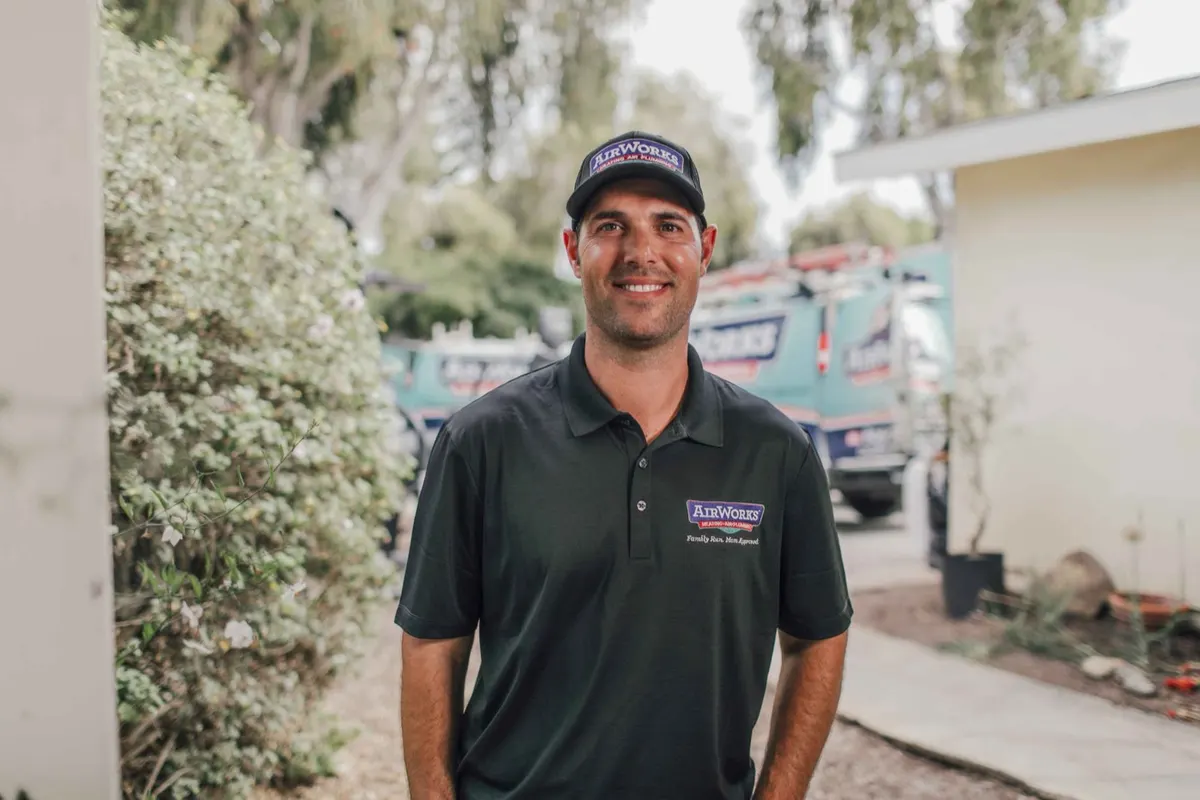
Co-founded AirWorks in 2010 and has worked in Ventura County HVAC since 2002. Leads the service and installation crews — and the fix-what's-actually-broken ethic the company was built on.
Need Help?
Contact us today to discuss your needs. Our team is ready to help.
Related Articles
Options Comparisons for Homeowners: Heat Pump vs. Gas Furnace
Read Options Comparisons for Homeowners: Heat Pump vs. Gas FurnaceWhy Is Your Air Conditioner Hissing When Off? Causes and Diagnostics
Read Why Is Your Air Conditioner Hissing When Off? Causes and DiagnosticsHeat Pump vs. Gas Furnace: Technical Options Comparisons for Homeowners
Read Heat Pump vs. Gas Furnace: Technical Options Comparisons for HomeownersReady to Get Started?
Whether you need a repair, maintenance, or a new installation, our expert team is here to help.