Summer Cooling Tips to Lower Energy Bills & Save Money
Kevin Allen
Co-Founder & Service Lead

Discover summer cooling tips to lower energy bills with smart thermostat settings, air sealing, insulation upgrades, and AC maintenance for Ventura County homes.
Why Summer Energy Bills Spike — And What You Can Do Right Now
The best summer cooling tips to lower energy bills come down to a simple idea: stop heat from getting in, then manage what you do use as efficiently as possible. Here is a quick overview of the most impactful actions you can take today.
Top Summer Cooling Tips to Lower Energy Bills:
- Set your thermostat to 78°F when home and raise it when you are away
- Use ceiling fans to create a wind-chill effect and raise the thermostat 4°F without discomfort
- Close blinds and curtains on south- and west-facing windows during peak afternoon heat
- Replace AC filters every 30 to 60 days to keep airflow efficient
- Seal air leaks around windows and doors with caulk or weatherstripping
- Run heat-generating appliances like dishwashers and dryers after 6 PM
- Schedule annual professional AC maintenance before summer peaks
- Insulate your attic to stop heat from pouring into your living spaces
Summer in Ventura County brings long stretches of intense heat, and for most households, that means the AC runs longer, harder, and more expensively. As much as 50% of your home's energy use during warm months can come from your heating and cooling system alone. When you add in water heating, lighting, and appliances that generate extra heat, those utility bills can climb fast — often faster than the outdoor temperature.
The good news is that many of the most effective fixes cost little or nothing. Adjusting your thermostat, using fans the right way, blocking sunlight before it heats up a room — these are habits that pay off immediately. Other steps, like sealing air leaks or maintaining your AC system, require a small upfront effort but deliver real, lasting savings every summer.
This guide walks you through every layer of the problem: how heat gets into your home, how your cooling system responds to it, and what you can do — whether you are a renter or a homeowner — to stay comfortable without watching your energy bill climb.
I’m Kevin Allen, co-founder of AirWorks. I started in commercial HVAC across Ventura County in 2002. Let’s get into everything you need to know to stay cool and keep your bills under control this summer.
Important summer cooling tips to lower energy bills terms:
Summer Cooling Tips to Lower Energy Bills: Thermostat & Ventilation Strategies
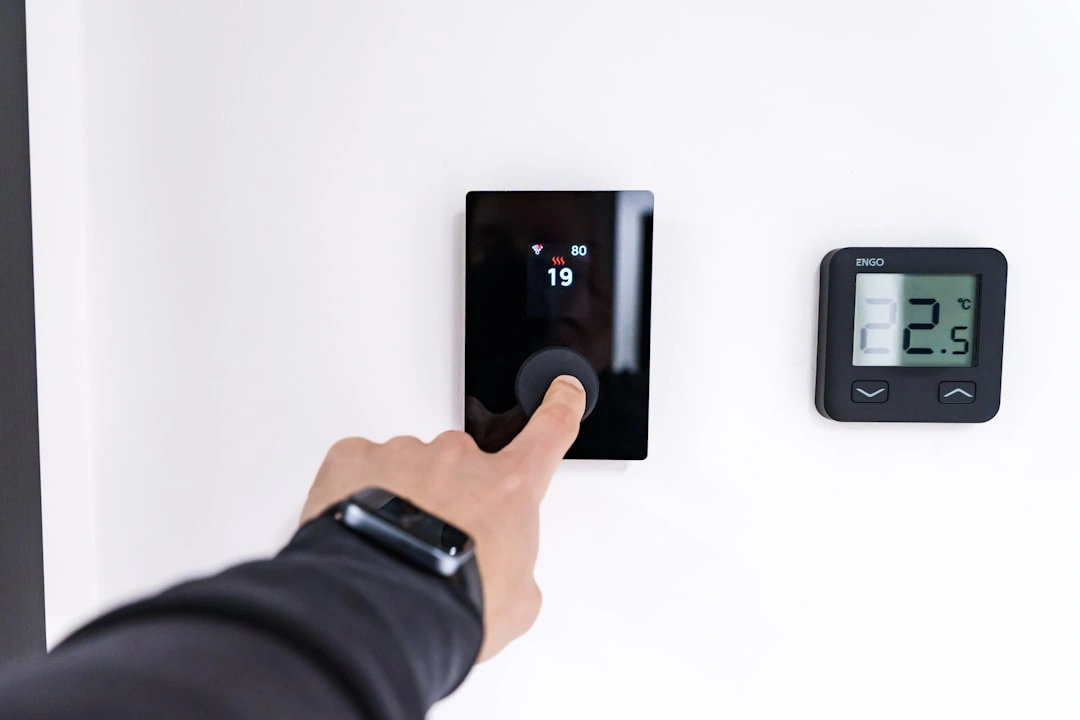
Managing how you control your indoor climate is the fastest way to see a drop in your monthly utility costs. Many homeowners believe that keeping their home at a constant, chilly temperature all day is the most efficient method, but building science says otherwise. In fact, minimizing the temperature difference between the indoors and outdoors reduces the rate at which heat enters your home, meaning your AC system doesn't have to work nearly as hard.
According to the Department of Energy, setting your thermostat to 78°F when you are at home offers the best balance between comfort and energy savings. If that feels a bit too warm initially, try raising the temperature by just one degree at a time to let your body adjust. Each degree you set your thermostat above 75°F can save you anywhere from 10% to 15% on the energy your AC uses.
Another highly effective strategy is "pre-cooling." If your utility provider uses Time-of-Use (TOU) rate plans—which are incredibly common throughout Sacramento, Elk Grove, and Ventura County—electricity costs significantly more during peak hours (usually between 4 PM and 9 PM). By lowering your thermostat a few degrees in the morning and early afternoon when rates are low, you can "charge" your home with cool air. When peak hours arrive, you can raise the thermostat to 78°F or higher, allowing your home's thermal mass to keep you comfortable while your AC takes a well-deserved break during the most expensive hours of the day.
If you are leaving the house for more than four hours, don't leave the AC running at your normal comfort level. You can save as much as 5% to 10% a year on cooling by simply adjusting your thermostat 7°F to 10°F higher for eight hours a day.
Implementing Summer Cooling Tips to Lower Energy Bills with Smart Thermostats
While manual adjustments work perfectly in theory, remembering to change your thermostat before leaving for work or heading to bed is easier said than done. This is where smart and programmable thermostats become your ultimate savings weapon. These devices automate your temperature schedule, ensuring you never accidentally waste money cooling an empty house.
A smart thermostat learns your daily routine and automatically implements setbacks when you are away. Many models also allow you to control your home's climate remotely via a smartphone app. If you are heading home early from a day at the beach in Ventura or Ventura Harbor, you can easily cue your AC to start cooling about 30 minutes before you arrive.
For homes utilizing zoned HVAC setups, smart controls are even more powerful. If you have a multi-zone system or are wondering Do Mini Splits Save Money on Energy Bills, the answer is a resounding yes. Mini-split systems allow you to cool only the rooms you are currently using—like the living room during the day and bedrooms at night—rather than wasting energy cooling empty guest rooms or formal dining areas. Pairing these systems with smart, localized thermostats maximizes your efficiency without sacrificing a shred of comfort.
How Ceiling Fans and Ventilation Support Summer Cooling Tips to Lower Energy Bills
If you want to keep your thermostat set higher without feeling like you are living in a sauna, ceiling fans are your best friends. It is important to understand the physics of how fans work: fans cool people, not rooms. They do not lower the actual air temperature of a space; instead, they create a "wind-chill effect" on your skin, evaporating moisture and making you feel up to four degrees cooler than the ambient room temperature.
Because fans only cool people, leaving a ceiling fan running in an empty room is simply wasting electricity—even if it is a small amount. Always turn fans off when you leave a room. During the summer, ensure your ceiling fans are rotating in a counterclockwise direction. This pushes a refreshing breeze straight down, creating that vital wind-chill effect.
In terms of energy consumption, fans are incredibly cheap to operate. A typical ceiling fan uses roughly 1/60th of the electricity consumed by a central AC unit. By pairing your ceiling fan with your AC, you can comfortably raise your thermostat setting by 4°F with zero loss in comfort, cutting back on your overall air conditioning needs and saving up to 40% on your cooling electricity.
In regions like Simi Valley, Thousand Oaks, or parts of Sacramento where the air cools down significantly at night, you can also leverage natural ventilation. Known as "night flushing," this technique involves opening windows on opposite sides of your home once the outdoor temperature drops below your indoor temperature. This creates a natural cross-breeze that draws cool evening air in and pushes warm, stagnant air out. Just remember to close your windows and pull your blinds shut early in the morning before the sun begins to bake your home again.
Passive Cooling: Air Sealing, Insulation, and Window Coverings
Before you even think about turning on your AC, you should focus on passive cooling. Passive cooling is all about keeping outdoor heat from penetrating your living space in the first place. Think of your home as a giant cooler: if you leave the lid cracked or have thin, uninsulated walls, your ice is going to melt incredibly fast. By reinforcing your home’s outer shell—often referred to as the building envelope—you make it much easier for your AC to do its job.
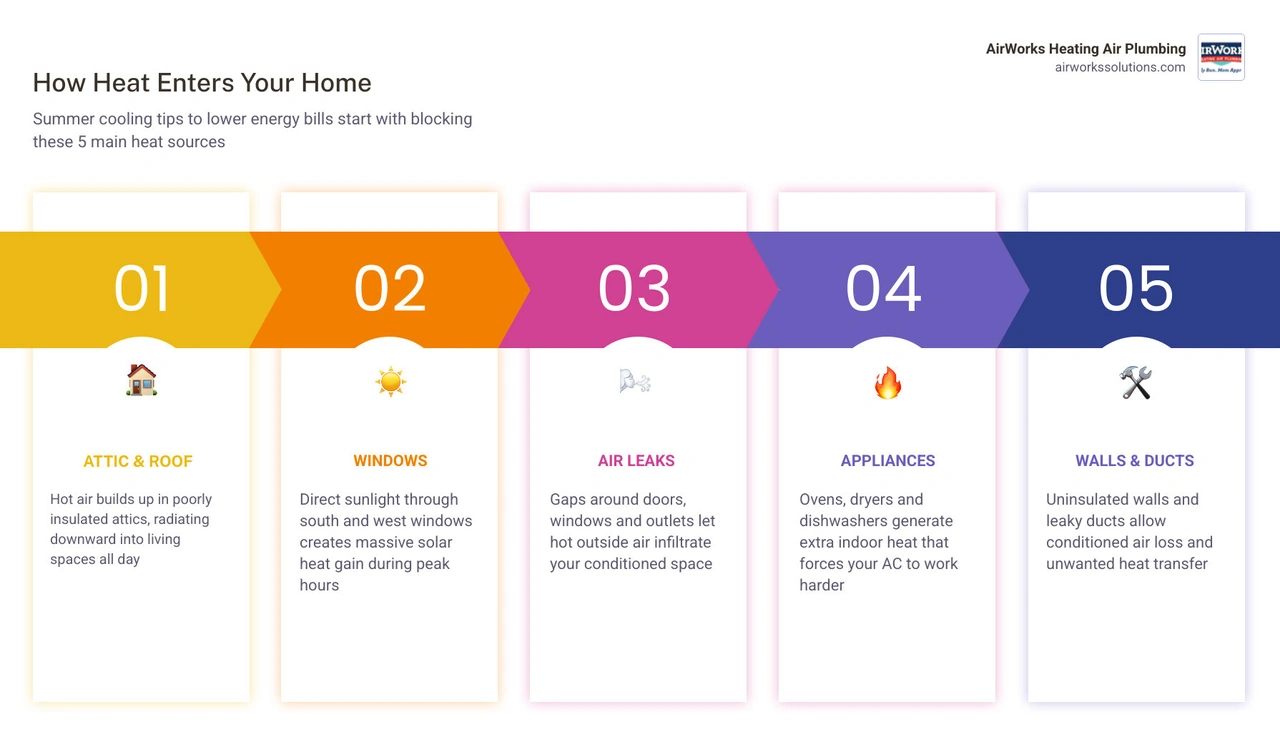
Heat enters your home in three main ways: solar radiation (sunlight streaming through windows), conduction (heat traveling through your roof, walls, and attic), and infiltration (hot outdoor air leaking through cracks and gaps). Addressing these pathways is one of the most effective, permanent ways to lower your energy bills.
Sealing Air Leaks and Upgrading Attic Insulation
Your attic is often a silent "heat bomb." On a typical 95°F summer day in Oxnard or Santa Paula, an uninsulated attic can easily reach temperatures between 150°F and 180°F. Without a proper barrier, that intense heat radiates straight down through your ceiling and into your bedrooms. Furthermore, if your home has leaky ductwork running through the attic, you could be losing up to 15% to 30% of your precious, cooled air before it ever reaches your living spaces.
Sealing air leaks and upgrading your insulation is a highly effective way to combat this. In fact, sealing air leaks could save you up to 20% on your annual heating and cooling costs. Start by inspecting the common culprits for drafts: gaps around exterior doors, window frames, plumbing penetrations, and electrical outlets. Applying a simple bead of exterior-grade caulk or installing fresh weatherstripping is a quick, low-cost DIY project that yields immediate results. For a detailed roadmap on how to address these drafty areas, check out our Home Air Sealing Ventura County Tips.
Once your home is sealed, it is time to look upward. If you are wondering, "How Much Attic Insulation Do I Need," the answer depends on your specific climate zone, but most homes in our service areas benefit greatly from upgrading to an R-38 or R-60 rating. If you live in Oxnard or Somis, we have put together localized guides to help you navigate this process:
- Emergency Attic Insulation in Oxnard CA
- Attic Insulation Somis CA Guide
- Attic Insulation Oxnard CA Guide
Window Coverings and Landscaping as Thermal Armor
Windows are responsible for roughly 25% to 30% of your home's residential heating and cooling loads. When direct sunlight hits a glass window, it acts like a greenhouse, magnifying the heat and raising indoor temperatures by up to 10 degrees.
To prevent this, make it a habit to close your window coverings—especially on south- and west-facing windows—before you leave for the day or as soon as the sun starts hitting them. Highly efficient window treatments, such as cellular shades (or honeycomb shades), can reduce solar heat gain by up to 62% compared to bare windows. Another fantastic option is reflective window film, which blocks up to 79% of solar energy and protects your furniture from UV damage without completely blocking your view.
You can also use nature as "thermal armor" for your home. Strategic landscaping is a beautiful and highly effective way to block solar heat. Planting deciduous trees or thick shrubs on the south and west sides of your house can shade your roof and walls, making your cooling systems up to 10% more efficient. Because deciduous trees drop their leaves in the winter, they allow welcome sunlight to warm your home during the colder months while providing dense, protective shade all summer long.
AC Maintenance, Water Heating, and Appliance Efficiency
While passive cooling and thermostat management lay a strong foundation, the mechanical systems inside your home still do the heavy lifting. To maximize your savings, you must ensure your AC is running at peak thermodynamic efficiency, while also minimizing the secondary heat sources inside your home.
Every appliance you run—from your water heater to your oven—consumes energy and often releases heat back into your indoor air, forcing your AC to work double-time to remove it.
Maximizing AC Efficiency and Upgrading Systems
Your AC system works by absorbing heat from your indoor air and transferring it outside. If anything restricts this heat transfer process, your system has to run longer and consume substantially more electricity to keep you cool.
The single most important DIY maintenance task is replacing your air filters regularly. A dirty, clogged filter restricts airflow, forcing the system's blower motor to work harder and run longer. Clearing a clogged AC unit filter alone can save you 5% to 15% in energy use. We recommend checking your filter every 30 days during the peak summer months and replacing it as soon as it looks grey or dusty.
Beyond filters, your system needs professional attention to maintain its optimal efficiency. Dirty evaporator or condenser coils can increase your system's energy consumption by up to 30% because dirt acts as an insulator, blocking heat transfer. During a professional tune-up, a technician will clean these coils, check refrigerant levels (low refrigerant can cause your system to run constantly and eventually freeze up), and inspect electrical connections.
If your current system is more than 10 to 15 years old and requiring frequent repairs, it may be time to consider an upgrade. Modern cooling systems are vastly more efficient than those manufactured a decade ago. For example, switching to a high-efficiency heat pump can offer incredible year-round savings. To learn more about how these modern systems compare and how they can benefit your home, explore our guides on Energy Efficient HVAC Ventura County, Heat Pumps vs Furnaces Which is Best for Your Home, and Heat Pump Benefits for Homeowners.
| Cooling Method | Typical Power Draw | Relative Energy Efficiency | Estimated Operating Cost |
|---|---|---|---|
| Ceiling Fan | 30 - 75 Watts | Extremely High (Cools people directly) | Extremely Low |
| Ductless Mini-Split | 400 - 1,200 Watts | Very High (Inverter technology & zoning) | Low to Medium |
| Central AC (Older) | 3,000 - 5,000 Watts | Low to Moderate (Fixed-speed compressor) | High |
| Central AC (Modern High-SEER2) | 1,500 - 3,000 Watts | High (Two-stage or variable-speed) | Moderate |
Managing Water Heaters, Pool Pumps, and Appliances
Many homeowners are surprised to learn that water heating accounts for about 18% of the energy consumed in your home—making it the second-largest energy expense for most households. The Consumer Product Safety Commission recommends setting your water heater temperature no higher than 120°F. Many manufacturers ship water heaters set to 140°F, which not only poses a scalding risk but also wastes a significant amount of standby energy keeping water unnecessarily hot.
If you have a swimming pool at your home in Camarillo, Folsom, or Sacramento, your pool pump is likely another massive energy draw. Upgrading to a variable-speed pool pump can save you up to $625 a year in electricity because it can run at lower, highly efficient speeds for most of the day. Additionally, using a pool cover when the pool is not in use reduces water evaporation and heat loss, saving you even more on heating and chemical costs.
Finally, pay close attention to your daily household habits. Heavy-duty appliances like ovens, clothes dryers, and dishwashers generate an immense amount of indoor heat. Using your oven on a 100°F afternoon can raise your kitchen's temperature by 3 to 5 degrees, forcing your AC to run a marathon to cool it back down.
Quick No-Cost Daily Habits to Reduce Heat Gain:
- Wash your laundry in cold water (90% of a washing machine's energy goes toward heating the water)
- Hang-dry your clothes on an outdoor line instead of running the dryer
- Cook meals outdoors on a grill, or use a microwave, toaster oven, or air fryer instead of your main oven
- Switch your home's lighting to LED bulbs, which run cool to the touch and save up to $260 a year in energy costs compared to hot, inefficient incandescent bulbs
- Unplug "phantom" energy drawers like chargers, game consoles, and small appliances when they aren't in use
Frequently Asked Questions
What is the most effective temperature setting for my AC in the summer?
The most effective setting recommended by the Department of Energy is 78°F when you are at home. If you want to maximize your savings, raise the thermostat to 85°F when you are away from home for four hours or more. Every degree you set your thermostat above 75°F can save you up to 10% to 15% on your cooling costs. If 78°F feels too warm, pairing your AC with a ceiling fan can make the room feel up to four degrees cooler due to the wind-chill effect.
Do ceiling fans actually lower the temperature of a room?
No, ceiling fans do not lower the actual air temperature of a room. They cool people, not spaces, by moving air across your skin and creating a wind-chill effect. Because they don't lower the room's temperature, leaving a ceiling fan running in an empty room is a waste of electricity. Always turn fans off when you leave the room.
How much can I save by sealing air leaks and upgrading insulation?
Sealing air leaks and upgrading your attic insulation can save you up to 20% on your annual heating and cooling costs. By preventing hot outdoor air from infiltrating your home and stopping attic heat from radiating through your ceilings, you drastically reduce the workload on your AC system, leading to lower energy bills and a much more comfortable home.
Conclusion
Taking a layered approach to your home's climate is the ultimate secret to beating the heat without breaking the bank. By starting with simple behavioral shifts—like raising your thermostat to 78°F, closing your blinds during peak afternoon hours, and utilizing ceiling fans—you can see immediate relief on your next utility bill. When you couple those habits with passive improvements like air sealing, proper insulation, and regular professional AC maintenance, you create a highly efficient home that stays naturally cooler.
Whether you are looking to optimize your current system or are ready to explore a high-efficiency system upgrade, our team at AirWorks Heating, Air & Plumbing is here to help. We have spent over a decade providing honest, reliable, and customer-focused HVAC and plumbing solutions to our neighbors throughout Ventura County.
If you want to find the exact areas where your home is losing energy, consider scheduling a Whole Home Health Audit with us. We will inspect your insulation, check for duct leaks, and ensure your cooling system is primed for peak performance.
Ready to maximize your comfort and minimize your bills? Schedule professional AC services with AirWorks Heating, Air & Plumbing today, and let’s make this summer your most comfortable—and cost-effective—one yet!

About the Author
Kevin Allen
Co-Founder & Service Lead
Co-founded AirWorks in 2010 and has worked in Ventura County HVAC since 2002. Leads the service and installation crews — and the fix-what's-actually-broken ethic the company was built on.
Need Help?
Contact us today to discuss your needs. Our team is ready to help.
Related Articles
Options Comparisons for Homeowners: Heat Pump vs. Gas Furnace
Read Options Comparisons for Homeowners: Heat Pump vs. Gas FurnaceWhy Is Your Air Conditioner Hissing When Off? Causes and Diagnostics
Read Why Is Your Air Conditioner Hissing When Off? Causes and DiagnosticsHeat Pump vs. Gas Furnace: Technical Options Comparisons for Homeowners
Read Heat Pump vs. Gas Furnace: Technical Options Comparisons for HomeownersReady to Get Started?
Whether you need a repair, maintenance, or a new installation, our expert team is here to help.