
Is Your R-410A System a Ticking Financial Clock?
Kevin Allen
Co-Founder & Service Lead

Is Your R-410A System a Ticking Financial Clock in Ventura County?
The 2026 Refrigerant Transition is already underway — and if your home in Ventura County runs on an R-410A air conditioning system, the clock on affordable repairs and easy service has officially started ticking.
Here is what you need to know right now:
- What changed: As of January 1, 2026, newly installed residential and light commercial AC systems must use low-GWP refrigerants (GWP ≤ 700), such as R-454B or R-32. R-410A is no longer used in new equipment.
- What it means for existing systems: You do not have to replace your R-410A system today, but it is now officially "legacy" technology. The refrigerant it needs is being produced at only 60% of its historical baseline — and that number keeps dropping.
- Why repairs are getting harder: With production of R-410A being phased down under the EPA's AIM Act, supply is tightening and service complexity is rising.
- What the new systems use: A2L refrigerants like R-454B (GWP: 466) and R-32 (GWP: 675) are now the standard for all new installations — both are dramatically better for the environment than R-410A (GWP: 2,088).
- The bottom line: A repair on an aging R-410A system today may be a "throwaway" investment on equipment with a shrinking future. Understanding your options now puts you in control.
This is not a distant regulatory shift — it is happening right now, in May 2026, in homes and neighborhoods across Camarillo, Thousand Oaks, and the rest of Ventura County.
I’m Kevin Allen, co-founder of AirWorks and the qualifying individual on our California licence. In this guide, we’ll walk you through everything you need to make a confident, informed decision about your home’s HVAC system.

Understanding the 2026 Refrigerant Transition
The 2026 Refrigerant Transition isn't just a technical change; it’s part of a global effort to protect our environment. For years, the HVAC industry relied on hydrofluorocarbons (HFCs) like R-410A. While these were great at cooling our homes, they had a high Global Warming Potential (GWP). GWP is a measure of how much heat a gas traps in the atmosphere compared to carbon dioxide.
To put it simply, if R-410A leaks, it’s significantly more impactful on the climate than the new alternatives we are installing today. Under the American Innovation and Manufacturing (AIM) Act, the EPA has mandated a phasedown of these high-GWP HFCs. We are currently in the middle of a major step-down, where the production of R-410A has been slashed to just 60% of its original baseline.
Understanding how your system works during this shift is vital. For instance, How Does a Heat Pump Work is a question many of our neighbors in Simi Valley and Moorpark are asking as they look toward more efficient, compliant technology.
| Refrigerant Type | Global Warming Potential (GWP) | Status in 2026 |
|---|---|---|
| R-410A | 2,088 | Legacy / Phase-out |
| R-32 | 675 | Current Standard |
| R-454B | 466 | Current Standard |
Key Deadlines for the 2026 Refrigerant Transition
The most critical date for homeowners was January 1, 2026. As of that day, we can no longer install new residential air conditioning or heat pump systems that use refrigerants with a GWP higher than 700.
This means that if you are looking for a new installation in Thousand Oaks or Oxnard today, the equipment we provide will exclusively feature the new A2L refrigerants. While there was a small "sell-through" period for equipment manufactured before 2025, that window has largely closed for new system installations.
Why the EPA Mandated the Shift
The primary goal of the EPA is to reduce greenhouse gas emissions. By transitioning to refrigerants like R-454B and R-32, the HVAC industry is contributing to an 85% reduction in HFC production and consumption by 2036. This shift aligns the United States with international climate agreements, such as the Kigali Amendment to the Montreal Protocol. For you, the homeowner, it means your cooling system is no longer just a luxury—it's a piece of a global sustainability puzzle.
The Shift to A2L Refrigerants: R-454B and R-32
You may have heard the term "A2L" recently. This refers to a specific ASHRAE safety classification. In the past, most home AC systems used "A1" refrigerants, which were non-flammable. A2L refrigerants, such as R-454B and R-32, are classified as "mildly flammable."
Now, before that word "flammable" causes any alarm, it's important to understand the scale. A2L refrigerants are incredibly difficult to ignite and have a very slow burning velocity. In fact, many common household items in your kitchen are more flammable than the gas inside a modern A2L heat pump.

Safety Features in the 2026 Refrigerant Transition
Because of this mild flammability, the equipment we install today in Ventura and Santa Barbara counties is more advanced than ever. These systems are designed with built-in safety measures that didn't exist in the R-410A era.
As a local safety authority, our team at AirWorks Heating, Air & Plumbing has undergone specialized training to handle these components. Our technicians are specifically trained to install and calibrate the new leak-detection sensors required for these mildly flammable refrigerants, ensuring your home remains safe and compliant.
New A2L systems include:
- Refrigerant Detection Sensors: These sensors constantly monitor for leaks within the indoor coil cabinet.
- Automatic Shutdown: If a leak is detected, the system automatically shuts down the compressor and engages the indoor fan to safely dissipate the refrigerant.
- Enhanced Ventilation: Modern codes require specific airflow rates to ensure that even in the event of a leak, the concentration of refrigerant never reaches a level that could pose a risk.
Efficiency Gains with New Technology
The good news for your wallet is that these new systems aren't just greener; they are often more efficient. Systems using R-32 or R-454B can deliver up to 10% greater energy efficiency than their R-410A predecessors. When deciding between Heat Pumps vs Furnaces: Which is Best for Your Home, these efficiency gains make heat pumps an even more attractive option for our Mediterranean climate.
Why Your Current R-410A System is a Legacy Asset
If your home still uses an R-410A system, it has officially become a "legacy asset." There are over 80 million of these systems installed across the country, and they will need service for the next 15 to 20 years. However, the 2026 Refrigerant Transition has changed the economics of keeping them running. Homeowners need to know that a simple repair today might be a "throwaway" investment tomorrow.
As production caps tighten, the price of R-410A refrigerant has already doubled in many cases. What used to be a standard repair can now become a significant expense simply because the "gas" itself is becoming scarce.
How the 2026 Refrigerant Transition Affects Repairs
When we visit a home in Agoura Hills or Westlake Village for a repair, we have to be much more strategic. Because virgin R-410A is limited, the industry is relying more on "reclaimed" refrigerant—gas that has been recovered from old systems, purified, and tested.
By 2029, the production of new R-410A will drop even further, making reclaimed supply the primary source for repairs. This increased service complexity means that for an older unit, a simple leak repair might cost nearly as much as a significant portion of a new, efficient system. This is why we recommend checking our Best Heat Pump Maintenance Thousand Oaks Guide to keep your current system in top shape as long as possible.
The Risks of Retrofitting Older Units
A common question we hear is: "Can't you just put the new refrigerant in my old R-410A machine?"
The answer is a firm no. A2L refrigerants like R-454B operate at different pressures and require different lubricants than R-410A. More importantly, your old system lacks the safety sensors and spark-proof electrical components required for A2L refrigerants. Attempting to retrofit an old unit is not only a safety hazard but will almost certainly lead to catastrophic system failure and voided warranties.
Navigating the Transition in Ventura County
Living in areas like Thousand Oaks, Camarillo, or Ojai, we deal with unique climate demands. Our summers can be scorching, while our winters are mild but chilly enough to require reliable heating. The 2026 Refrigerant Transition actually offers a great opportunity to modernize your home's comfort.
When we perform a Best Heat Pump Installation Thousand Oaks CA, we don't just swap boxes. We look at the whole home. The new A2L systems are highly sensitive to proper sizing and ductwork. Because they are more efficient, an oversized system will "short cycle," leading to poor humidity control and premature wear.
Available Incentives for Upgrading
To help offset the transition, there are several programs available to Ventura County residents. The California Heat Pump Incentive Programs provide significant support for homeowners moving away from gas furnaces or old HFC-based air conditioners. Additionally, federal tax credits under the Inflation Reduction Act can provide up to $2,000 annually for high-efficiency heat pump installations.
Choosing the Right System for Your Home
Choosing a system in 2026 requires more than just picking a brand. You need to consider:
- Sizing Requirements: A precise Manual J load calculation is essential.
- Ductwork Evaluation: New refrigerants and high-efficiency blowers require ducts that can handle the specific airflow needs.
- Long-term Reliability: Investing in a system with a solid warranty and a local service team like ours ensures your investment is protected for the next 15+ years.
Lead Magnet: Refrigerant Identification Checklist
Not sure what you have? Follow these steps to identify your system’s "financial clock":
- Check the Nameplate: Look at the outdoor condenser unit. There is usually a metal data plate.
- Look for the Refrigerant Type: It will clearly state "R-22" (obsolete), "R-410A" (legacy), or "R-454B/R-32" (modern).
- Note the Manufacture Date: If it was built before 2023, it is almost certainly an R-410A system.
- Check for "A2L" Stickers: Newer units will have yellow warning labels indicating mildly flammable refrigerant.
- Evaluate System Age: If your R-410A system is over 12 years old, the cost of the next major refrigerant leak may outweigh the value of the unit.
Frequently Asked Questions about the 2026 Refrigerant Transition
Do I need to replace my R-410A system immediately?
No. If your current system is working efficiently and hasn't had a history of leaks, there is no legal requirement to replace it. You can continue to have it serviced and repaired using R-410A for as long as the refrigerant is available. However, you should be prepared for the fact that repair costs will rise as the refrigerant becomes more expensive.
Can my old AC be converted to use R-454B?
Absolutely not. As mentioned, the internal components, lubricants, and safety features are completely different. There is no approved "drop-in" replacement for R-410A that meets the new A2L safety standards.
What are natural refrigerants like R-290 and R-744?
Natural refrigerants are alternatives with extremely low GWPs.
- R-290 (Propane): Has a GWP of 3. It is used in very small amounts in self-contained units like some portable ACs or commercial reach-in coolers. Due to its higher flammability (A3), it is not currently used for whole-home central air systems in the U.S.
- R-744 (CO2): Has a GWP of 1. It is primarily used in commercial refrigeration (like supermarkets) and some specialized heat pump water heaters. It operates at extremely high pressures, requiring very heavy-duty equipment.
Conclusion
The 2026 Refrigerant Transition marks a turning point for homeowners in Ventura County and the Sacramento area. While it brings new technology and safety standards, it also brings a level of complexity that requires expert guidance. At AirWorks Heating, Air & Plumbing, we’ve spent years preparing for this shift so that you don't have to worry about the technicalities.
Whether you are in Thousand Oaks, Simi Valley, or Santa Barbara, our goal is to ensure your home remains a sanctuary of comfort. Don't wait for your old R-410A system to become a financial burden. Proactive planning today can save you from the stress of an emergency replacement in the middle of a California heatwave.
If you have questions about your current system or are ready to explore the benefits of a modern, low-GWP installation, we are here to help. More info about air conditioning services is just a click away, or you can reach out to our team to schedule a comprehensive system evaluation. Let’s make sure your home’s "financial clock" is set to "peace of mind."
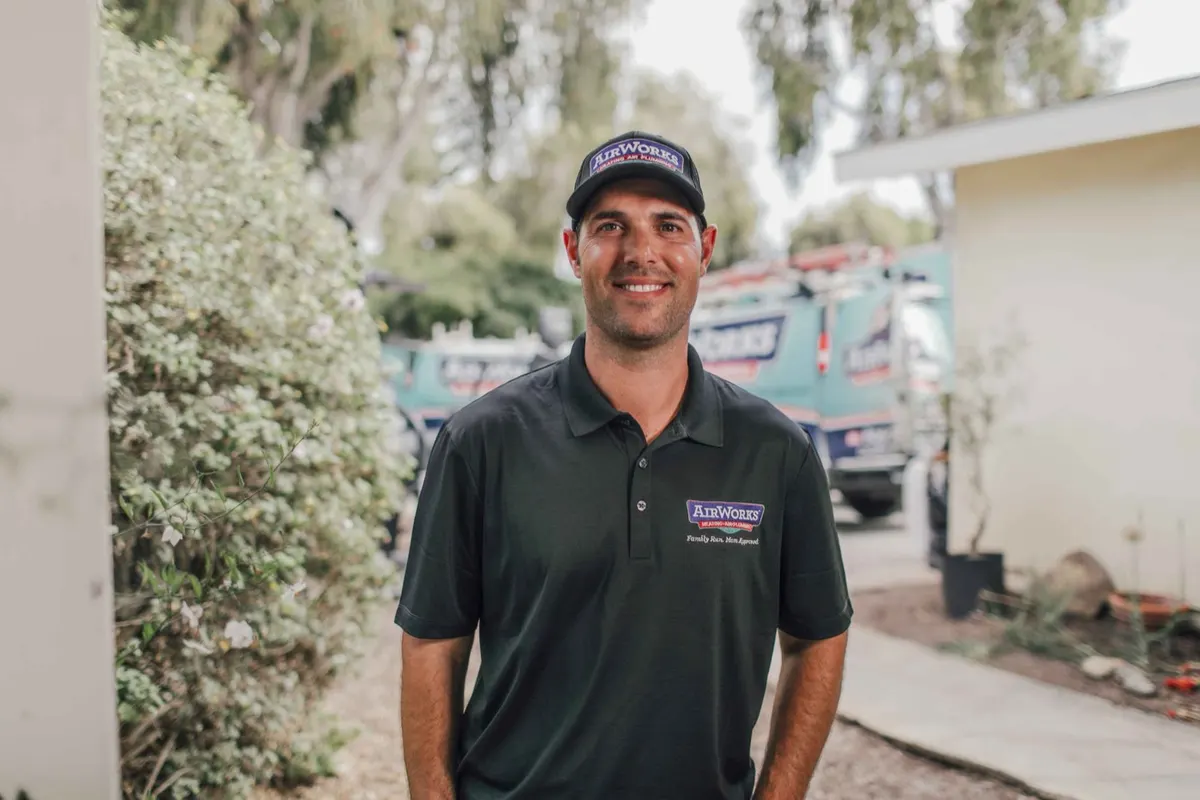
About the Author
Kevin Allen
Co-Founder & Service Lead
Co-founded AirWorks in 2010 and has worked in Ventura County HVAC since 2002. Leads the service and installation crews — and the fix-what's-actually-broken ethic the company was built on.
Need Help?
Contact us today to discuss your needs. Our team is ready to help.
Related Articles
Why Is Your Air Conditioner Hissing When Off? Causes & Diagnostics
Read Why Is Your Air Conditioner Hissing When Off? Causes & DiagnosticsOptions Comparisons for Homeowners: Heat Pump vs. Gas Furnace
Read Options Comparisons for Homeowners: Heat Pump vs. Gas FurnaceWhy Is Your Air Conditioner Hissing When Off? Causes and Diagnostics
Read Why Is Your Air Conditioner Hissing When Off? Causes and DiagnosticsReady to Get Started?
Whether you need a repair, maintenance, or a new installation, our expert team is here to help.