Picking the Best Water Heater for Your Home is Easier Than You Think
Kevin Allen
Co-Founder & Service Lead

Why Knowing How to Choose the Right Water Heater Can Save You Money and Stress
How to choose the right water heater comes down to five key factors:
- Type - Storage tank, tankless, heat pump, or solar
- Size - Match capacity to your household's peak hot water demand
- Fuel source - Electric, natural gas, propane, or solar based on what's available in your home
- Energy efficiency - Look for a high Uniform Energy Factor (UEF) and ENERGY STAR certification
- Long-term costs - Weigh upfront price against monthly operating savings
Water heating is not a small line item. It accounts for anywhere from 15 to 25 percent of your household energy bill. Yet most homeowners only think about their water heater when it stops working — usually at the worst possible moment. A leaking tank on a Sunday morning or a cold shower before work has a way of forcing fast decisions that don't always lead to the best outcome.
The good news? Choosing the right water heater does not have to be complicated. Whether you are replacing an aging unit or planning ahead, understanding a few straightforward criteria puts you firmly in control of the decision.
I’m Kevin Allen, co-founder of AirWorks. I started in commercial HVAC across Ventura County in 2002. Read on for a clear, practical breakdown of everything you need to make a confident choice.

Comparing Common Water Heater Types
When you start looking into how to choose the right water heater, the sheer variety of technology can feel overwhelming. In, we typically see five main categories of water heaters. Each has its own rhythm and "personality" regarding how it delivers comfort to your home.
- Conventional Storage Tank Water Heaters: These are the most common units found in California homes. They keep a ready reservoir of hot water (typically 30 to 80 gallons) available at all times.
- Tankless (Demand-Type) Water Heaters: These units do away with the tank entirely. They use high-powered heat exchangers to heat water instantly as it flows through the device. If you are considering an upgrade, our Tankless Water Heater Installation Thousand Oaks Guide provides a deeper look at this specific technology.
- Heat Pump (Hybrid) Water Heaters: These don't "create" heat; they move it. By pulling heat from the surrounding air and transferring it to the water, they can be two to four times more energy-efficient than a conventional electric heater.
- Solar Water Heaters: These use the abundant California sunshine to preheat water via roof-mounted collectors. They are often backed up by a gas or electric system for cloudy days.
- Condensing Gas Water Heaters: Similar to a high-efficiency furnace, these capture hot exhaust gases that would normally be vented outside and use them to help heat the water.
Understanding Storage Tank Mechanics
The traditional storage tank works like a giant thermos. It has an internal heating element (electric) or a burner (gas) that keeps the water at a set temperature, usually 120°F. The main challenge here is "standby loss"—the energy used to keep that water hot even when you aren't using it. To combat this, modern tanks come with high-density foam insulation.
Another key term to know is the recovery rate. This is the amount of hot water the unit can provide in one hour after being completely drained. If you have a large family, a high recovery rate is essential to avoid those "who used all the hot water?" arguments.
The Benefits of Tankless Technology
The biggest draw for tankless systems is the "endless" supply. Because there is no tank to empty, you can theoretically run a shower forever (though your water bill might suggest otherwise!). They are also incredibly space-efficient, often mounting on a wall and freeing up valuable floor space in a garage or utility closet.
However, tankless units have specific flow rates. If you try to run the dishwasher, the washing machine, and two showers at once, the unit might struggle to keep up. In some cases, we recommend point-of-use units for distant bathrooms to supplement the main system. If you ever run into issues with your existing setup, our Water Heater Repair Somis CA Guide offers troubleshooting tips.
| Feature | Storage Tank | Tankless |
|---|---|---|
| Upfront Cost | Lower | Higher |
| Lifespan | 8–12 Years | 20+ Years |
| Energy Efficiency | Standard | High (up to 34% more) |
| Space Required | Large footprint | Compact/Wall-mount |
| Hot Water Supply | Limited to tank size | Endless (within flow limits) |
How to Choose the Right Water Heater for Energy Savings
Efficiency isn't just a buzzword; it's a direct reflection of your monthly budget. When looking at a new unit, always check the EnergyGuide label. This yellow tag provides an estimate of annual operating costs and displays the Uniform Energy Factor (UEF). The higher the UEF, the more efficient the unit.
Choosing an ENERGY STAR certified model is one of the smartest moves you can make. For example, an ENERGY STAR certified tankless water heater can save you 30% more energy compared to standard storage models. If you are opting for a heat pump model, you could see energy usage drop by 50% compared to a standard electric unit. For more localized advice, check out our Water Heater Repair Thousand Oaks CA Guide.
How to Choose the Right Water Heater Size
Sizing isn't about the physical dimensions of the heater; it's about the First-Hour Rating (FHR) for tanks or Gallons Per Minute (GPM) for tankless.
To determine your needs, think about your "peak hour." If everyone in your house showers between 7:00 AM and 8:00 AM while the dishwasher is running, that is your peak demand.
- For Tanks: Look for an FHR that matches your peak hour demand within a few gallons. A family of four typically needs a tank with an FHR of 60 to 80 gallons.
- For Tankless: Calculate the GPM of the fixtures you use simultaneously. A standard shower uses about 2 GPM. If you need to run two showers at once, you need a unit that can handle at least 4 GPM.
Evaluating Fuel Source Compatibility
Your home’s existing infrastructure often dictates how to choose the right water heater.
- Natural Gas/Propane: Usually requires a vent (chimney or PVC pipe) and a gas line. Gas units generally have faster recovery rates than electric ones.
- Electricity: Almost every home has it, but switching from gas to electric (or vice versa) can involve significant electrical upgrades, like adding a 240V circuit for a heat pump heater.
- Climate Suitability: In our service areas like Sacramento and Thousand Oaks, heat pump water heaters are fantastic because they thrive in warmer climates. They can even act as a dehumidifier for your garage!
Maintenance and Longevity Strategies
Once you’ve made your choice, the goal is to make that investment last as long as possible. The "silent killer" of water heaters is sediment buildup. In areas with hard water, minerals like calcium settle at the bottom of the tank, creating an insulating layer that makes the burner work harder and eventually causes the tank to overheat and crack.
We highly recommend checking your anode rod every few years. This is a sacrificial metal rod that "attracts" corrosion so the tank doesn't have to. When the rod is gone, the tank is next. If you experience a sudden leak or failure, don't panic—refer to our Emergency Water Heater Repair Somis CA Guide for immediate steps to take.
How to Choose the Right Water Heater Replacement Timing
Don't wait for a flood to decide it's time for a new unit. Here are the warning signs:
- Age: If your tank is over 10 years old, it’s in the "danger zone."
- Rusty Water: This indicates internal corrosion.
- Rumbling Noises: This is the sound of sediment "boiling" at the bottom of the tank.
- Frequent Repairs: If you're calling us every few months, a replacement is likely more cost-effective.
For residents in Ventura County, our Water Heater Repair Thousand Oaks CA Guide can help you decide if a repair is worth it or if it's time to go shopping.
Routine Care for Maximum Lifespan
- Annual Flushing: Drain a few gallons from the tank once a year to remove sediment.
- T&P Valve Check: Briefly lift the lever on the Temperature and Pressure relief valve to ensure it's not stuck.
- Insulation: If you have an older electric tank in a cold garage, an insulation blanket can help reduce standby loss.
Frequently Asked Questions about Water Heaters
How long do water heaters typically last?
Standard storage tanks usually last between 8 and 12 years. Tankless units are much more durable, often reaching 20 years or more with proper descaling. Factors like water quality (hard vs. soft) and how often you flush the unit play a massive role in these timelines.
Are heat pump water heaters worth it?
Absolutely, especially in California. While they require more physical space (to breathe and pull in air), the energy savings are massive. A family of four can save hundreds of dollars a year on electric bills. Plus, they are currently eligible for significant federal tax credits (up to 30% of the project cost).
Should I choose gas or electric?
This often depends on your long-term goals. Natural gas is traditionally cheaper to operate in many areas, but as California moves toward electrification, many homeowners are switching to high-efficiency electric heat pumps to reduce their carbon footprint and take advantage of solar panels.
Conclusion
At AirWorks Heating, Air & Plumbing, we believe that how to choose the right water heater shouldn't be a guessing game. Since 2010, our team has provided honest, customer-focused plumbing and HVAC services across and beyond. We understand the local climate, the local water conditions, and exactly what it takes to keep your home comfortable.
Whether you are in Thousand Oaks, Roseville, or anywhere in between, we are here to ensure your next water heater is the perfect fit for your family and your budget.
Ready to upgrade your home’s comfort? Schedule your professional water heater service today with the experts at AirWorks Heating, Air & Plumbing.
About the Author
Kevin Allen
Co-Founder & Service Lead
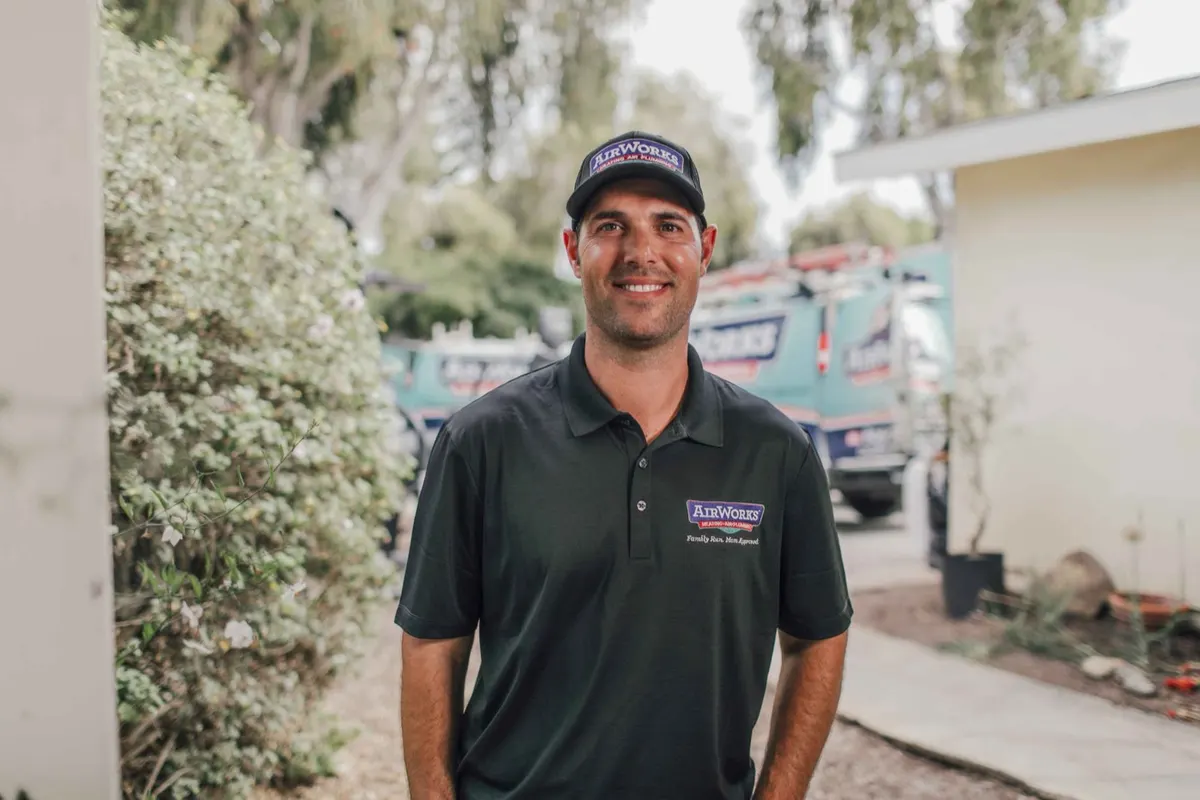
Co-founded AirWorks in 2010 and has worked in Ventura County HVAC since 2002. Leads the service and installation crews — and the fix-what's-actually-broken ethic the company was built on.
Need Help?
Contact us today to discuss your needs. Our team is ready to help.
Related Articles
Options Comparisons for Homeowners: Heat Pump vs. Gas Furnace
Read Options Comparisons for Homeowners: Heat Pump vs. Gas FurnaceWhy Is Your Air Conditioner Hissing When Off? Causes and Diagnostics
Read Why Is Your Air Conditioner Hissing When Off? Causes and DiagnosticsHeat Pump vs. Gas Furnace: Technical Options Comparisons for Homeowners
Read Heat Pump vs. Gas Furnace: Technical Options Comparisons for HomeownersReady to Get Started?
Whether you need a repair, maintenance, or a new installation, our expert team is here to help.