
Upgrading Your Home to Meet California Water Codes Without Breaking a Sweat
Kevin Allen
Co-Founder & Service Lead

What CALGreen Water Efficiency Standards Mean for Your California Home
CALGreen water efficiency standards explained simply: CALGreen (California Green Building Standards Code, Title 24 Part 11) is the first mandatory statewide green building code in the U.S., and it requires all new California buildings to reduce indoor potable water use by at least 20% compared to baseline. Here's a quick breakdown of what that means in practice:
Key CALGreen Water Efficiency Requirements at a Glance:
| Fixture | Maximum Allowed Flow Rate |
|---|---|
| Residential lavatory faucets | 1.2 gpm at 60 psi |
| Showerheads | 2.0 gpm at 80 psi |
| Kitchen faucets | 1.8 gpm at 60 psi |
| Toilets (water closets) | 1.28 gpf (effective flush rate) |
| Urinals | 0.125 gpf |
- Who it applies to: All new residential and non-residential construction, plus qualifying additions (over 1,000 sq ft) and alterations (over 10% of conditioned floor area)
- Two compliance paths: Prescriptive (install code-compliant fixtures) or Performance (prove a 20% overall reduction in indoor water use)
- Voluntary upgrades: Tier 1 (12% reduction beyond mandatory) and Tier 2 (20% reduction beyond mandatory) are available for projects aiming higher
- Outdoor requirements: Weather-based irrigation controllers, soil moisture sensors, and drought-tolerant landscaping are required for applicable projects
- Current code cycle: The 2022 CALGreen Code took effect January 1, 2023; the 2025 code takes effect January 1, 2026; July 2024 supplements added embodied carbon pathways
If you're a Ventura County homeowner navigating a new build, renovation, or fixture upgrade, these standards directly shape what gets installed in your home — and what passes inspection.
I’m Kevin Allen, co-founder of AirWorks and the qualifying individual on our C-20 and C-36 licence. Let’s walk through everything you need to know so your next project goes smoothly from plan check to final sign-off.

CALGreen Water Efficiency Standards Explained: Mandatory Indoor Requirements
When we talk about CALGreen, we are looking at the state’s primary tool for hitting its greenhouse gas reduction targets (set by AB 32). Because it takes a massive amount of energy to treat, transport, and heat water, saving water is essentially saving energy. In our service areas—from the sunny streets of Sacramento to the coastal breezes of Santa Barbara—water is a precious resource.
The core of the code is a mandatory 20% reduction in indoor potable water use. To achieve this, homeowners and builders generally choose between two "paths":
- The Prescriptive Path: This is the "check-the-box" method. You simply install fixtures that meet or beat the maximum flow rates specified in the code.
- The Performance Path: This involves a bit more math. You calculate a "baseline" for the building and then show that your specific mix of fixtures and systems results in a 20% overall reduction. This path is great if you want to use a high-flow showerhead but offset it with ultra-efficient toilets or a greywater system.
Whether you are building a new home in Folsom or remodeling a kitchen in Oxnard, understanding these plumbing services requirements is the first step toward a successful project.
Maximum Flow Rates for Residential Fixtures
To meet the prescriptive path, your fixtures must stay under specific "speed limits" for water. For residential projects, these include:
- Showerheads: Limited to 1.8 gallons per minute (gpm) at 80 psi. If you have multiple showerheads in one stall, the combined flow must often meet specific limits to prevent "cheating" the system.
- Kitchen Faucets: These must not exceed 1.8 gpm at 60 psi. However, the code allows for a temporary "increase" to 2.2 gpm for filling pots or pans, provided the faucet defaults back to 1.8 gpm.
- Water Closets (Toilets): The maximum effective flush rate is 1.28 gallons per flush (gpf). Many modern "High Efficiency Toilets" (HETs) easily beat this.
- Lavatory Faucets: In bathrooms, the limit is 1.2 gpm at 60 psi.
It’s also important to look for the WaterSense label. This is a voluntary partnership program by the EPA that helps consumers identify fixtures that are at least 20% more efficient than average products while still performing well. In California, these standards often overlap with Title 20 appliance standards, which regulate what manufacturers can actually sell in the state.
Non-Residential Standards and Urinal Requirements
For our commercial clients or those working on mixed-use buildings in areas like Citrus Heights or Simi Valley, the rules get even stricter.
- Urinals: These are limited to a maximum of 0.125 gpf. This matches the Title 20 standards that took effect in 2016.
- Metering Faucets: In public restrooms, you’ll often see faucets that turn off automatically. These are limited to 0.083 gallons per cycle (gpc).
- Submetering: Non-residential buildings often require separate water meters for indoor and outdoor use. This helps managers track leaks and manage "water budgets" more effectively.
All compliant products must be listed in the California Energy Commission’s MAEDbS database (Modernized Appliance Efficiency Database System). If it isn't in the database, it technically shouldn't be sold or installed in California.
Compliance Pathways for New Construction and Renovations
A common question we hear at AirWorks Heating, Air & Plumbing is: "Does this apply to my small bathroom update?" The answer depends on the scope of the work. CALGreen is usually triggered by a building permit.
- New Construction: 100% of the building must comply.
- Additions: If you are adding more than 1,000 square feet to a home, the new portion must meet CALGreen standards.
- Alterations: If you are doing a renovation that increases the "conditioned" (heated or cooled) area by more than 10%, or if the valuation of the work exceeds a certain local threshold (often $200,000 for non-residential), the code kicks in.
Recently, the state added a new layer: Embodied Carbon Pathways. As of July 2024, larger non-residential projects (and eventually residential) must account for the carbon "cost" of the materials themselves. This includes pathways like building reuse (keeping 45% or more of the existing structure) or performing a Whole Building Life Cycle Assessment (WBLCA). While this sounds like it's just for skyscrapers, it’s a sign of where residential codes are headed.
CALGreen Water Efficiency Standards Explained for Additions
When you add a master suite to your home in Elk Grove or a guest house in Thousand Oaks, your building department will look for specific documentation. This usually includes:
- WS-1 Baseline Water Use Worksheet: This calculates how much water a "standard" version of your addition would use.
- WS-2 Water Use Reduction Worksheet: This shows how your chosen low-flow fixtures bring that number down by at least 20%.
During the rough-in inspection, the inspector will check that the plumbing lines are laid out according to the approved plans. At the final verification, they will check the actual model numbers of the faucets and toilets to ensure they match the "cut sheets" (manufacturer spec sheets) you submitted.
Verification and Inspection Procedures
In some high-performance homes, you might need a HERS Rater (Home Energy Rating System). These pros verify things like "compact hot water distribution." The goal here is to minimize the "wait time" for hot water. If you've ever run the tap for two minutes waiting for the shower to get warm, you've wasted gallons of water. CALGreen encourages shorter pipe runs or demand recirculation systems (pumps that quickly pull hot water to the fixture only when you need it) to solve this.
Voluntary Tiers and Outdoor Water Conservation
While the 20% reduction is mandatory, some cities (like those in the Sacramento region) or developers choose to go further by adopting Voluntary Tiers.
- Tier 1: Requires a 12% reduction beyond the mandatory baseline.
- Tier 2: Requires a 20% reduction beyond the mandatory baseline.
Achieving these tiers often requires going beyond just low-flow faucets. You might see waterless urinals in commercial settings or the integration of recycled water (purple pipe) systems for flushing toilets or irrigation.
Achieving Tier 1 and Tier 2 CALGreen Water Efficiency Standards Explained
To hit Tier 2 levels, we often look at "performance calculations." This might involve installing ultra-high-efficiency appliances, like Energy Star clothes washers that use significantly less water per load. We also look at aerator retrofits. Sometimes, you can take a standard faucet and simply swap the aerator for a 0.5 gpm or even a 0.35 gpm version to hit those high-tier savings without replacing the whole fixture.
Landscape and Irrigation Standards
Outdoor water use is where many Californians see the biggest potential for savings. CALGreen works in tandem with the Model Water Efficient Landscape Ordinance (MWELO).
Key requirements for outdoor efficiency include:
- Weather-Based Irrigation Controllers: These "smart" controllers use local weather data to adjust watering schedules automatically. If it rained in Roseville last night, your sprinklers shouldn't turn on this morning.
- Soil Moisture Sensors: These measure how thirsty your lawn actually is before allowing the water to flow.
- Hydrozoning: This means grouping plants with similar water needs together. You wouldn't put a thirsty rose bush on the same valve as a drought-tolerant succulent.
- Drip Emitters: Using drip irrigation or "bubblers" instead of spray heads reduces evaporation and ensures water gets directly to the roots.
Frequently Asked Questions about CALGreen
When did the latest CALGreen updates take effect?
The current 2022 CALGreen Code became effective on January 1, 2023. There was a significant supplement regarding embodied carbon that took effect on July 1, 2024. Looking ahead, the 2025 code cycle is already in the works and is scheduled to take effect on January 1, 2026. It’s always best to check with your local building department in places like Santa Paula or Rancho Cordova, as they may have even stricter local ordinances.
How do I verify if a plumbing fixture is CALGreen compliant?
Look for three things:
- The WaterSense Label: This is the easiest visual cue.
- MAEDbS Listing: Check the California Energy Commission’s online database.
- Flow Rate Marking: Most faucets and showerheads have the gpm rating etched directly onto the metal or plastic.
Also, ensure the product is "lead-free" according to AB 1953 standards, which is a requirement for all potable water fixtures in California.
Does CALGreen apply to simple fixture replacements?
Generally, if you are just replacing a leaky faucet in your kitchen, you don't need a full CALGreen compliance report. This is often considered "maintenance" or a "like-for-like" replacement. However, California law prohibits the sale of non-compliant fixtures. So, even if you don't need a permit, the only faucets you’ll find at a reputable supplier in Sacramento or Ventura will likely already meet the 1.8 gpm standard. If your project involves a permit—like a full bath remodel—then 100% compliance is required.
Conclusion
Navigating CALGreen water efficiency standards explained above doesn't have to be a headache. While the rules are strict, they are designed to protect our state's future and, quite frankly, save you money on your utility bills. By choosing the right fixtures and staying ahead of the permit process, you can build a home that is as efficient as it is comfortable.
At AirWorks Heating, Air & Plumbing, we’ve been helping homeowners in and beyond—from the hills of Calabasas to the suburbs of Antelope—since 2010. We pride ourselves on being honest, customer-focused, and deeply knowledgeable about the local codes that affect your home. Whether you're planning a major addition or just want to upgrade to a high-efficiency water heater, we're here to help.
Ready to make your home a model of California efficiency? For more information on how we can assist with your next project, explore our plumbing services and let’s get to work on a home that saves water without breaking a sweat!
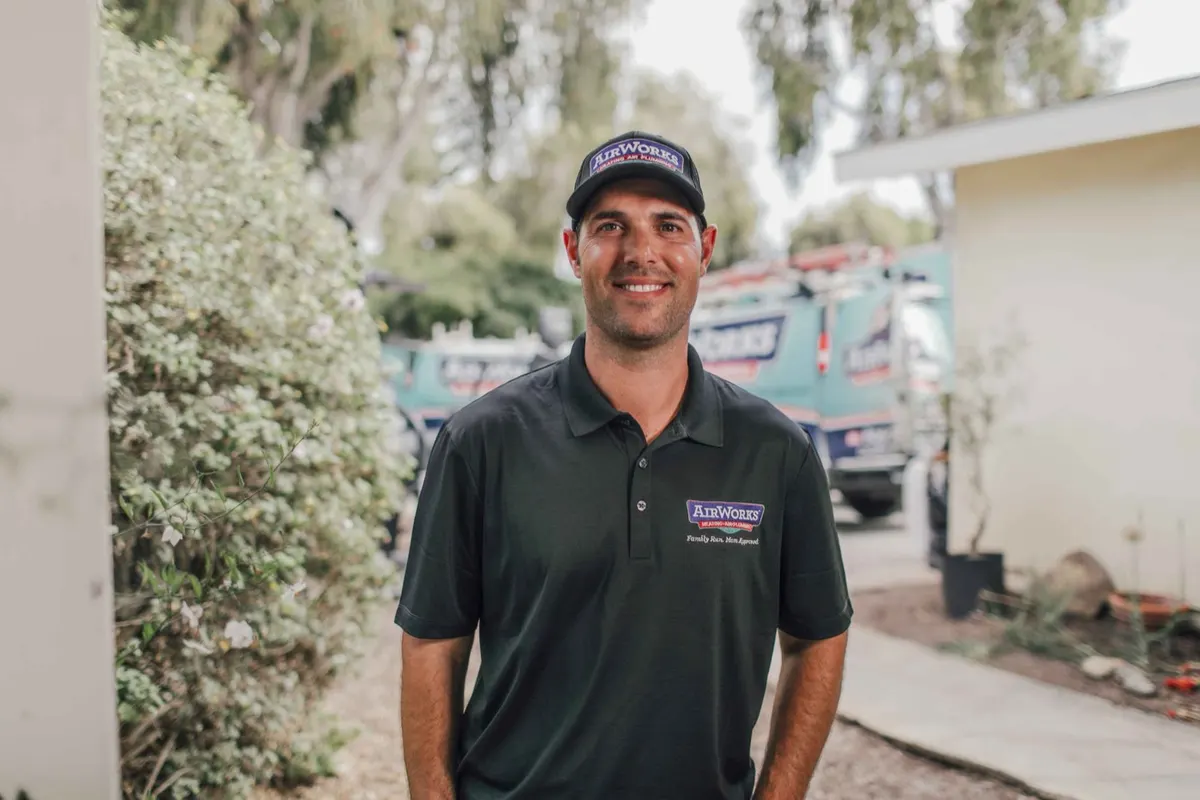
About the Author
Kevin Allen
Co-Founder & Service Lead
Co-founded AirWorks in 2010 and has worked in Ventura County HVAC since 2002. Leads the service and installation crews — and the fix-what's-actually-broken ethic the company was built on.
Need Help?
Contact us today to discuss your needs. Our team is ready to help.
Related Articles
Options Comparisons for Homeowners: Heat Pump vs. Gas Furnace
Read Options Comparisons for Homeowners: Heat Pump vs. Gas FurnaceWhy Is Your Air Conditioner Hissing When Off? Causes and Diagnostics
Read Why Is Your Air Conditioner Hissing When Off? Causes and DiagnosticsHeat Pump vs. Gas Furnace: Technical Options Comparisons for Homeowners
Read Heat Pump vs. Gas Furnace: Technical Options Comparisons for HomeownersReady to Get Started?
Whether you need a repair, maintenance, or a new installation, our expert team is here to help.